Puerto Rico has hundreds of beaches, and that is exactly the problem. On a four- or five-day trip you have time for a handful, the guidebooks name three dozen, and the wrong pick can mean a day of seaweed-lined sand or an afternoon fighting a current you never signed up for. The good news for a no-passport trip from the mainland is that the island's best beaches are genuinely world-class, and they sort cleanly once you understand the two things that actually decide whether a beach is worth your day. Here is Puerto Rico region by region, which beaches earn the ferry or the drive, and the one honest caveat on each.
The two facts that decide everything
Before any single beach, two seasonal patterns run the whole island, and our local team plans around them every week.
First, sargassum. The drifting brown seaweed that piles up on windward sand runs heaviest from roughly April through October, and thins to its most reliable clear window from about November through March. If you are booking a winter trip now, you are booking into the good season; a summer trip is the one where you want a backup beach in your pocket. We track it in detail in our sargassum guide.
Second, the winter swell. From roughly November through April, North Atlantic groundswells push into the island's north- and west-facing coasts. That is a gift if you surf and a hazard if you do not: it is what makes Rincon the island's surf capital in winter, and it is why a casual swimmer should weight those same months toward reef-protected coves, the east coast, and the calmer south. Put the two together and a simple rule falls out. In winter, the east coast, the south, and the protected coves are your swimming beaches, while the west coast is for watching, or riding, the waves and chasing the sunset.
Find your hotel by area & budget
Compare current Puerto Rico rates across the major booking sites in one place, in USD. Most rooms are free to cancel.
The offshore islands: worth the ferry
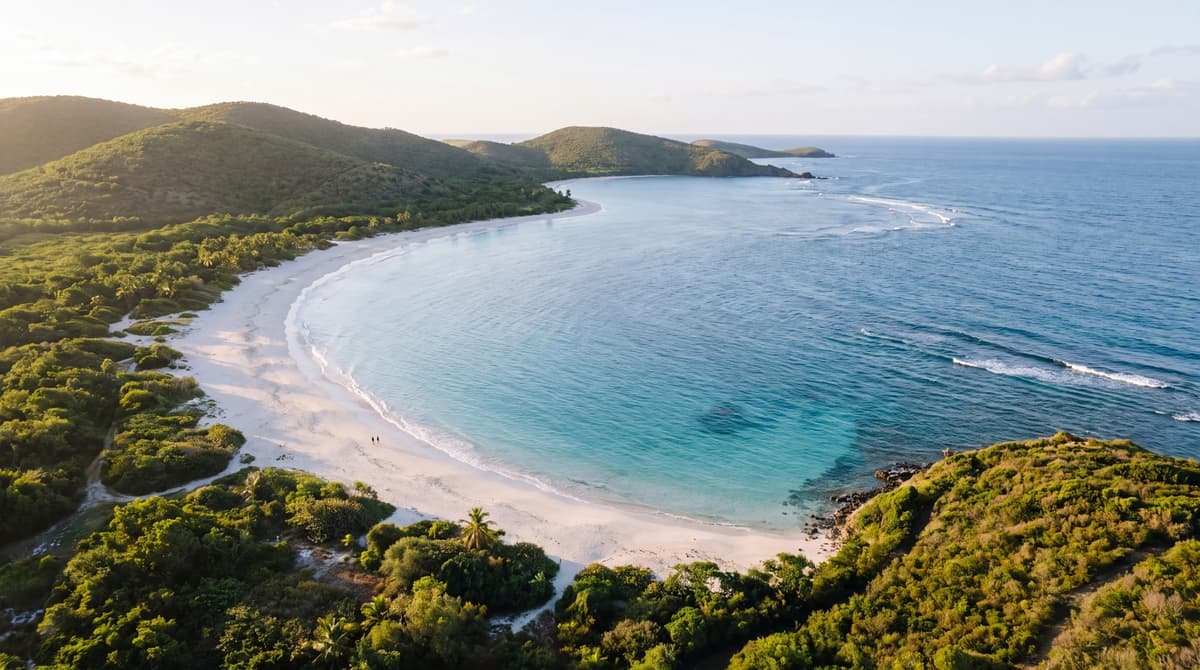
If you cross the water only once, cross it for Flamenco Beach on Culebra. The mile-long horseshoe bay sits behind a reef that works as a natural breakwater, so the water stays calm and an improbable shade of turquoise across most of the year, and it lands on the world's-best-beaches lists year after year. A rusted 1940s Sherman tank half-buried in the sand near one end is the island's most photographed landmark. Getting there takes intention: a cheap public ferry from Ceiba, about 45 minutes, or a short flight, then a short publico ride the few miles from town. The honest caveat is access and timing. The ferry sells out in high season and the beach's own lot fills by mid-morning, so this is a book-ahead, arrive-early day, not a spur-of-the-moment one. The full picture is on our Culebra page.
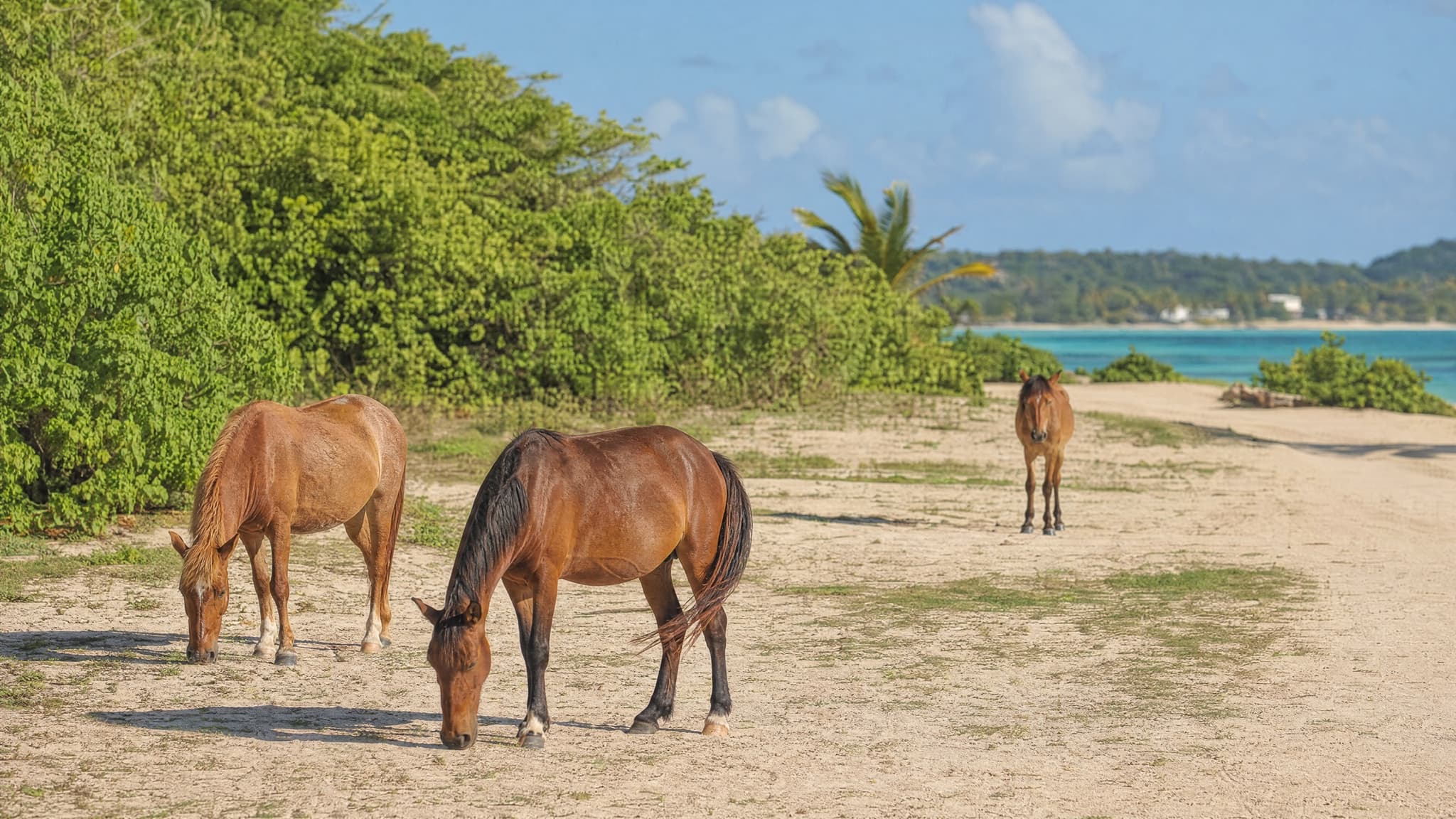
Vieques, Culebra's larger and quieter sister, trades one showpiece for a whole coast of good beaches, much of it inside a national wildlife refuge. Sun Bay is the signature: a mile of white sand curving between two points that keep it calm, managed by Puerto Rico's Department of Natural Resources, with restrooms, lifeguards, and the island's free-roaming wild horses wandering across the sand. Parking runs about four dollars a car. For clear water and snorkeling, keep driving to Playa La Chiva, the refuge beach the Navy nicknamed Blue Beach: a string of undeveloped coves with seagrass beds close enough to shore that you see fish without trying. The caveat for both is that Vieques rewards a car and a night or two; it makes a long day trip and a far better two-day one. If you are torn between the two islands, our Culebra vs Vieques guide settles it.
Traveling with little ones
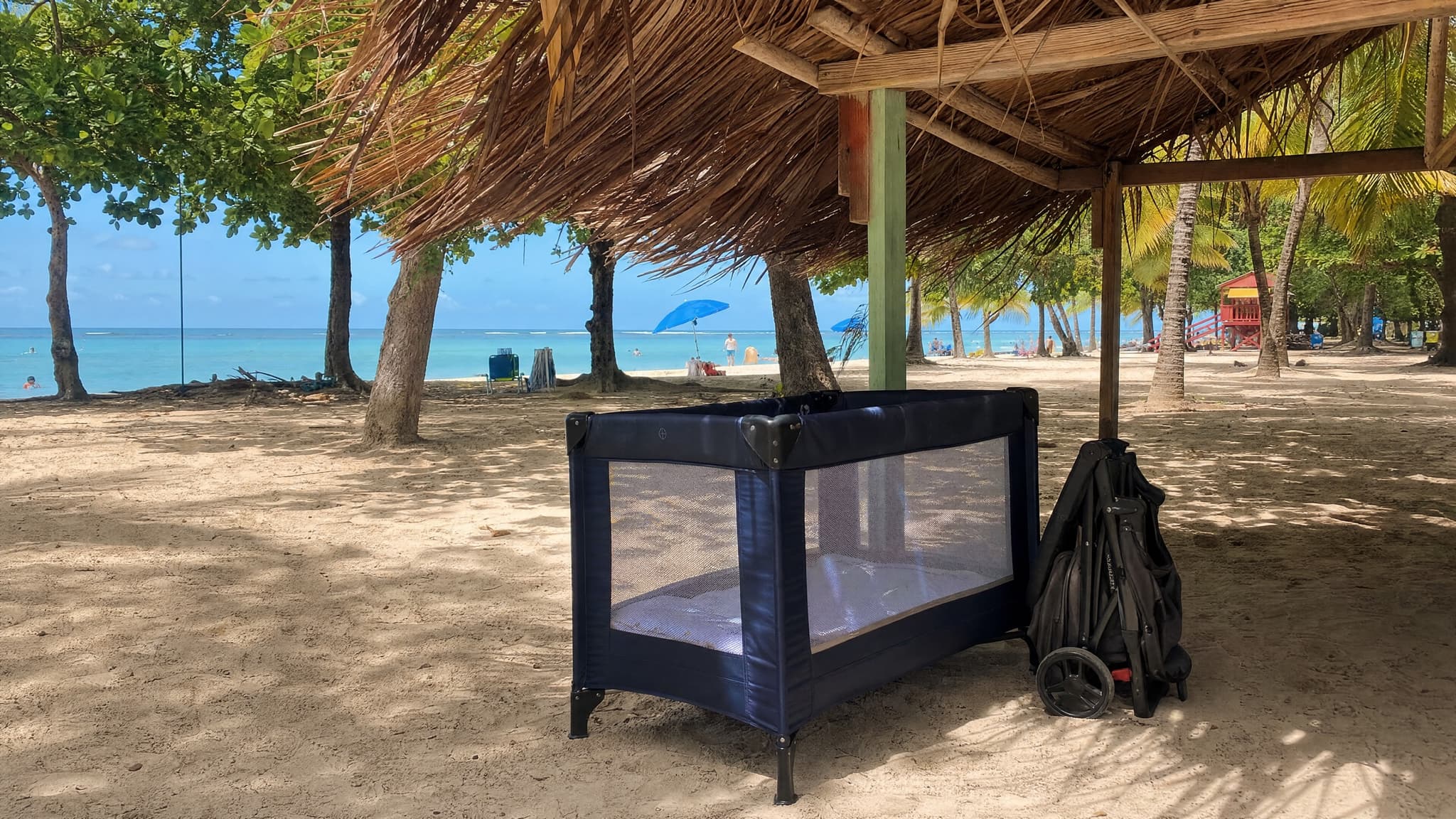
Land with the crib already sorted
A full-size crib, stroller, and car seat rarely fit in the luggage. Local BabyQuip providers deliver the gear to your hotel or rental for your dates and collect it when you fly home, cleaned and insured per their standards. Pick what you need, see the price for your stay, and board with carry-ons instead of cargo.
- Cribs, pack-and-plays, and toddler beds
- Car seats sized to your child
- Strollers, wagons, and beach gear
Delivered by independent BabyQuip providers on the island. We may earn a commission at no extra cost to you.
The easy wins: San Juan and the east coast
Not every great beach needs a boat. The east coast delivers the island's most reliable family swimming within an hour of the capital.
Luquillo Beach, officially Balneario La Monserrate, is the safe pick: a Blue Flag-certified, lifeguarded public beach in a reef-protected crescent, with El Yunque's green ridgeline rising behind it and more than sixty family-run food kiosks lining the road next door. It is about 45 minutes east of San Juan, the lot costs a couple of dollars, and the water is calm enough for first-time swimmers. The caveat is that everyone knows it, so it fills on weekends and holidays; go on a weekday morning.
Seven Seas in Fajardo is the other easy east-coast win, a shaded, shallow crescent that doubles as the launch point for Icacos Cay boat trips and Laguna Grande bio bay kayaks. The one real caveat is its hours: as a government balneario it is open Wednesday to Sunday in the low season and daily in summer, closed Mondays and Tuesdays, so check the day before you drive out.
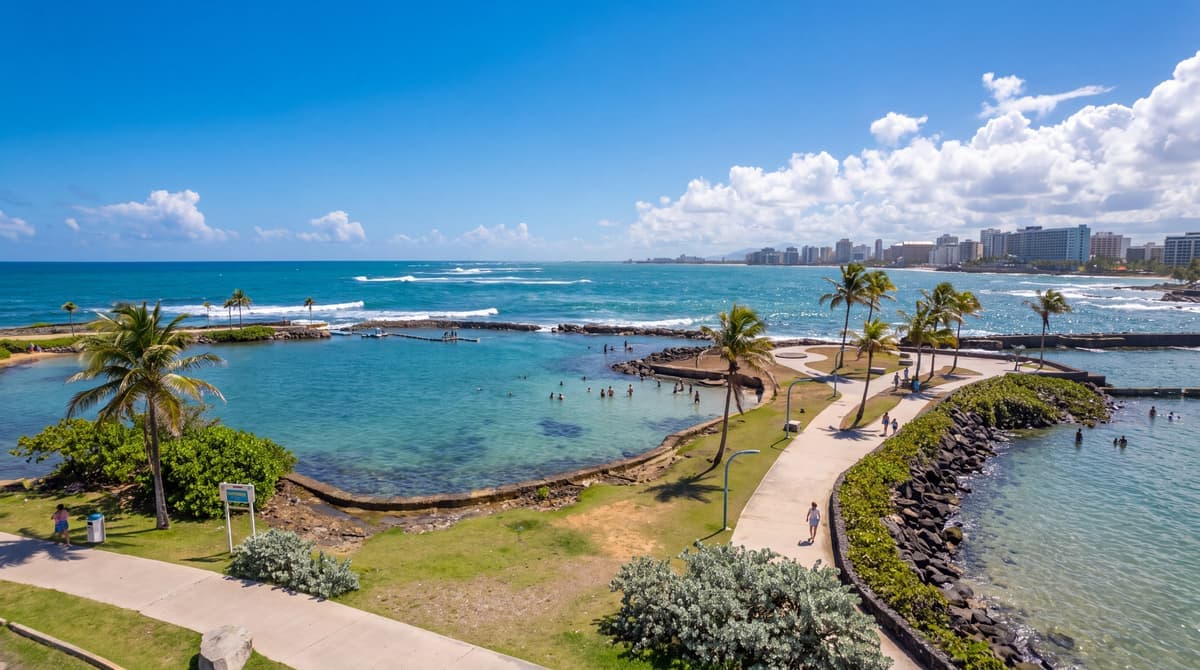
Right in the city, the San Juan beaches are walkable rather than spectacular, but they are genuinely good for a no-car trip: the protected Playita cove at Condado, the wide and local Ocean Park, and Isla Verde, the closest sand to the airport at ten to fifteen minutes out. We sort those by how far they really are in our companion best beaches near San Juan guide.
Browse 30 vetted Puerto Rico experiences
Instant confirmation, free cancellation up to 24h.
The west coast: surf, color, and the island's best sunset
The west coast is where the winter swell and the sunset both live.
In Rincon, Domes is the marquee winter reef break, named for the decommissioned nuclear dome still standing onshore, and it is a spectacle from roughly November through April. It is also emphatically not a casual swim beach: rip currents, a circulating "toilet bowl" when the waves are up, and a rocky, urchin-dotted bottom at entry. Beginners and families want Sandy Beach up the coast instead, a wider, gentler stretch with board rentals and one of the island's most dependable sunsets, with the honest note that there are no lifeguards. If trying to surf is the point, our Rincon-for-beginners guide covers how to read whether a given week is your week.
North of Rincon in Aguadilla, Crash Boat is the postcard: a calm cove of color-painted fishing boats around a WWII-era pier, swimmable and good for snorkeling near the pilings. The caveat is the pier itself, which loses sections to storms and changes shape year to year, so admire it more than you climb on it.
Then there is the southwest. Playa Sucia, also called La Playuela, sits at Puerto Rico's southwestern-most tip below the 1882 Los Morrillos lighthouse: a dramatic, undeveloped cove of pale sand under limestone cliffs, with the pink-tinted Cabo Rojo salt flats a short drive away. Build an afternoon here around the sunset rather than a swim. There are no services, and currents run near the rocky point, so this is a wading-and-photos beach, not a lap-swimming one.
Stay in the Puerto Rico loop
Puerto Rico news and deals, in your inbox.
Get island news, fresh activity ideas and deals when available, straight to your inbox.
Occasional emails from Puerto Rico Playbook. Unsubscribe anytime.
Email signup is temporarily paused. Please check back soon.
Browse the latest Puerto Rico storiesThe quick reference: best beach for your kind of trip
- Best all-around, bucket-list: Flamenco on Culebra.
- Best for families and easy swimming: Luquillo and Seven Seas on the east coast, and Sun Bay on Vieques, all calm, shallow, and lifeguarded.
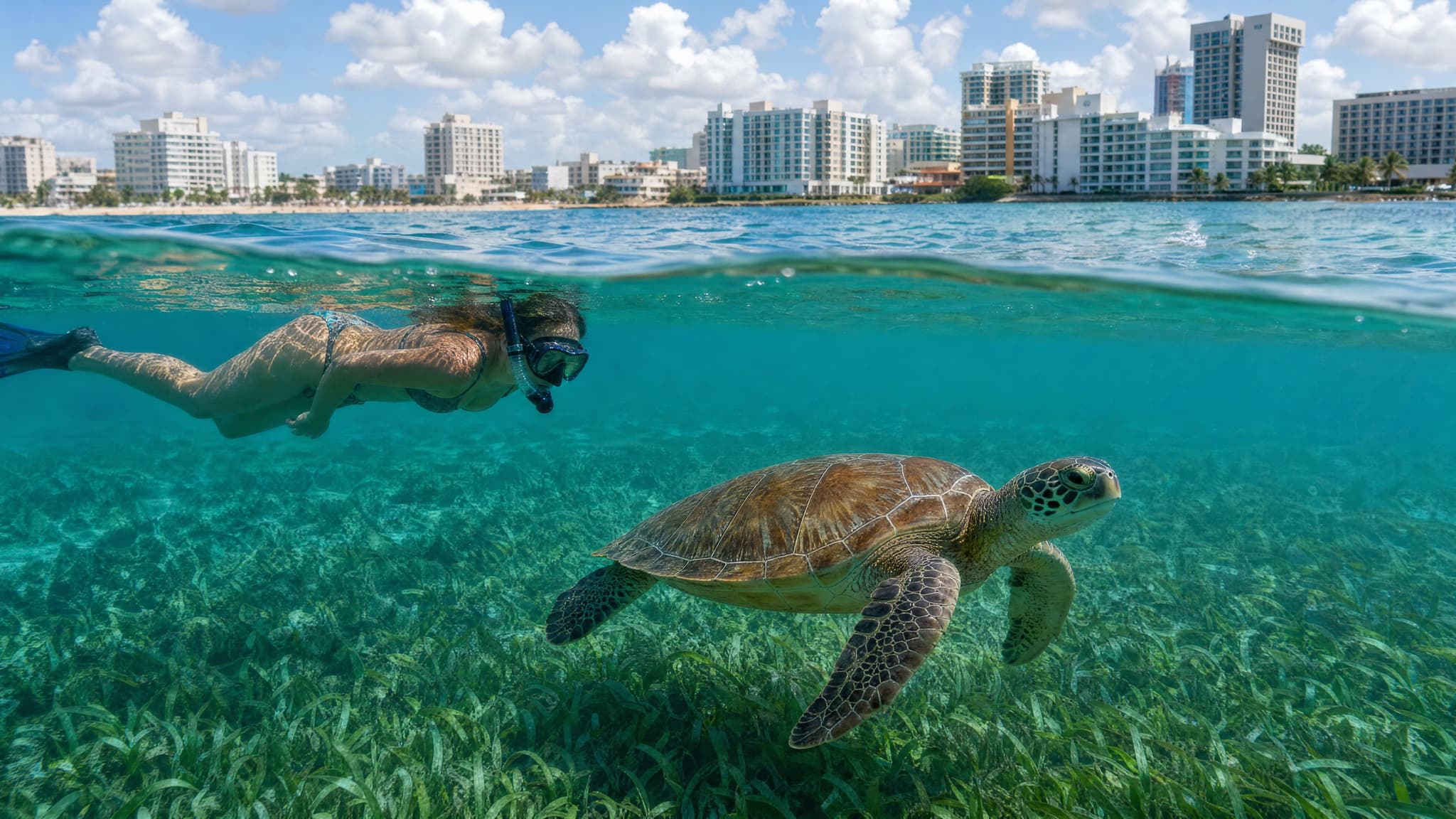
- Best for snorkeling: Playa La Chiva on Vieques and Crash Boat in Aguadilla, plus El Escambron right in San Juan (see our snorkeling guide).
- Best for surfing: Domes for the experienced, Sandy Beach for beginners, both in Rincon.
- Best sunset: Playa Sucia in Cabo Rojo and Crash Boat in Aguadilla.
- Best with no car: the walkable San Juan beaches, Condado, Ocean Park, and Isla Verde.
- Closest to the airport: Isla Verde, ten to fifteen minutes from SJU.
Want your whole trip planned for you?
Tell us who is coming and when, and we will build your days around what you actually want.
When to go, and why winter is the book-now season
If your dates are open, the sweet spot for most of these beaches is roughly November through March. It is the reliable clear-water window with the least sargassum, the crowds thin outside the winter holidays and SanSe, and the whole stretch sits outside the hurricane season that ends November 30. The trade-off is the winter swell on the north and west coasts, which is exactly why you weight your swimming toward the east, the south, and the protected coves in those months. Summer flips it: the west coast calms down and Rincon becomes swimmable, but sargassum is at its heaviest on windward sand, so keep a backup beach in mind. Because that winter window is also peak season, the beaches themselves stay free but the flights and hotels around them do not, so this is the trip you book early; our vacation-cost guide is the honest place to calibrate the budget.
Where we would base
For a first trip built around beaches, San Juan is still the smart home base: the city beaches are at your door, Luquillo and Seven Seas are an easy day east, and the Culebra and Vieques ferries leave from Ceiba, about an hour away. If the offshore islands or the west-coast surf and sunsets are the whole point of the trip, give them their own nights rather than trying to day-trip them, and split the week. Either way, the beaches are the one part of Puerto Rico that consistently over-delivers on the brochure, as long as you match the coast to the season. You can browse the full set, with facilities and swim notes on each, on our beaches page.
Let us plan this trip for you
We check every spot against live sources, share your dates and we'll build the rest.
FAQ
What is the best beach in Puerto Rico? Flamenco Beach on Culebra is the consensus pick: a reef-protected turquoise horseshoe bay that lands on the world's-best-beaches lists year after year, with a half-buried 1940s tank as its landmark. The catch is access, a book-ahead ferry from Ceiba (about 45 minutes) or a short flight, plus an early arrival before the lot fills. For a no-boat family day, Luquillo or Seven Seas on the east coast are the easy, calm alternatives.
What is the best time of year for Puerto Rico beaches? Roughly November through March. It is the least-sargassum, clearest-water window, and it falls entirely outside the hurricane season that ends November 30. The trade-off is the Atlantic winter swell, which makes many north- and west-facing beaches rough for casual swimmers those months, so stick to the east coast, the south, and reef-protected coves. Summer calms the west coast but brings the heaviest sargassum.
Which Puerto Rico beaches are best for families with kids? The reef-protected, lifeguarded public balnearios: Luquillo (about 45 minutes east of San Juan) and Seven Seas in Fajardo (about an hour), plus Sun Bay on Vieques. All three are calm, shallow, and have real facilities, and Luquillo has the food-kiosk strip next door.
Do you need a car to reach the best beaches? For the San Juan city beaches, no, they are walkable or a short rideshare. For Luquillo, Seven Seas, Rincon, and Cabo Rojo, yes, you want a car or a tour that includes transport. Culebra and Vieques need the ferry from Ceiba or a short flight, plus a publico or a rental once you are there.
Are Culebra and Vieques worth the ferry? Yes, if you plan for it. Flamenco on Culebra is genuinely world-class, and Vieques trades one showpiece beach for a whole refuge coast, Sun Bay and Playa La Chiva among them. Both are better as an overnight than a rushed day trip, and the ferries from Ceiba sell out in high season, so book ahead.
Which beach is best for snorkeling? Playa La Chiva on Vieques and Crash Boat in Aguadilla are the standouts among the island beaches, and El Escambron is the best shore snorkeling right in San Juan. Our snorkeling guide covers the boat trips that reach the clearest water.