Puerto Rico is a genuinely good snorkeling destination with one honest caveat: the best of it is not evenly spread. A handful of shore-entry spots are excellent and free, the offshore cays and Culebra's reserve reefs are the real headline, and a large stretch of the north coast is a surf zone half the year, not a snorkel zone. This guide sorts it the way we would for a friend: where to walk in from the sand, which boat trips are worth the money, when the water actually cooperates, and how not to be the person standing on the coral.
The two ways to snorkel here
Everything bookable and walkable splits into two modes. Shore entry costs nothing, works on your schedule, and covers more range than most visitors expect, from a city cove in San Juan to a no-take marine reserve on Culebra. Boat trips cost real money but solve real problems: they reach reefs you cannot swim to, they carry the gear, and on the east coast they turn a logistics puzzle (ferries, remote parking, no facilities) into a fed, guided day. Most good Puerto Rico trips use one of each.
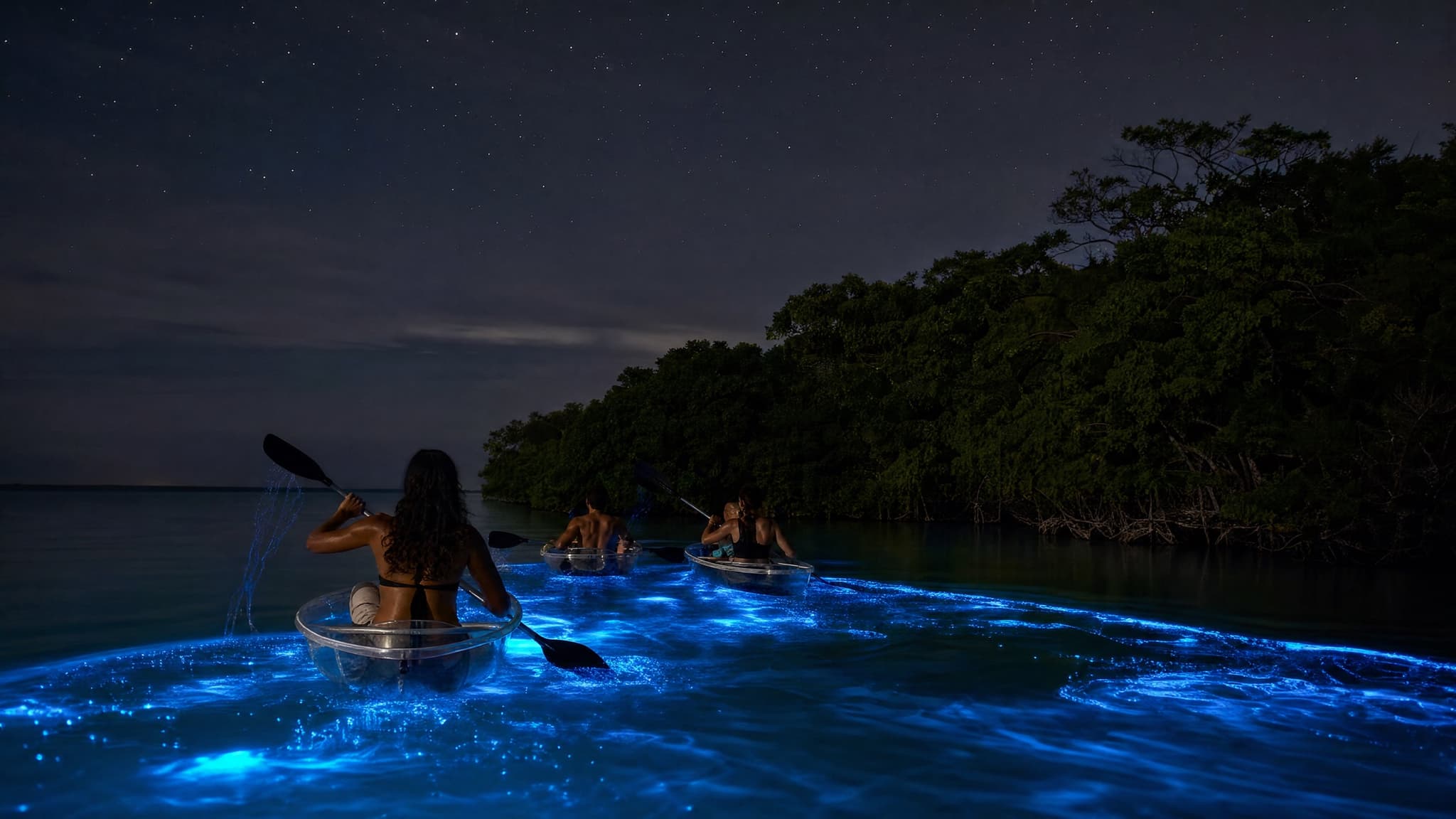
Bioluminescent Bay Kayak Trip from Vieques
2 Hours · From $65. Live prices, dates, and the honest details, one page.
Shore entry: the spots that actually deliver
Escambron, San Juan: the city option
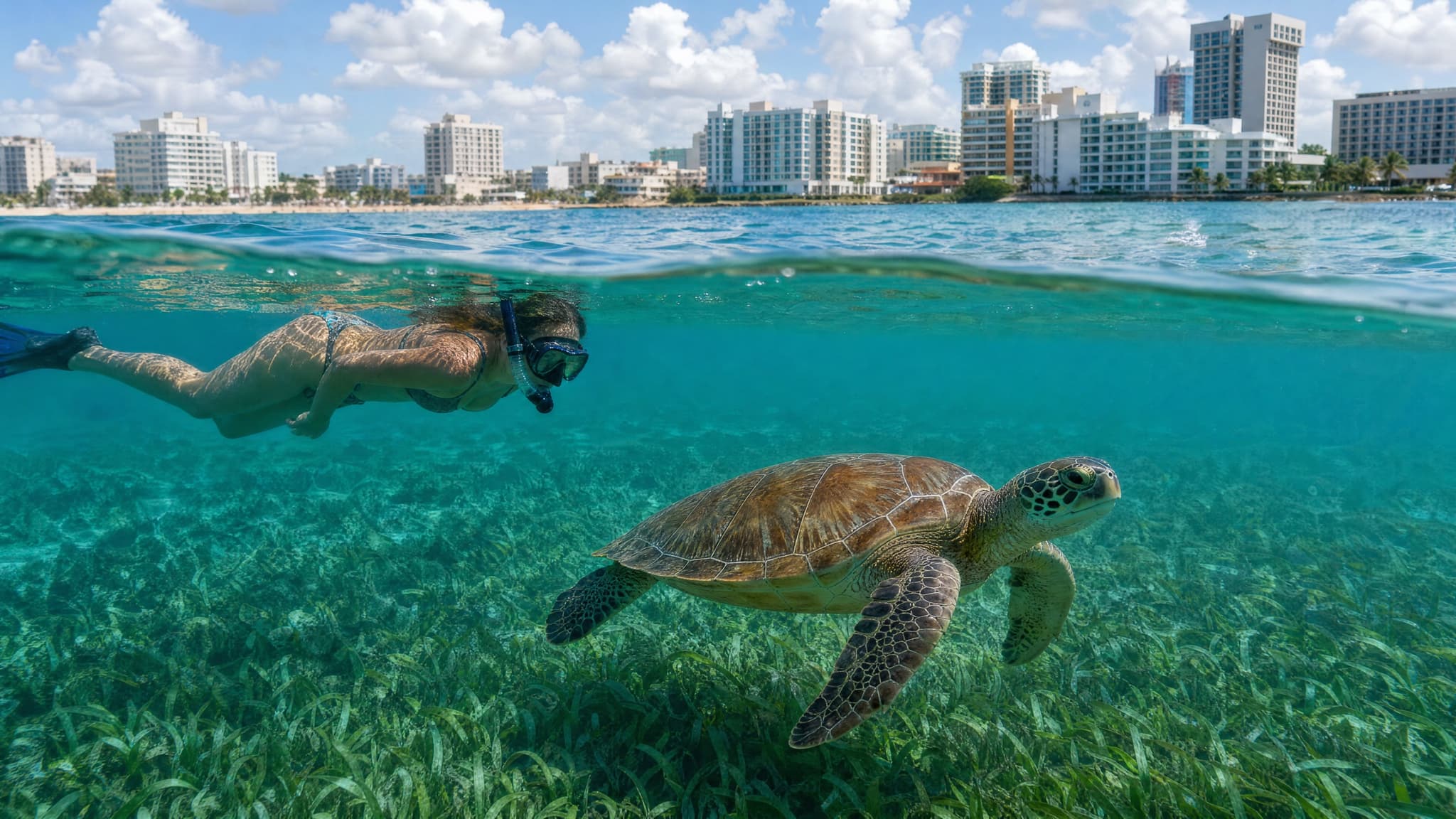
Balneario El Escambron sits between Old San Juan and Condado, a nearly enclosed cove protected by a limestone and rock barrier, with lifeguards during posted hours and a small fee for the official parking lot. Inside the barrier the water stays calm and shallow, which makes it the best first-timer and family snorkel on the main island: sergeant majors and reef fish around the rocks and sunken structures, and sea turtles seen regularly along the seagrass. It is a marine park rather than a pristine wild reef, and that is exactly its value: ten minutes from a San Juan hotel, no boat, no drive. If you want the turtle odds raised and a guide in the water with you, the guided turtle snorkel at Escambron runs small groups from this same beach, gear and video included.
Culebra: Tamarindo and Carlos Rosario, the reserve reefs
Culebra is the best snorkeling on any Puerto Rican shoreline, and the reason is protection: the waters off its west coast form the Canal Luis Pena Natural Reserve, Puerto Rico's first no-take marine reserve, where fishing has been banned since 1999. Playa Tamarindo is the easy version: drive to it, walk in, and snorkel the seagrass channel where green sea turtles graze, with stingrays cruising the sand between them. The water is calm, sheltered by Cayo Luis Pena offshore, and it suits every level. Carlos Rosario, a 15-to-20-minute rocky trail walk from the Flamenco Beach parking area, is the step up: a reef in 15 to 25 feet of water with the best coral and fish diversity you can reach on foot in Puerto Rico. Bring water shoes for the trail, nothing you cannot carry, and reef-safe habits; there are no facilities at either beach.
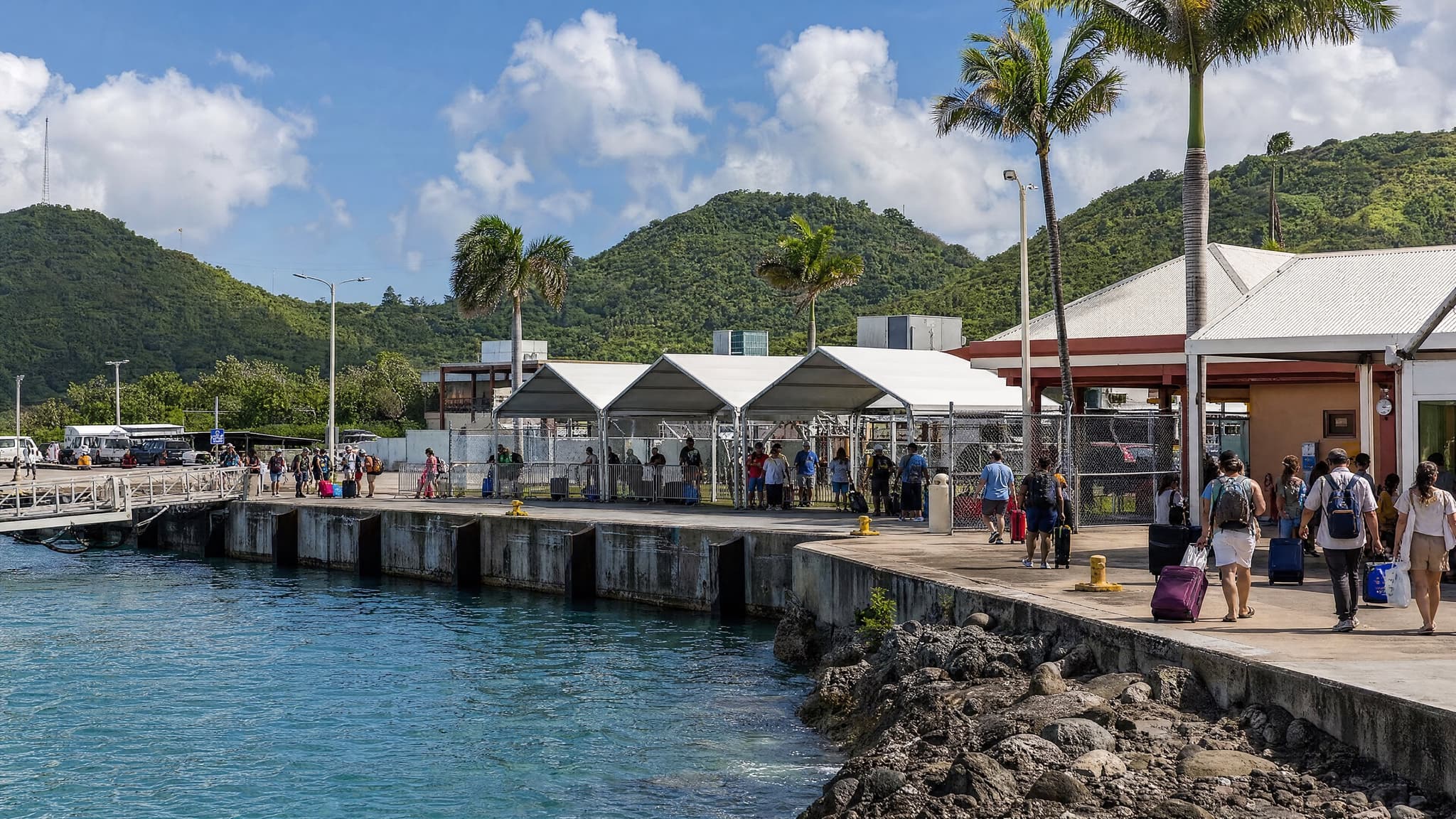
Getting to Culebra at all is its own logistics question, ferry from Ceiba or a boat day from Fajardo, and our Culebra ferry guide covers it honestly. Flamenco Beach itself, for the record, is a swimming beach first: the famous water is clearest over sand, and the snorkeling is at its rocky ends and the neighboring beaches above, not off the main crescent.
Vieques: La Chiva
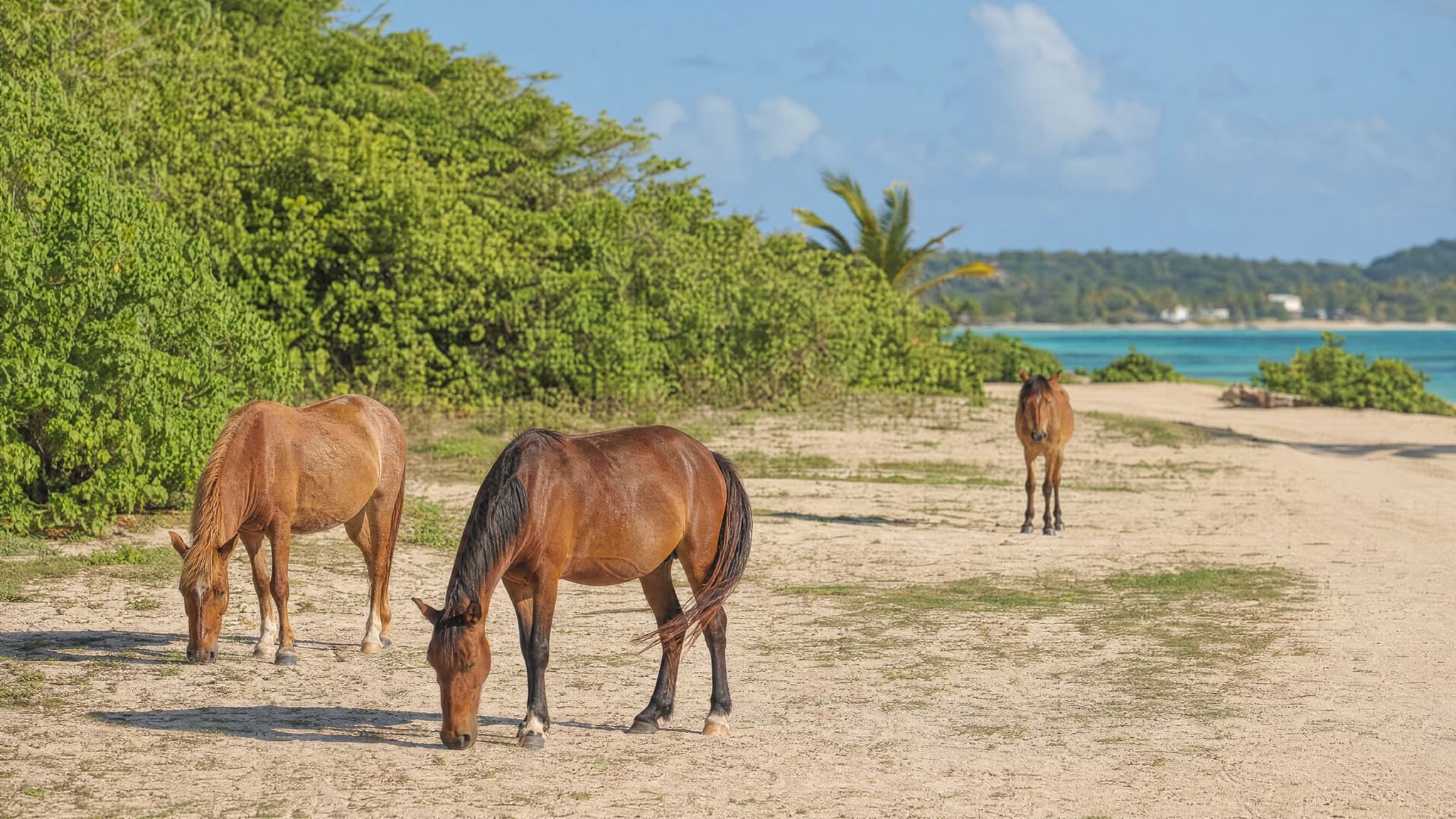
On Vieques, the standout shore snorkel is La Chiva, the long turquoise beach inside the Vieques National Wildlife Refuge on the former Navy lands. Reef patches sit close to shore along the rocky sections, and the classic entry is at the far end of the beach road, where a small cay sits just off the sand with shallow water between it and the island. Numbered entrances off the refuge road let you pick a stretch of beach nearly to yourself midweek. The refuge setting means zero facilities, so carry in water and shade, and note the same island logistics as the bio bay: Vieques is a ferry or small plane away, covered in our Culebra vs Vieques comparison.
Steps Beach, Rincon: the seasonal one
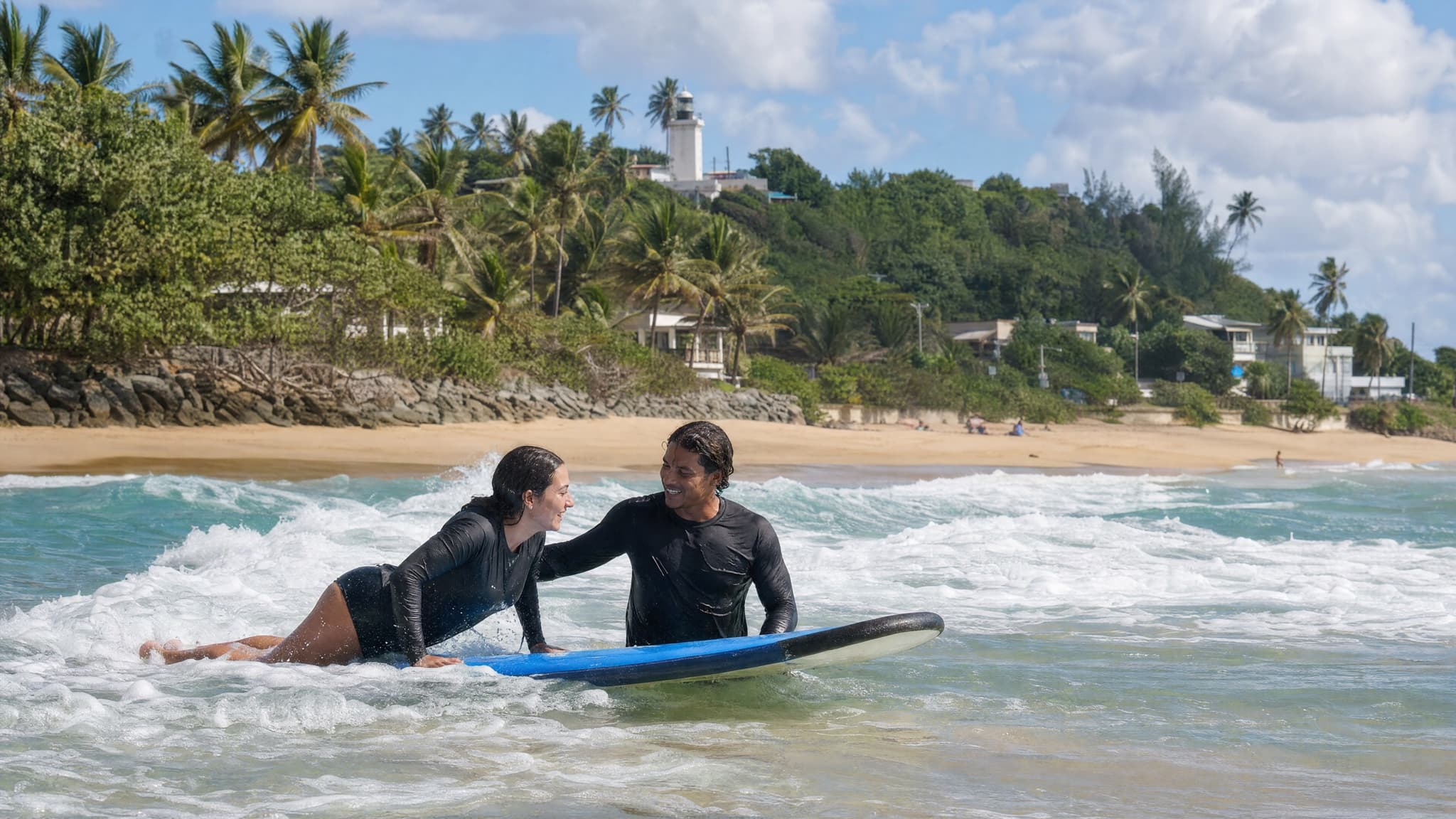
Steps Beach (Playa Escalera) fronts the Tres Palmas Marine Reserve in Rincon, home to some of the healthiest elkhorn coral stands in the Caribbean, and in season it is a west-coast highlight: swim out from the sand and the elkhorn thickets start within easy reach. The rule that matters is seasonal and absolute: this coast is a world-class surf zone in winter, with swells that can run well over ten feet, and Steps is only a snorkel spot in the calm window, roughly mid-April through October. If the waves are working, do not snorkel here; people get pushed onto rock and coral trying. Check conditions locally on the day, not the season average. Our Rincon destination page covers how the town's whole rhythm flips between surf winter and snorkel summer.
Boat trips: what the money buys
The east coast is where a boat earns its price, because the best water sits off uninhabited cays you cannot walk to.
Icacos from Fajardo is the classic half-day-plus: an undeveloped island of reef, sand, and mangrove. The catamaran snorkel and picnic cruise is the relaxed sail-and-swim version; the all-inclusive powerboat day leans into food, drinks, and floating gear with snorkeling optional rather than the whole point; and the snorkel-and-slide boat adds a water slide and flexes between Icacos and Vieques waters depending on conditions, a detail the operator is upfront about.
Culebra by water solves the ferry problem outright. The catamaran day sail from Fajardo builds snorkel stops into the crossing; the all-inclusive Culebra beach day departs Fajardo directly with food and gear handled; and the ferry-plus-guided-snorkel package rides the public ferry like a local, then pairs Flamenco time with a guided turtle swim, the budget-shaped version of the day.
What every boat option shares: gear provided, a crew reading the conditions, and reef stops chosen for that day's water instead of a fixed pin on a map. That last part is worth more than it sounds in winter.
Want your whole trip planned for you?
Tell us who is coming and when, and we will build your days around what you actually want.
When the water cooperates
The pattern to plan around is swell, not temperature; the water is warm all year. Winter (roughly November through March) sends North Atlantic swell onto the north and west coasts: great for surfers in Rincon and Aguadilla, wrong for snorkeling at Steps and rough at exposed north-coast spots, while Escambron's protected cove often stays workable and the east coast, Fajardo's cays, Culebra, Vieques, remains the most reliable snorkeling on the island. Summer (roughly mid-April through October) flattens the west coast and opens Steps Beach, at the price of hurricane-season weather watching from June onward; a passing system can cancel boat days even when no storm comes near, so keep a flexible day in the plan. Mornings beat afternoons almost everywhere for wind, light, and visibility.
Gear, briefly and honestly
Boat tours and the guided Escambron swim include gear, so gear ownership only matters for the shore spots. If you will snorkel more than twice, a cheap own mask that fits beats any rented one, and fit is the entire game: test the seal by inhaling gently through your nose with the strap off. Water shoes matter more than fins at rocky entries like Carlos Rosario and Escambron's edges. A flotation vest or belt is standard on tours for a reason; distances at Tamarindo and La Chiva feel short until the wind picks up. Skip the full-face masks for anything beyond calm-surface floating; a standard mask and snorkel clears easier if chop or effort spikes.
Let us plan this trip for you
We check every spot against live sources, share your dates and we'll build the rest.
The free 7-day itinerary
The exact 7 days we send friends
One email with our day-by-day Puerto Rico plan: which beach on which day, where to eat, and the tours worth booking. No spam, unsubscribe anytime.
Reef etiquette, the non-negotiable part
The reefs you will swim over here are recovering ecosystems, and two of the best spots are legally protected reserves. The rules are simple. Touch nothing and stand nowhere except sand; a fin-kick or a moment of standing kills coral that took decades to grow, and fire coral bites back anyway. Keep distance from turtles and rays, and never chase or feed them; at Tamarindo the turtles keep grazing when people float calmly and leave when people lunge. Take nothing, not even empty-looking shells, and mind that Luis Pena is a no-take reserve by law. Wear reef-safe sunscreen, mineral-based, and better yet, cover up with a rash guard and put lotion only on what remains. Anchor your trash in your bag; the refuge beaches and Culebra have no bins on purpose.
Who should temper expectations
Snorkeling here rewards the right expectations. Divers who know Bonaire or Cozumel will find the easy shore reefs here patchier and the visibility more variable; Culebra's reserve is the honest exception. Anyone whose trip is confined to San Juan in a big winter-swell week may find Escambron plus a Fajardo boat day is the whole realistic menu, which is still a good menu. And nobody should book any trip around a guaranteed turtle: the sightings at Escambron and Tamarindo are regular precisely because the animals are wild, unbothered, and on their own schedule.
Find your hotel by area & budget
Compare current Puerto Rico rates across the major booking sites in one place, in USD. Most rooms are free to cancel.
Building it into your trip
For most itineraries the pattern that works is one city snorkel early (Escambron, an hour or two, no logistics), one east-coast boat day mid-trip, and one Culebra or Vieques shore day if the islands are in your plan anyway. The 7-day itinerary slots these against the bio bay and El Yunque days, and the beach guide carries swim-safety notes for every beach we cover, including the ones this guide deliberately left off the snorkel list.
FAQ
Where is the best snorkeling in Puerto Rico? Culebra, specifically Playa Tamarindo and the trail-access Carlos Rosario inside the Luis Pena Channel no-take reserve. On the main island, Escambron in San Juan is the best easy shore entry, and the Fajardo boat trips to Icacos cover the offshore reefs.
Can you snorkel for free in Puerto Rico? Yes. Escambron (small parking fee), Tamarindo and Carlos Rosario on Culebra, La Chiva on Vieques, and Steps Beach in Rincon in season are all free shore entries once you are there. Boats and guides cost money; the water does not.
When can you snorkel Steps Beach in Rincon? Roughly mid-April through October, when the winter surf drops. In winter this coast runs serious swell and Steps is a surf spot, not a snorkel spot; check conditions locally on the day either way.
Are there sea turtles? Yes, seen regularly at Escambron in San Juan and at Tamarindo on Culebra, where they graze the seagrass. They are wild animals on their own schedule, so no operator can honestly guarantee a sighting, and keeping a calm distance is both the rule and the way they stay around.
Do I need to bring my own snorkel gear? Not for boat trips or guided swims, which include it. For the free shore spots you need your own mask, snorkel, and ideally water shoes; a well-fitting cheap mask beats a rented one, and reef-safe sunscreen or a rash guard belongs in the bag regardless.