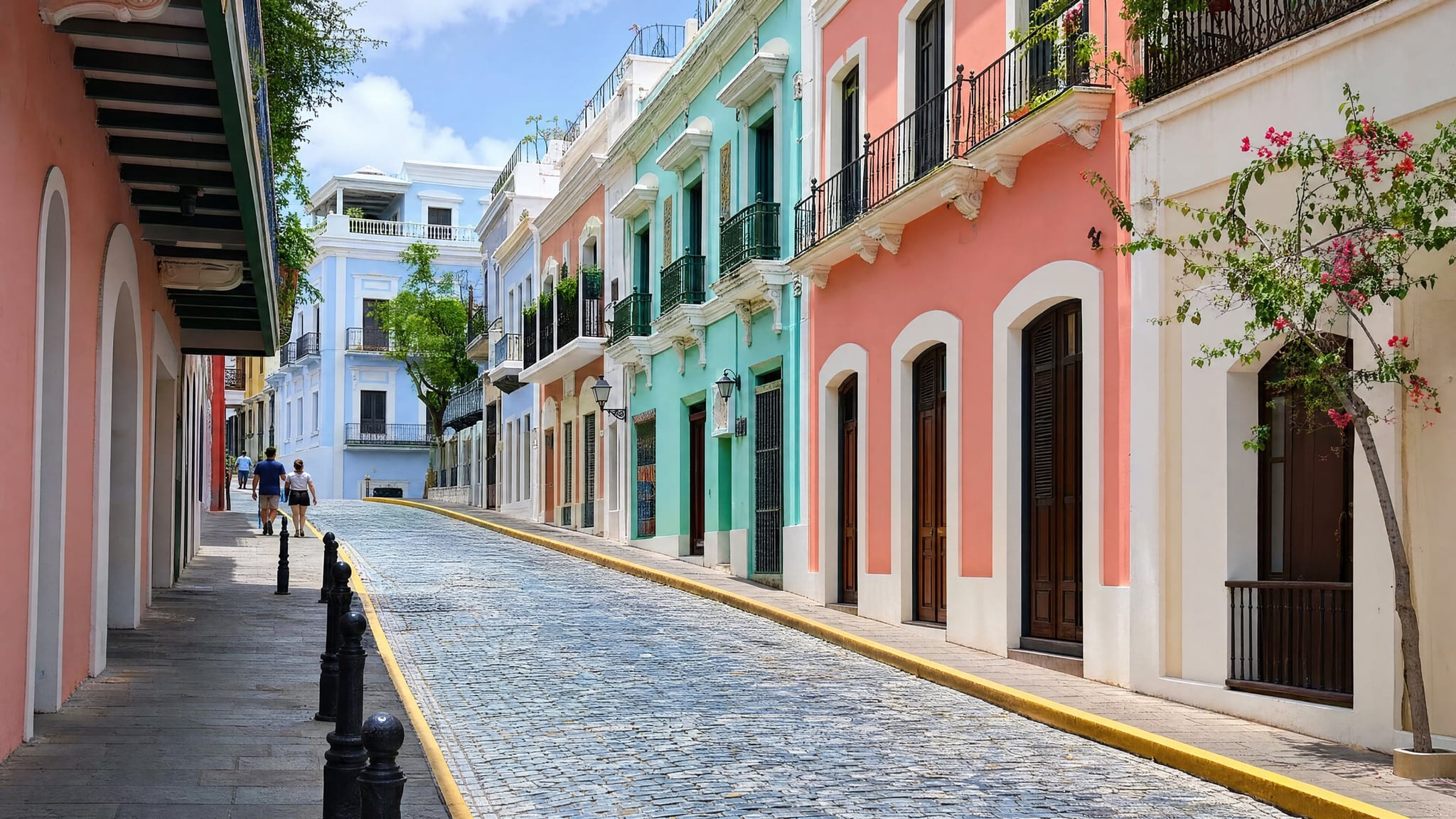
500 years of streets in half a square mile
Old San Juan, walked properly
The forts, the food worth the walk, when the cruise crowds actually thin out, and where sunset looks best. A local walking guide, not a highlight reel.
The short answer
Plan a full day: both forts on one $10 ticket, a walk down the blue adoquin streets, and a real meal, not a quick snack. Go early or late to dodge the cruise-ship midday crowd, and end at one of the harbor-facing spots for sunset. Parking is genuinely tight, so plan to park once and walk.
Where to start
El Morro and San Cristobal
Two forts, one ticket, the reason Old San Juan is a UNESCO-adjacent name in the first place.
Castillo San Felipe del Morro and Castillo San Cristobal are both part of the San Juan National Historic Site and share one admission ticket that covers both forts. Admission runs $10 for visitors 16 and older, with 15 and under and active US military free. Hours run approximately 9 a.m. to 5 p.m. daily, and the National Park Service runs occasional fee-free days around Martin Luther King Jr. Day, National Park Week in April, and Veterans Day in November. Confirm exact current hours and fees at nps.gov/saju before you go, since federal fees and hours do change.
El Morro sits at the harbor entrance with sweeping ocean views and a wide lawn locals fly kites on; San Cristobal, the larger of the two, guards the land approach with a maze of tunnels and lookout points. Seeing both in one visit is realistic; give yourself at least two to three hours between them.
The blue-grey streets underfoot
The distinctive blue-grey cobblestones paving much of Old San Juan are called adoquines, originally brought over as ballast stone and laid by the Spanish colonial government in the 1800s. They give the old city its color as much as the painted buildings do, and they are genuinely uneven in places, so comfortable, closed shoes matter more here than on a normal city walk. They can also get slippery when wet.
Where to actually eat
Food worth the detour
Three spots that keep coming up for very different reasons: a tasting menu, a local lunch counter, and farm-to-table in a plant-filled townhouse.
Fine Dining
Marmalade
A tasting-menu restaurant and wine bar in a restored Old San Juan storefront, built around a rotating multi-course menu of French technique with Caribbean ingredients.
See the full listingLocal Favorite
Cafe Manolin
A Puerto Rican lunch counter on a quiet Old San Juan side street, family-owned since the 1950s and serving home-style Creole plates to a mostly local crowd.
See the full listingRomantic
Verde Mesa
Farm-to-table dining in a plant-filled historic Old San Juan townhouse, built around whatever is freshest from local farms that week, with a menu that changes accordingly.
See the full listingMore of the old city's kitchens on the full dining guide.
End the day here
Where to catch sunset
The same harbor walls that made Old San Juan a fortress make it one of the better sunset views on the island.
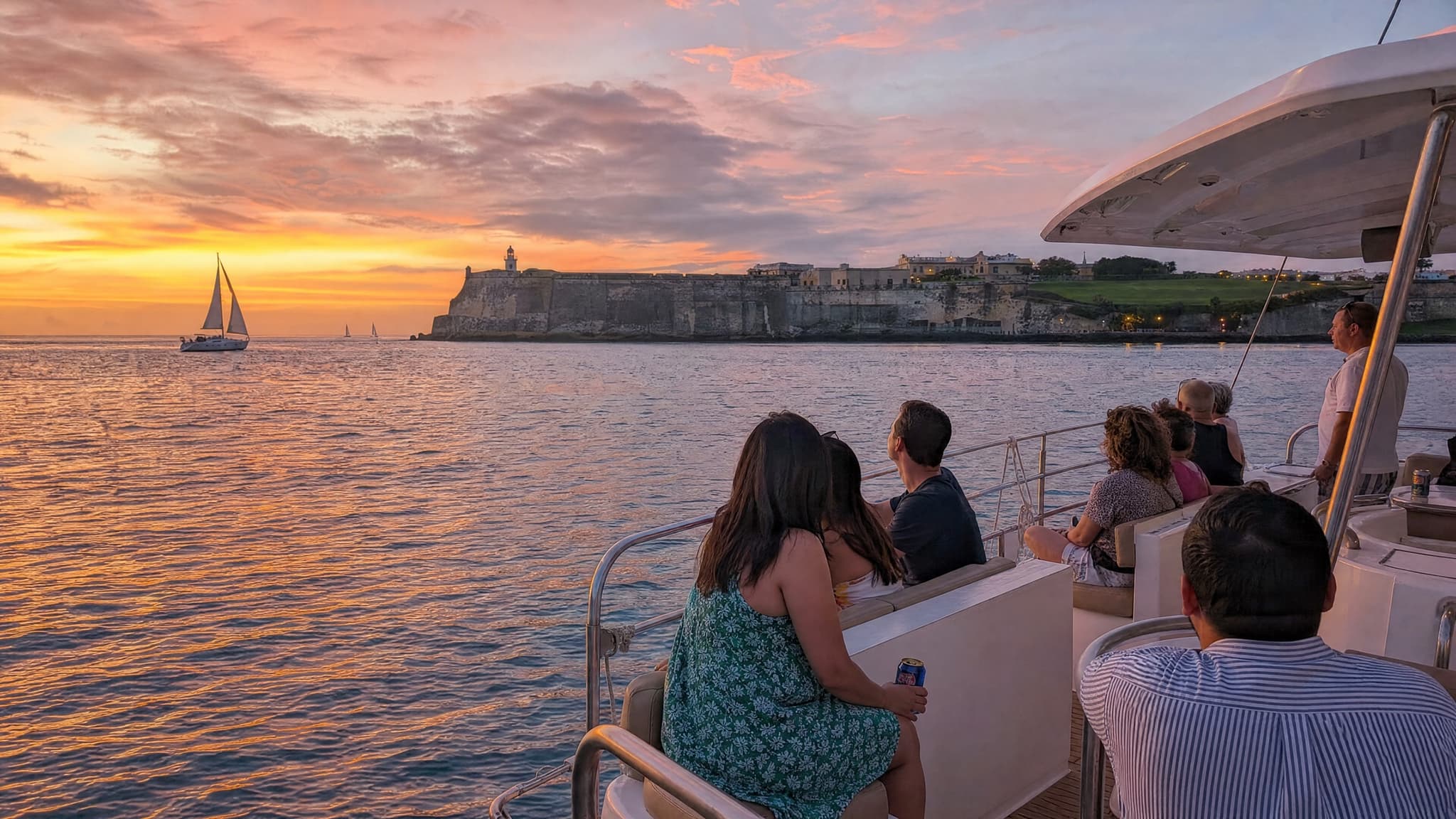
El Morro's lawn and the Paseo del Morro walkway along the harbor wall both face open water to the west, making them reliable, free sunset spots once the fort itself closes for the day. For a different angle, an evening harbor boat ride puts you on the water looking back at the fortress walls and the old city skyline as the light goes down, a shorter, calmer outing than a full day tour.
Cruise-day rhythms
San Juan is a major cruise port, and the old city's main streets fill up fast once ships dock, usually mid-morning, and thin out again by late afternoon as passengers head back to their ships. Arriving early or timing your visit for late afternoon into evening avoids the densest part of the day.
Parking, honestly
Street parking is limited and competitive, particularly on cruise-ship days. Paid garages exist at the edges of the old city and fill up too. Park once, ideally near the edge of the historic core, and walk the rest; the whole neighborhood is compact enough that a car becomes a liability once you are inside it.
Or let someone else handle it
Old San Juan tours worth booking
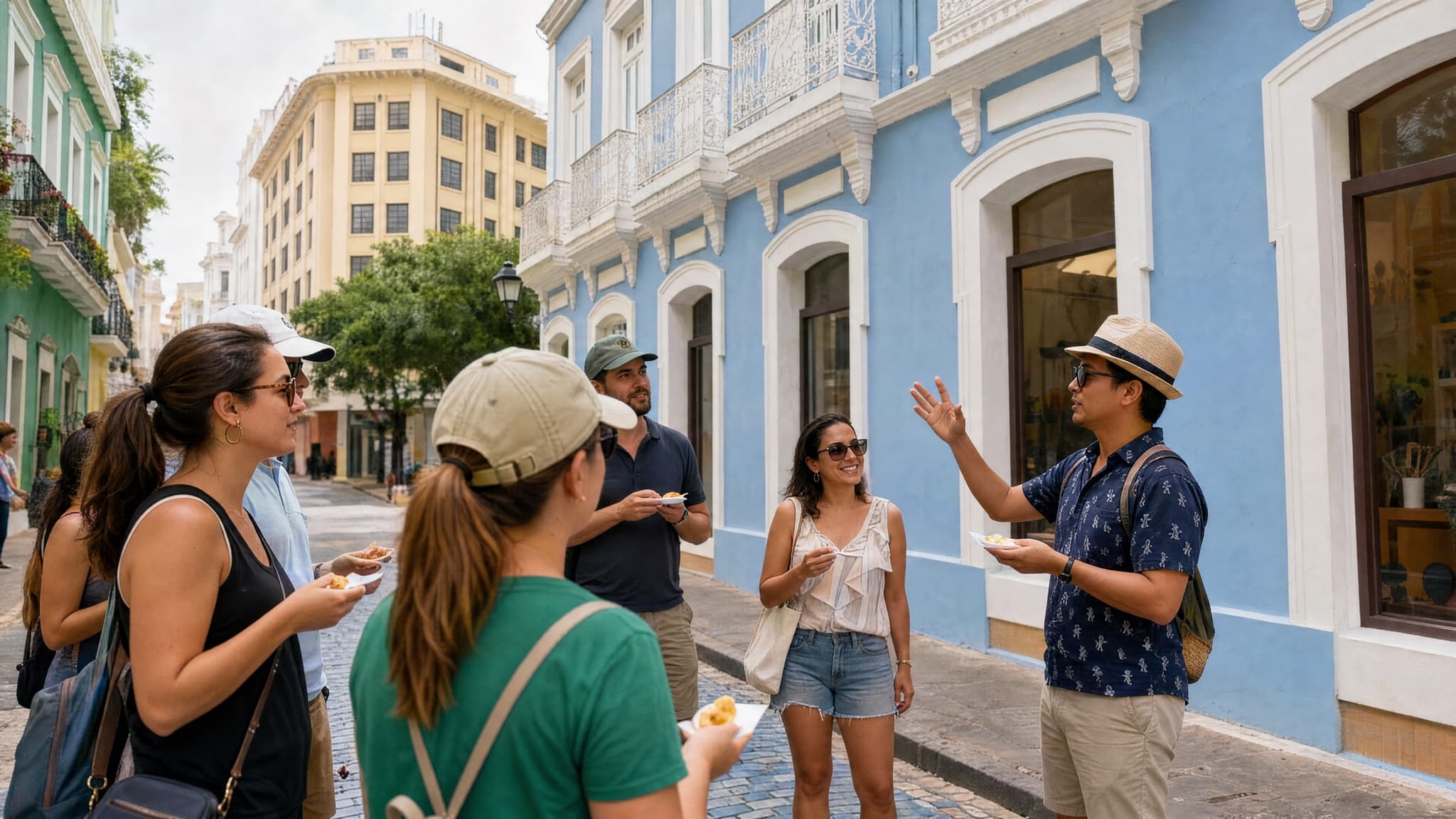
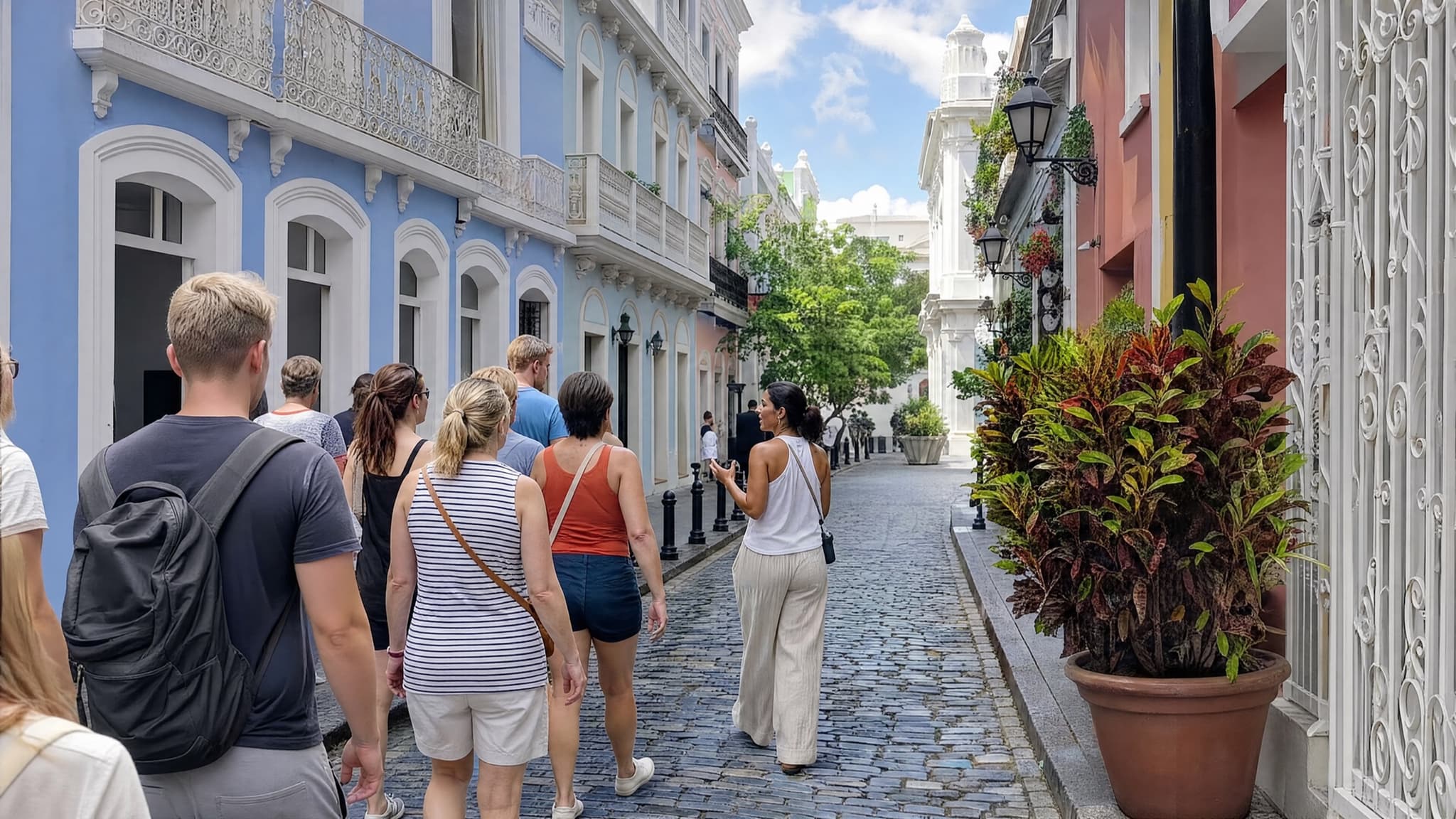
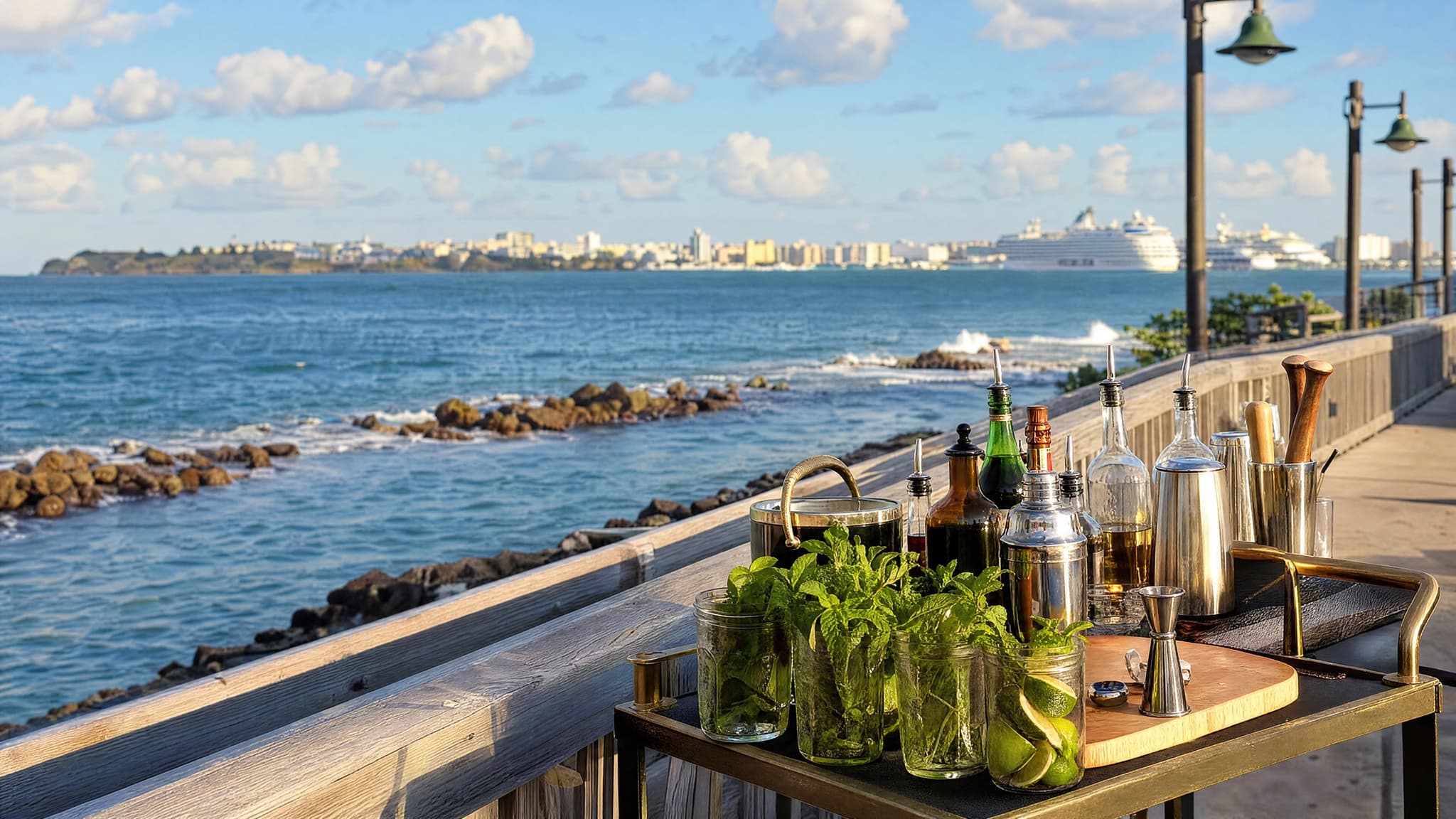
A guided walk, a food crawl, a mixology class across the bay, or a sunset boat ride, the four ways to spend a structured afternoon here.
Old San Juan questions, answered straight
Is one day enough for Old San Juan?
For the highlights, yes. One day covers both forts, a walk down the blue cobblestone streets, and a proper lunch or dinner. If food is your priority, budget a second day or a dedicated food tour, since the neighborhood rewards slower, repeated visits more than a single rushed pass.
What is the traditional food of Old San Juan?
Mofongo (mashed fried plantain, usually stuffed), alcapurrias and bacalaitos (fried fritters), mallorca sandwiches, and cafe con leche come up again and again as the dishes locals and repeat visitors point to. A short walking food tour is an efficient way to try several of these in one outing instead of committing a full meal to just one.
Are the Old San Juan forts free?
No, not generally. El Morro and San Cristobal share one admission ticket, priced at $10 for visitors 16 and older, with 15 and under and active US military free. The National Park Service does run occasional fee-free days, including around Martin Luther King Jr. Day, National Park Week in April, and Veterans Day in November; check nps.gov/saju for the current year's exact dates.
Is parking easy in Old San Juan?
Not really, and that is the honest answer. Street parking is limited and competitive, especially on cruise-ship days. Paid garages exist but fill up, and many visitors find it easier to park once near their hotel or a garage at the edge of the old city and walk the rest, since the historic core itself is compact and walkable.
Eat well everywhere
The full dining guide
Beyond the old city, the island's best kitchens, kiosks, and lechoneras.
See where to eatFit it into the week
The 7-day itinerary
See which day we would send you into the old city.
Read the itineraryWant your day in Old San Juan mapped out?
Tell us if a cruise ship is in port on your dates and how you like to eat, and we will time your walk around it.
Plan my Puerto Rico trip