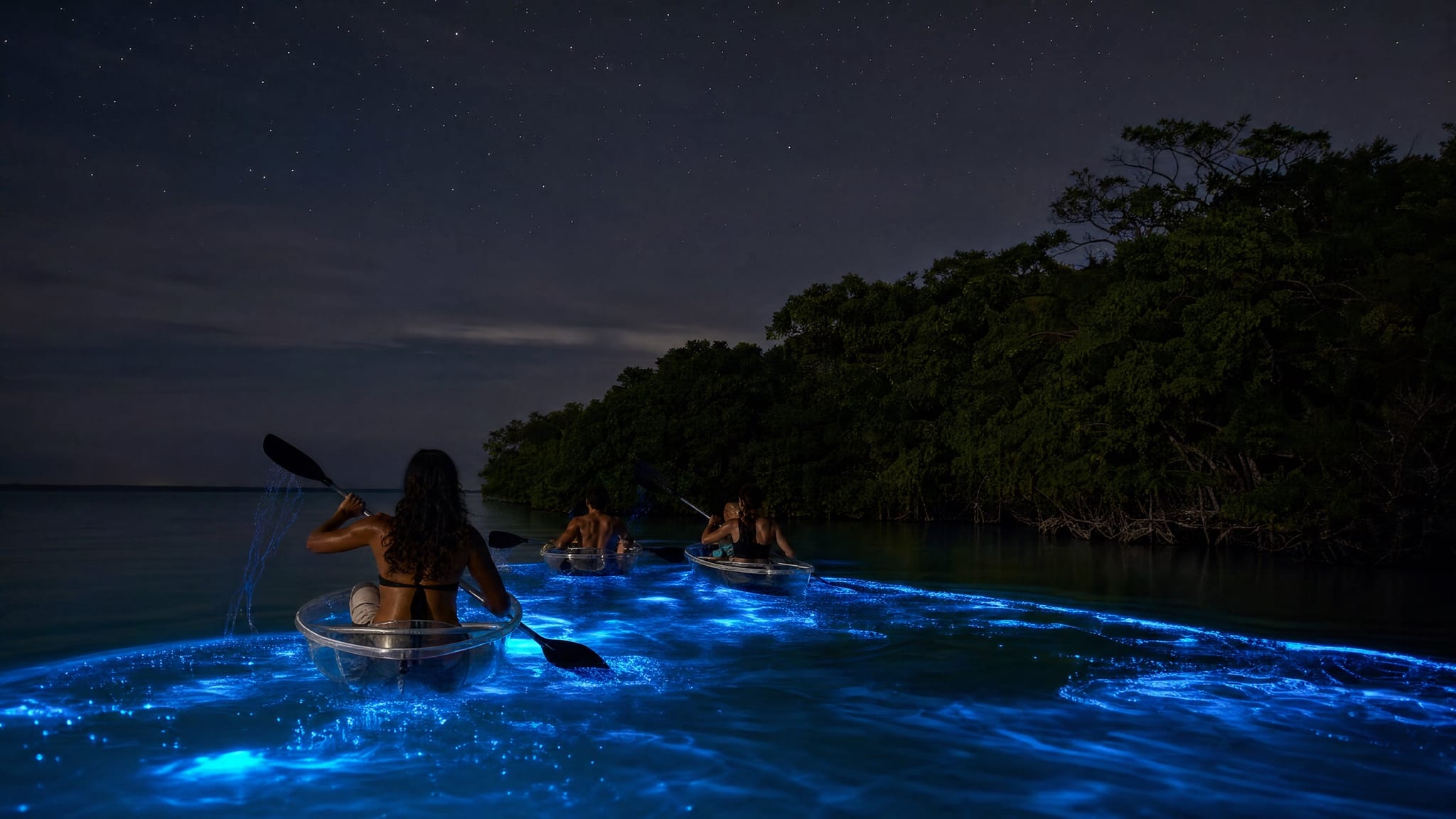
The signature Puerto Rico experience
Which bioluminescent bay is actually right for you?
Puerto Rico has three bioluminescent bays, not one, and most guides never explain which one fits your actual trip. Here is the honest comparison, the moon-phase logic that makes or breaks the night, and which bay to book based on where you are staying and what you want out of it.
Updated August 29, 2026, moon-phase rules checked on the operators' own pagesThe short answer
If you want the brightest glow on record and can spare an overnight, go to Mosquito Bay, Vieques. If you are based in San Juan and want the easiest day trip, go to Laguna Grande, Fajardo. If your trip runs through the west or south coast, La Parguera is the bay that fits your route, and the only one where any operator offers swimming at all, though rules differ by operator, so confirm before you book. All three only work on nights close to a new moon, so the moon calendar decides your date before anything else does.
Three bays, three trips
The three bays, compared
Every guide mentions all three exist. Almost none tells you honestly which one to actually book.
Mosquito Bay, Vieques
BrightestOfficially recognized by Guinness World Records as the brightest bioluminescent bay on the planet. The catch is getting there: Vieques is a separate island, reached by ferry or a short flight from the main island, then a permitted tour operator takes you out after dark. Reputable operators hold a permit from Puerto Rico's Department of Natural and Environmental Resources (DRNA), and DRNA closes this bay to tours on the night before, the night of and the night after the full moon, so it rests three nights every lunar month. Because of the extra travel leg, this bay works best paired with an overnight on Vieques rather than a rushed day trip from the main island.
Laguna Grande, Fajardo
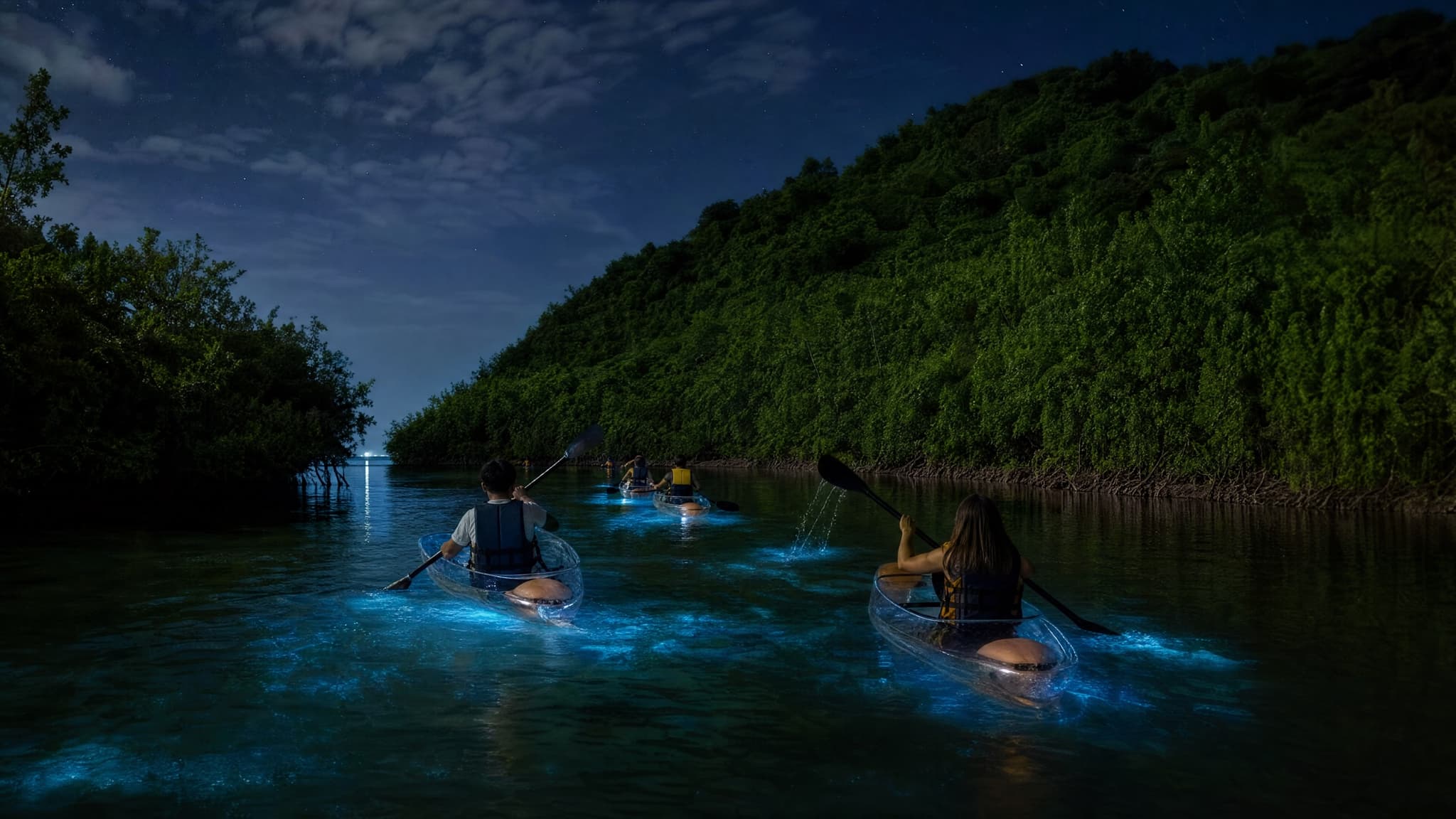
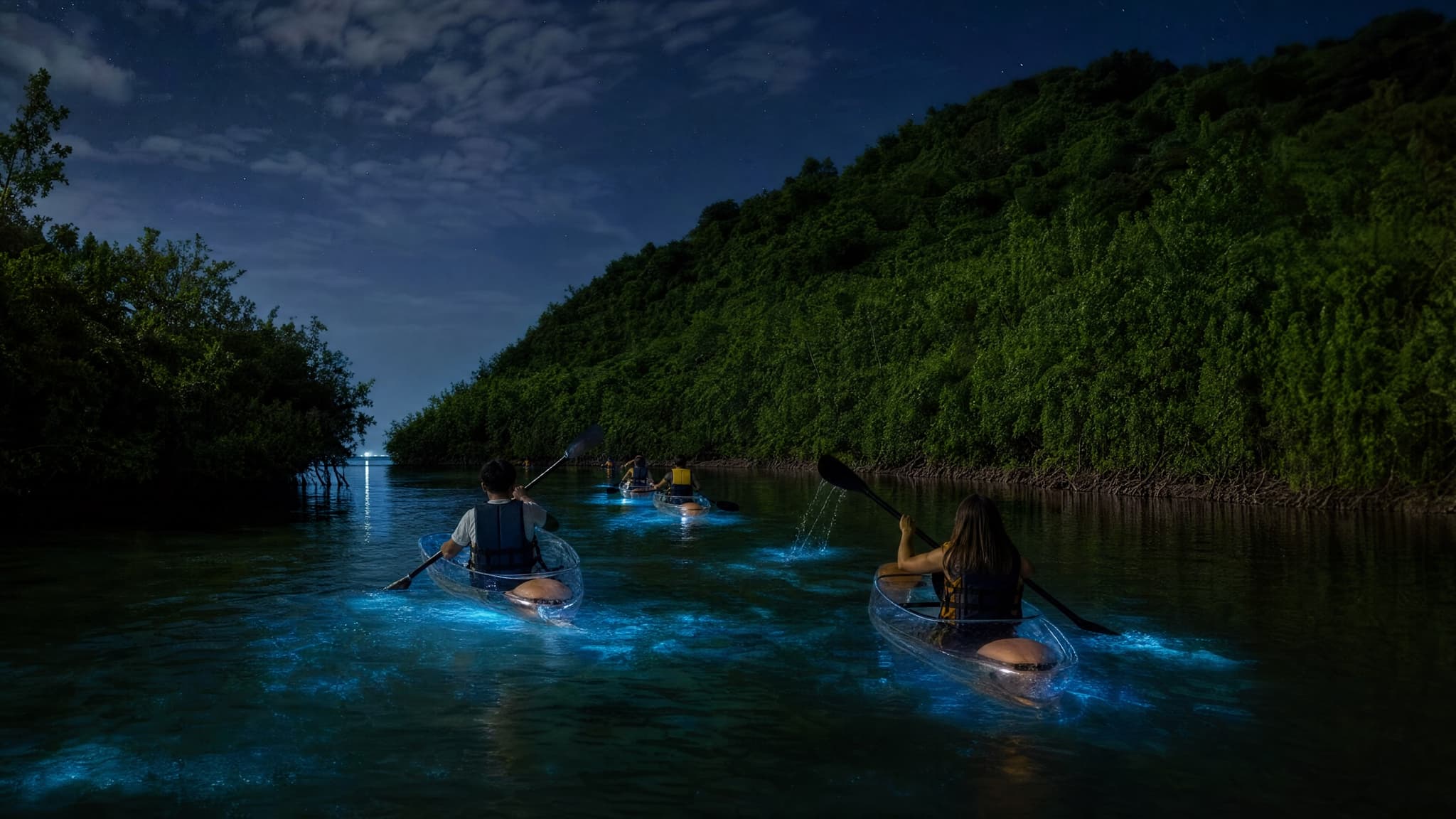
Most accessibleWidely considered Puerto Rico's most accessible bio bay, because it sits on the main island, a manageable one to one and a half hour drive from San Juan rather than a separate island trip. A DRNA permit is required to enter the lagoon, but in practice nearly every visitor gets this handled automatically by booking a licensed kayak or boat tour, since going in on your own is not the normal path. This is the bay for travelers who want the bioluminescence experience without rearranging their whole itinerary around it, and it is best known specifically for kayak tours through the mangrove channel.
La Parguera, Lajas
The southwest oneLa Parguera is the odd one out: it sits on the southwest coast, geographically distinct from the other two, so it is a longer trip from San Juan, roughly two hours each way, and it is the only bay where swimming has historically been on the menu at all. Operators differ on that today: some boat tours have advertised swim time on dark nights, while the pedal-powered water bike tour we link keeps everyone on the bikes and states that DRNA regulations do not allow swimming in the bay. If getting in the water matters to you, confirm it with your specific operator before booking.
The one thing that decides your date
The moon phase matters more than the bay
Book your bay first. Then check the moon before you lock a date, not after.
Bioluminescence is visible on any night, but it is only worth traveling for on dark nights, roughly three to five nights on either side of a new moon. A full moon washes the glow out almost completely with ambient light. That is why Mosquito Bay is closed to tours for the three nights around the full moon, and why a Fajardo tour on a full-moon night, which does still run, is the weakest version of the trip rather than a cancelled one.
The practical move is to check a moon phase calendar for the actual week you are traveling, once your flights are booked, rather than assuming any random Tuesday will work. New moon dates shift every month, so do not build your itinerary around a date you saw on a blog post; recalculate it for your own trip. If your travel window happens to land on or near a full moon, that is the week to skip the bio bay and put El Yunque or Culebra in its place instead.
Getting on the water
Kayak, clear kayak, or water bike
The three bays do not all move you the same way.
Kayak or clear kayak
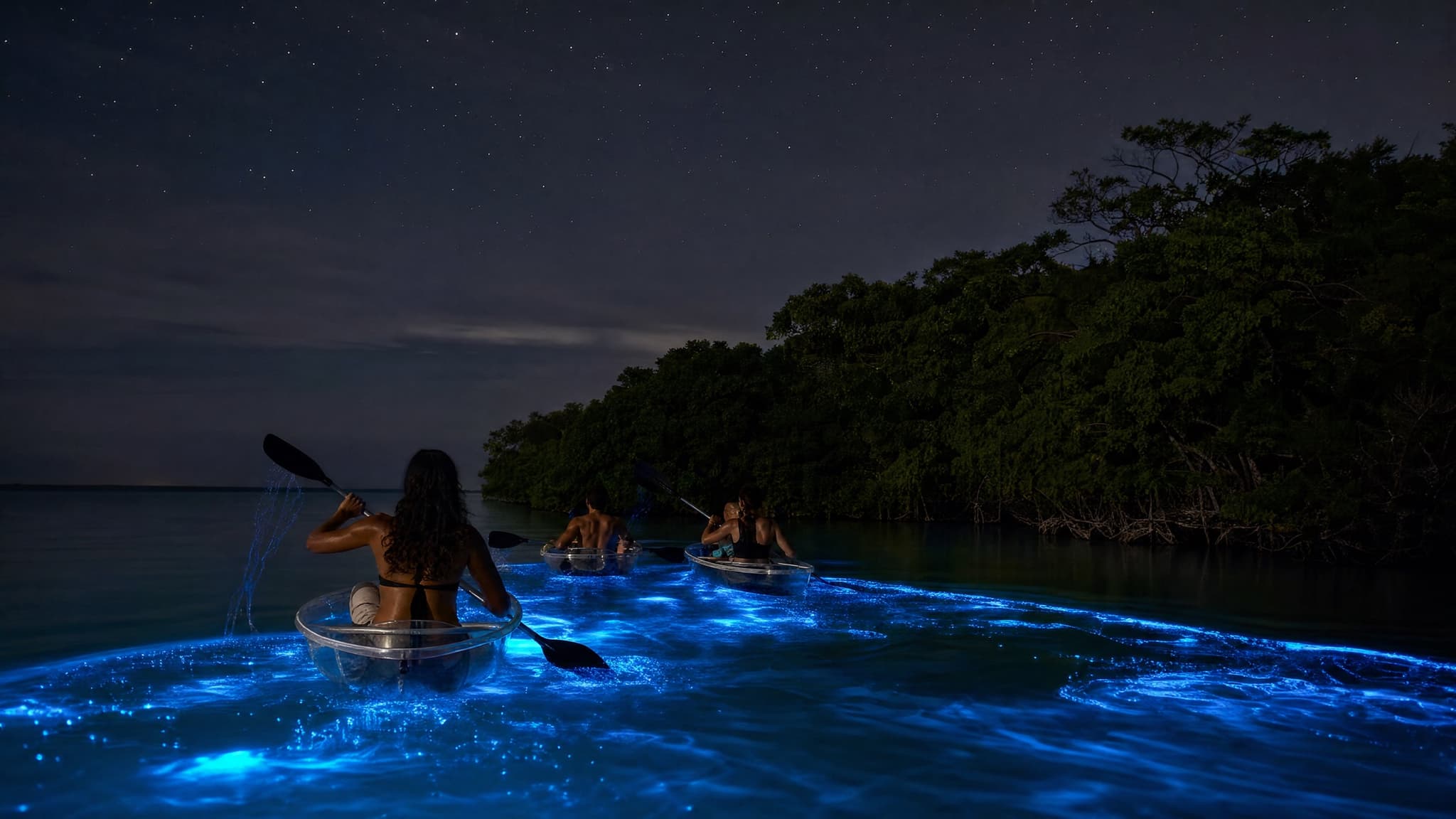
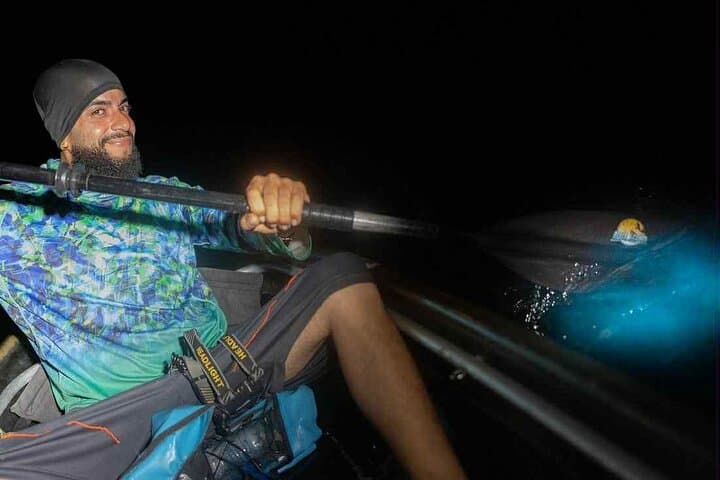
The standard way into both Fajardo and Vieques: a guided paddle through a mangrove channel and out onto the open lagoon, with the glow trailing off every stroke. It is active, more physical than a boat ride, and puts you closest to the water. Vieques also offers a fully clear kayak option, which shows the glow underneath the hull as well as around the paddle.
Water bike, on the south coast
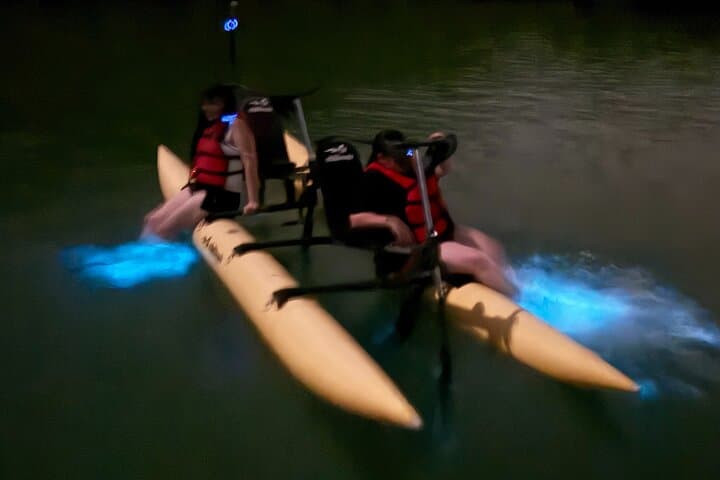
La Parguera runs a different format again: pedal-powered water bikes with catamaran-style twin hulls, noticeably more stable than a kayak, crossing calm water and mangroves out to the bay and stirring the glow with your hands and feet. Boat tours also operate here; formats and rules, including whether any swim time is offered, vary by operator, so check the details of the specific tour you book.
Set expectations honestly
Your phone will mostly fail here
This is the part most tour operators skip over.
Bioluminescence is faint to the naked eye and fainter still to a phone sensor. A phone camera generally cannot capture the glow the way it actually looks in person, no matter how good the phone is, and most operators do not allow tripods, flashes, or extended long exposures on the water for safety and wildlife-protection reasons. Go in planning to watch it, not to film it. The honest highlight of the trip is your own hand or paddle lighting up in the dark, not a photo you bring home.
Book the right bay
Bio bay tours worth booking
Every card below books through the bay it actually describes, kayak or boat, exactly as detailed above.
Bio bay questions, answered straight
Which bioluminescent bay is the brightest?
Mosquito Bay on Vieques. It holds the Guinness World Record for the brightest bioluminescent bay on the planet. Laguna Grande in Fajardo and La Parguera in Lajas are both real, worthwhile bio bays, just not the record holder.
Can you swim in the bioluminescent bay?
Only possibly at La Parguera, and never at the other two: swimming is not allowed at Mosquito Bay or Laguna Grande under current tour-operator practice, largely to protect the bioluminescent organisms and keep the water undisturbed for paddlers. At La Parguera the operators themselves differ: some boat tours have advertised swim time on dark nights, while the water bike operator we link states that DRNA regulations do not allow swimming in the bay. If swimming in the glow is the point of your trip, confirm it directly with your specific operator before you book rather than assuming.
Is the bioluminescent bay worth it?
For most first-time visitors, yes, with one honest caveat: it is a phenomenon your eyes see far better than your phone camera does. Go in expecting a quiet, slightly eerie glow around your paddle and your hand in the water, not a neon photo. People who go in with that expectation tend to come out amazed. People chasing an Instagram shot tend to come out disappointed.
When is the best time to see the bioluminescent bay?
Within roughly three to five nights of a new moon, on a clear night with little cloud cover. The full-moon closure people repeat is a Mosquito Bay rule rather than an island-wide one: DRNA keeps Mosquito Bay on Vieques closed to tour companies on the night before, the night of and the night after the full moon, three nights per lunar month. Fajardo's Laguna Grande has no such closure: operators there run through the full moon and the glow simply reads dimmer. Check a moon phase calendar for your actual travel dates rather than assuming any given night will work.
Do I need to book a bio bay tour in advance?
Yes, especially for Mosquito Bay in Vieques, where tours have been reported to sell out two to three weeks ahead during peak season and around new-moon windows. Book as soon as your dates are set, not once you land.
Build the week around it
The 7-day itinerary
See where a bio bay night actually fits into a week in Puerto Rico.
Read the itineraryMore to book
All tours and experiences
El Yunque, Culebra, Old San Juan, and everything else worth booking.
See every tourNot sure which night fits your trip?
Tell us your dates and where you are staying, and we will tell you which bay actually fits, and whether your week even lands on a usable moon phase.
Plan my Puerto Rico trip