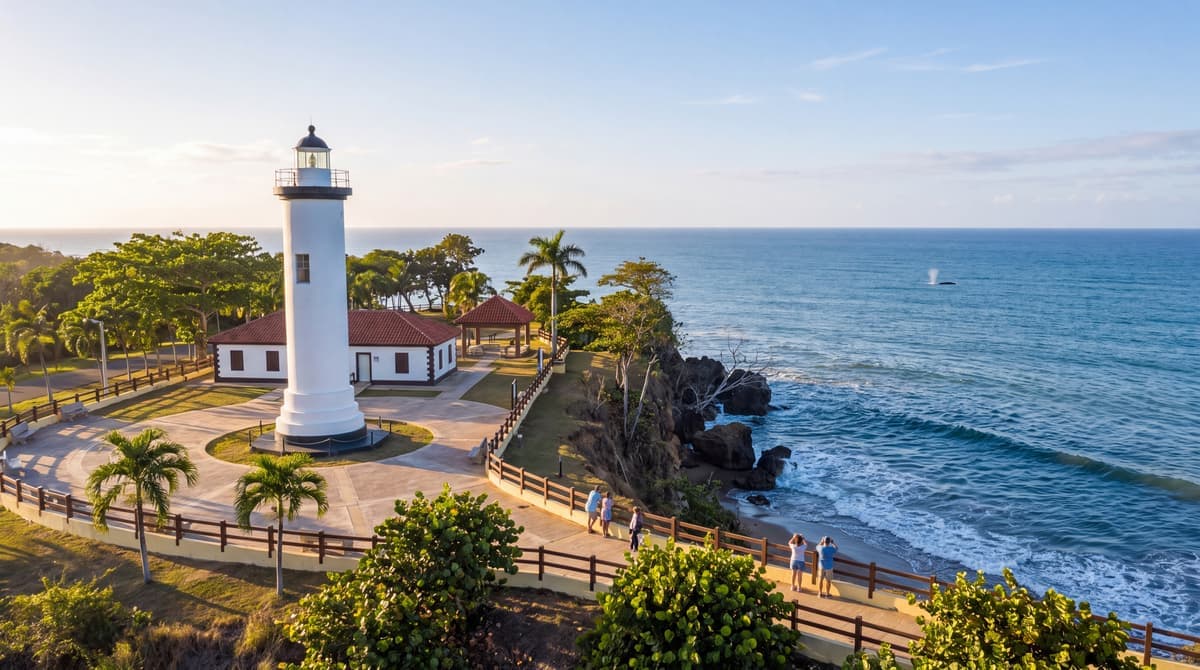
Ask most first-time visitors what they hope to see in Puerto Rico and you will hear beaches, El Yunque, maybe a bioluminescent bay. Almost nobody expects whales. So it surprises people to learn that every winter, humpbacks, some of them 40 feet and up, swim past the island's west coast, close enough that you can watch them from a park bench with a lighthouse behind you and nothing between you and the water but a railing. It is one of the most genuinely wild things you can do here, and one of the least advertised.
It is also a specific, seasonal, and honestly hit-or-miss thing, which is why so much of what is written about it online oversells it. You will see confident claims of a "90 percent success rate" or Rincon billed as the "whale watching capital of the Caribbean." We would not lean on either. Sightings are common in a good week of the right month and completely absent in a bad one, and no reputable local will promise you a whale. What we can do is tell you exactly when to come, where to stand, what a boat trip really gets you, and how to watch without breaking the law or bothering the animals.
When humpbacks actually pass Rincon
The season is winter, and only winter. North Atlantic humpbacks spend their summers feeding in the cold waters off New England and Canada, then migrate south to the warm Caribbean to breed and calve. They reach Puerto Rico's west coast roughly from December through March. A few scouts show up on the shoulders, from late fall into the first days of April, but the reliable window is those four winter months, and if you want the single best odds, come in February. Ask around Rincon and February is the month everyone names.
That timing lines up neatly with the island's dry, high-season stretch, so a whale trip pairs naturally with the rest of a winter visit. If your dates are still open, our month-by-month guide to when to visit and our look at Puerto Rico in December both cover how the whale window sits against weather, crowds, and hotel prices.
Browse 30 vetted Puerto Rico experiences
Instant confirmation, free cancellation up to 24h.
Why the west coast, and why here at all
This is not luck of the map. Puerto Rico sits at the eastern edge of what scientists call the West Indies breeding ground, the main winter nursery for the entire North Atlantic humpback population, the same broad region that includes the Dominican Republic's famous Silver Bank. Rincon faces west into the Mona Passage, the deep channel between Puerto Rico and the Dominican Republic, and the whales travel that corridor. Aguadilla and Isabela, just up the coast, share the same water and see whales too, but Rincon is the town built around the season.
The animals themselves are the North Atlantic humpback, adults running roughly 40 to 50 feet long, the ones known for their long pectoral fins, their tail-fluke dives, and the full-body breaches that people drive across the island hoping to catch. Mothers arrive to give birth and nurse in the calm, warm water, which is exactly why the rules further down matter so much.
Watching from land: the lighthouse is the spot, and it is free
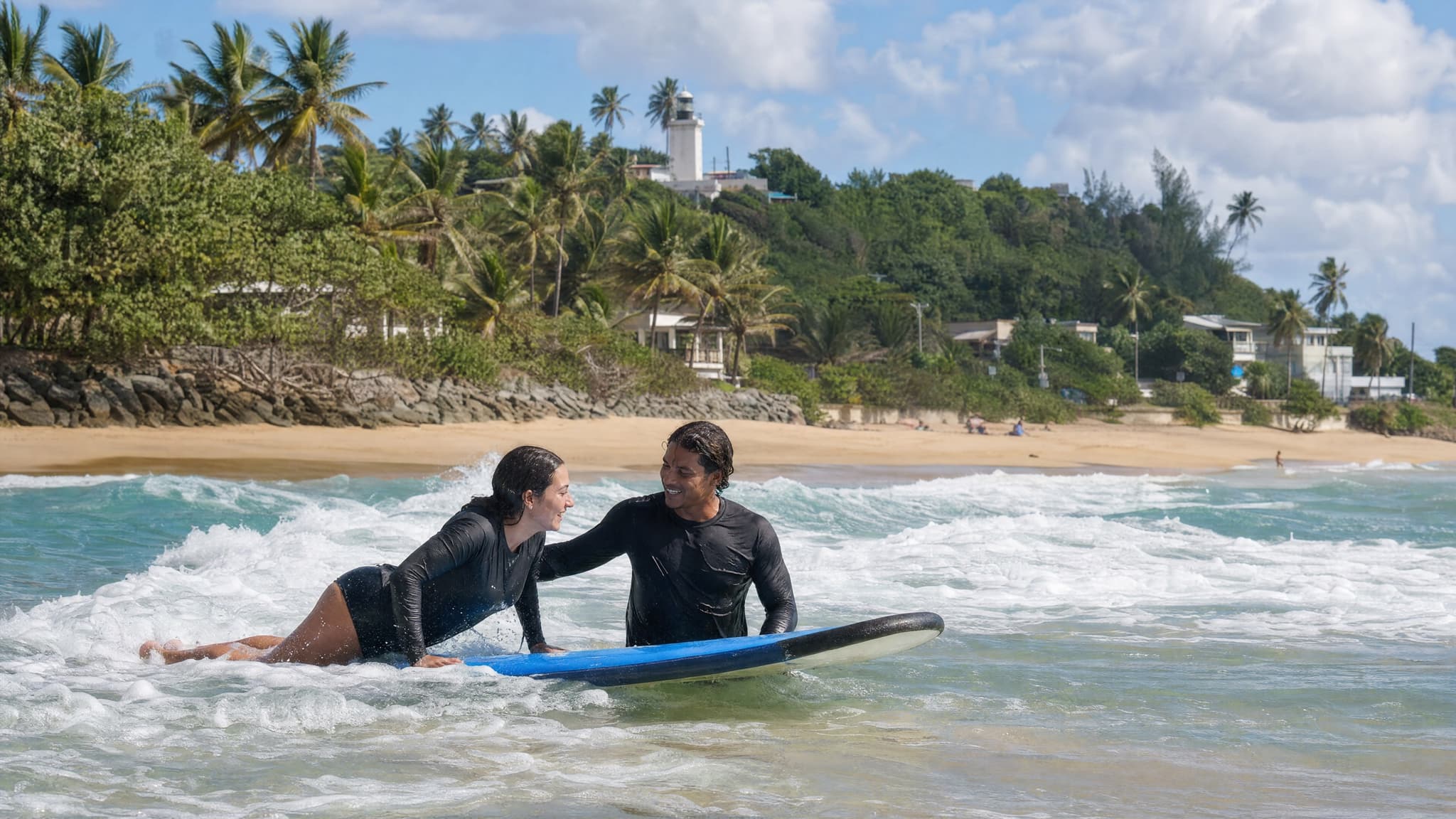
The best-known perch is Punta Higuera Lighthouse Park, the little headland park at the western tip of Rincon, also called El Faro. Admission is free, parking is free, and there is an observation deck built for exactly this. It sits right beside Domes Beach, so you can pair a morning of watching with the beach, and the town's surf breaks are a few minutes away. Rincon's own tourism office calls the lighthouse the perfect place to catch the migration, and on a good winter afternoon you will find a quiet crowd of locals and visitors doing just that, scanning the horizon for a spout or a splash.
Bring binoculars, bring patience, and come in the afternoon when the light is behind you rather than in your eyes. The honest caveat: land watching is free and low-stress, but it is a waiting game. You may stand at that railing for an hour and see nothing but blue water, and then a whale blows half a mile out and the whole deck gasps at once. That is the deal. If you need a guarantee, this is the wrong activity; if you like the idea of a wild animal on its own schedule, it is hard to beat.
Want your whole trip planned for you?
Tell us who is coming and when, and we will build your days around what you actually want.
Taking a boat out
A boat gets you off the shore and, on a good day, closer to the action, and it puts a captain who watches this water daily between you and the guesswork. Rincon and neighboring Aguadilla have a handful of operators running winter whale trips, from short sunset sails to longer charters that run the coast between Domes Beach and Desecheo Island.
Here is the honest part. Most of these are small, direct-book local outfits rather than the kind of tour you reserve online months ahead, and many run on minimums, a set number of passengers before the boat leaves, so a trip can be scrubbed or rescheduled by weather or a light booking day. Prices move around by season and by operator, so we are not going to quote you a figure that will be wrong by the time you read this; call or message ahead and confirm when you are actually in town. You will find the west coast's vetted sailing and snorkel day trips among our things to do, and our Rincon area guide covers the town as a base. Be a little skeptical of any pitch built around getting in the water to "swim with" the whales, for reasons that come down to the law.
The free 7-day itinerary
The exact 7 days we send friends
One email with our day-by-day Puerto Rico plan: which beach on which day, where to eat, and the tours worth booking. No spam, unsubscribe anytime.
The rules, and why they protect your trip too
Whales here are protected, and the distance rules are not suggestions. Federally, NOAA Fisheries asks everyone to stay at least 100 yards, about the length of a football field, from any large whale, humpbacks included. Puerto Rico's own natural-resources regulations go further and get specific: boats must stay at least 100 meters from a whale, swimmers may not come within 50 meters, vessels have to trail behind rather than steer into an animal's path, and approaching a mother with her calf is flatly prohibited. Violations carry steep penalties.
That is the real reason to treat "swim with the whales" marketing carefully. The law keeps swimmers 50 meters off, and the calves that make this coast special are precisely what you are not allowed to crowd. A responsible operator keeps its distance and lets a curious whale close the gap on its own terms, which, pleasingly, is also when the best encounters happen. Watching well and watching legally turn out to be the same thing here.
Let us plan this trip for you
We check every spot against live sources, share your dates and we'll build the rest.
Building a whale trip into a Puerto Rico week
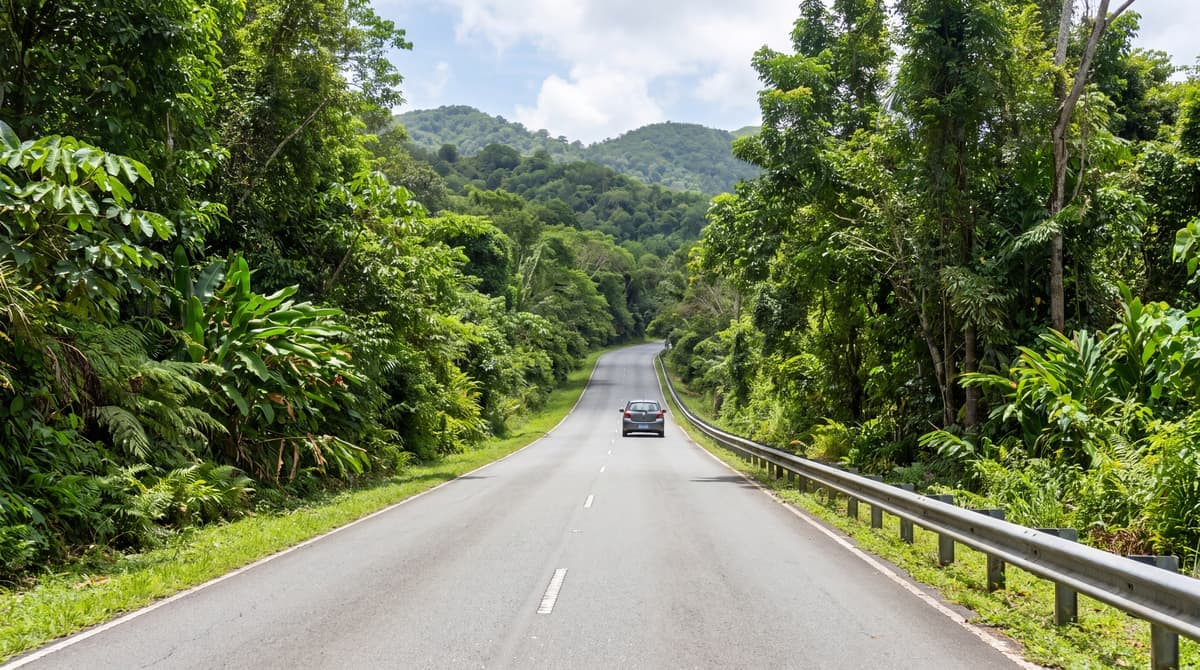
The one logistical truth about Rincon is that it is far. It sits at the opposite end of the island from San Juan, roughly two and a half hours west by car, and there is no practical way to do it without your own wheels. This is firmly an overnight, not a day trip; if you are weighing what actually works as a day run from the capital, our day trips from San Juan guide draws that line, and Rincon is on the far side of it. For the drive, whether you even need a car and the car rental basics both apply, and out here they apply doubly.
One timely note for the 2026 to 2027 winter season: the west coast has its own airport, Rafael Hernandez in Aguadilla (BQN), about half an hour north of Rincon, which can beat the long drive from San Juan entirely. Avelo Airlines is adding new nonstop service into Aguadilla in late November 2026, from Lakeland in central Florida (starting November 18) and Tweed-New Haven in Connecticut (starting November 19), which puts the whale coast within a single short flight for part of the East Coast. Confirm schedules directly with the airline, since new and seasonal routes change.
Give yourself two or three nights on the west coast and the whales become one thread in a good winter stretch: the surf season is running, the sunsets are the island's best, and the water is calm enough for snorkeling on the right days. Come in February if you can, stand at the lighthouse with a coffee, and let the ocean decide. When it delivers, you will remember it longer than any beach.
FAQ
When is whale watching season in Puerto Rico? Winter. Humpbacks pass the west coast roughly from December through March, with a slim chance on the shoulders from late fall into early April. February is the most reliable month.
Where is the best place to see whales in Puerto Rico? Rincon, on the west coast. The best free spot is Punta Higuera Lighthouse Park (El Faro), which has an observation deck and sits next to Domes Beach. Aguadilla and Isabela, just up the coast, share the same viewing water.
Do you need a boat, or can you watch from shore? You can watch for free from land at the Rincon lighthouse, which is how many people do it. A boat gets you offshore and, on a good day, closer, but most Rincon and Aguadilla whale trips are small, direct-book local operators that depend on weather and passenger minimums. Neither option guarantees a sighting.
Are whale sightings guaranteed? No. Ignore any "90 percent success rate" or "whale watching capital of the Caribbean" claim; those are repeated across marketing copy without evidence. Sightings are common in a good week of the right month and absent in a bad one.
How close can you legally get to a whale in Puerto Rico? NOAA recommends staying at least 100 yards (about a football field) from large whales. Puerto Rico's own regulations require boats to stay at least 100 meters away and swimmers to stay at least 50 meters away, prohibit steering toward a whale, and prohibit approaching a mother with her calf. Penalties are steep.
How far is Rincon from San Juan, and do I need a car? Rincon is at the far western end of the island, roughly two and a half hours by car from San Juan, and you need your own vehicle to get there and around. It is best as an overnight rather than a day trip. If you are flying, the west coast's own airport, Aguadilla (BQN), is about 30 minutes north.