Most of our island comparisons come down to one line: Puerto Rico needs no passport and the other place does. The US Virgin Islands are the exception, and that is exactly why they are worth comparing. The USVI is the only other Caribbean destination that is US soil, so for a US citizen both trips skip the passport, the customs line on arrival and the currency exchange. With that tiebreaker gone, the choice gets more interesting: it is no longer about paperwork, it is about what kind of trip you actually want.
We are going to give you the honest version, including the parts where the Virgin Islands are the better pick. For the comparisons where the passport does decide it, our Puerto Rico vs Cancun and Puerto Rico vs the Dominican Republic guides cover two common match-ups, and Puerto Rico vs Hawaii weighs the other big US-territory beach trip.
The part that is identical: no passport, the dollar, your phone
Start with what the two destinations share, because it is a lot. Both Puerto Rico and the US Virgin Islands are unincorporated United States territories, which means a flight from the mainland to either one is a domestic flight. No passport, no immigration form, no money to change. You need a REAL ID-compliant license or a passport to clear TSA, as you do for any flight anywhere in the country since enforcement began in May 2025, but that is the mainland end, not an entry requirement for the islands. Our no passport needed explainer covers the ID rules and the few edge cases.
Both run on the US dollar, so your cards work with no foreign-transaction surprises and prices read the way they do at home. And both sit on US cell networks, so the major US carriers treat them as domestic: your phone works with no international roaming in either place. On these counts the two destinations are interchangeable, and both are genuinely easy for a first Caribbean trip. The differences are everything that comes after.
Browse 30 vetted Puerto Rico experiences
Instant confirmation, free cancellation up to 24h.
Getting there, and hopping between them
Puerto Rico has the clear edge on access. San Juan's Luis Munoz Marin airport takes nonstop flights from more than 20 US cities, and airlines keep adding winter routes, so the odds of a direct flight from your home airport are high and improving. Our flights to Puerto Rico guide tracks the routes.
The Virgin Islands are a little more work to reach. St. Thomas (airport code STT) and St. Croix (STX) have their own airports with nonstop mainland service, though from fewer cities than San Juan, and fares tend to run higher. St. John, the island most people picture when they picture the USVI, has no airport at all: you fly into St. Thomas and finish the trip on a short ferry.
A lot of travelers ask about doing both in one trip, and it is very doable, but as a flight, not a boat. There is no regular scheduled public ferry between the Puerto Rico main island and the US Virgin Islands. The hop is a quick flight instead, San Juan to St. Thomas in roughly 30 to 45 minutes, with Cape Air running several a day and JetBlue on the route too. Puerto Rico's own ferries, from Ceiba on the east coast, serve only Vieques and Culebra, not the USVI. So a combined trip is real, it just has a short plane ride in the middle rather than a ferry glide.
Getting around once you land, and the one that surprises people
Here is the difference that catches first-time Virgin Islands visitors off guard. The US Virgin Islands are the only place under US control where you drive on the left. It is a holdover from Danish and British colonial days, and the twist is that almost every car on the road is a standard left-hand-drive American import, so you sit on the side you are used to but drive on the side you are not. On St. Thomas's steep, narrow, blind-cornered roads, that takes real concentration for a day or two. It is manageable, and people do it every day, but it is worth knowing before you are at the rental counter.
Puerto Rico drives on the right, exactly like the mainland. In and around San Juan you may not need a car at all, because Uber works in the metro area and the old city is walkable, while a rental makes sense only when you head out to the rainforest, the west coast or the ferry towns. Our do you need a car in Puerto Rico guide lays out when to rent and when to skip it. The Virgin Islands lean more car-dependent outside the main towns, and because the islands are separate, seeing more than one means a ferry or a flight between them, each with its own schedule.
Want your whole trip planned for you?
Tell us who is coming and when, and we will build your days around what you actually want.
Two very different sizes, two very different trips
This is the heart of it. Puerto Rico is big: about 3,400 square miles and some 3.2 million people. The US Virgin Islands are small: roughly 134 square miles and about 87,000 people across three main islands. Puerto Rico is close to 25 times the area, and that scale is the whole point of the difference.
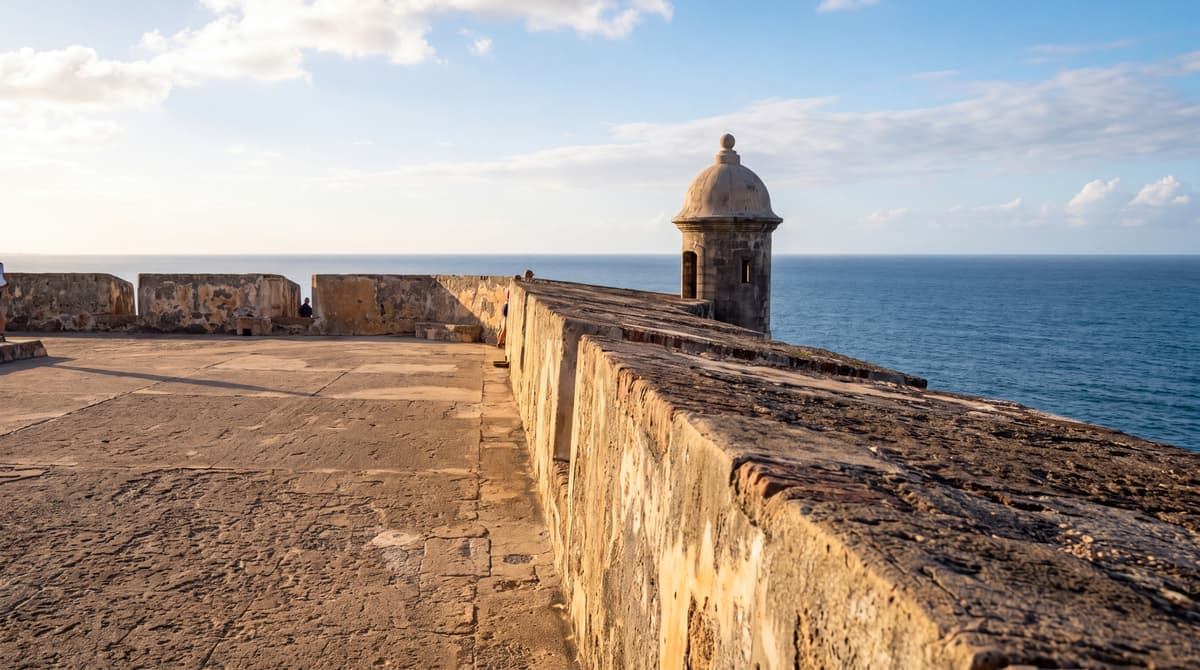
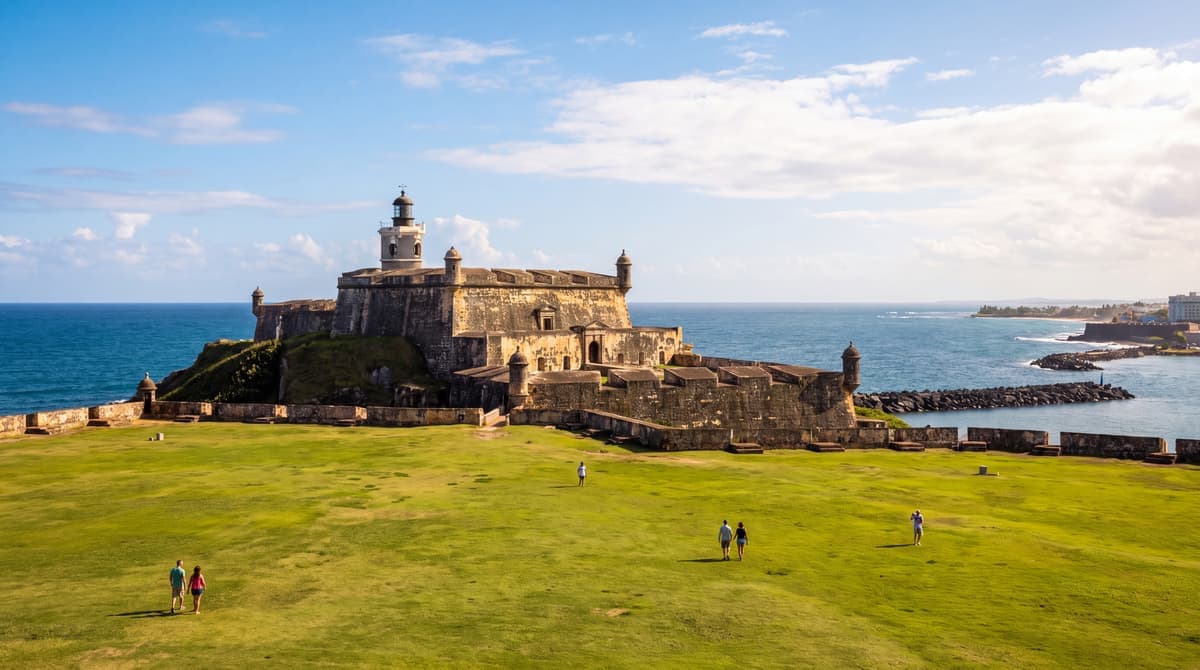
Puerto Rico is the explore-a-real-place trip. You can base in or near San Juan and reach wildly different days within a short drive. Old San Juan is a walkable, 500-year-old Spanish colonial city founded in 1521, its whole old town a UNESCO World Heritage Site guarded by the El Morro fortress. El Yunque is the only tropical rainforest in the US National Forest System, half an hour from the capital. There are mountains, a coffee country, a food scene, and the glowing bioluminescent bays. It is a place with a lot going on, which is the appeal if you like variety and the drawback if you wanted everything in one small radius.
The US Virgin Islands are the slow-down-by-the-water trip, and they wear their three islands differently. St. Thomas is the busy one, with the main airport, the cruise-ship harbor at Charlotte Amalie and the duty-free shopping the territory is known for. St. John is the quiet, green one: more than half of it is protected as Virgin Islands National Park, so it is largely undeveloped coves and hiking trails rather than towns. St. Croix, the largest by area, is the most low-key, with Danish-colonial Christiansted and Frederiksted and far fewer crowds. None of them is trying to be a do-everything island, and that is the draw. If your ideal week is a beach, a boat and not much of a plan, the USVI is built for it.
The beaches, the water, and the glowing bays
Both destinations deliver warm, swimmable Caribbean water all winter, and both have beaches worth the trip. The Virgin Islands' reputation is earned: Trunk Bay on St. John, with its marked underwater snorkel trail, and Magens Bay on St. Thomas are postcard beaches that land on best-of lists, and St. John's national-park coast hides cove after cove you reach on foot. For a trip built around simply being on gorgeous sand, the USVI is hard to beat.
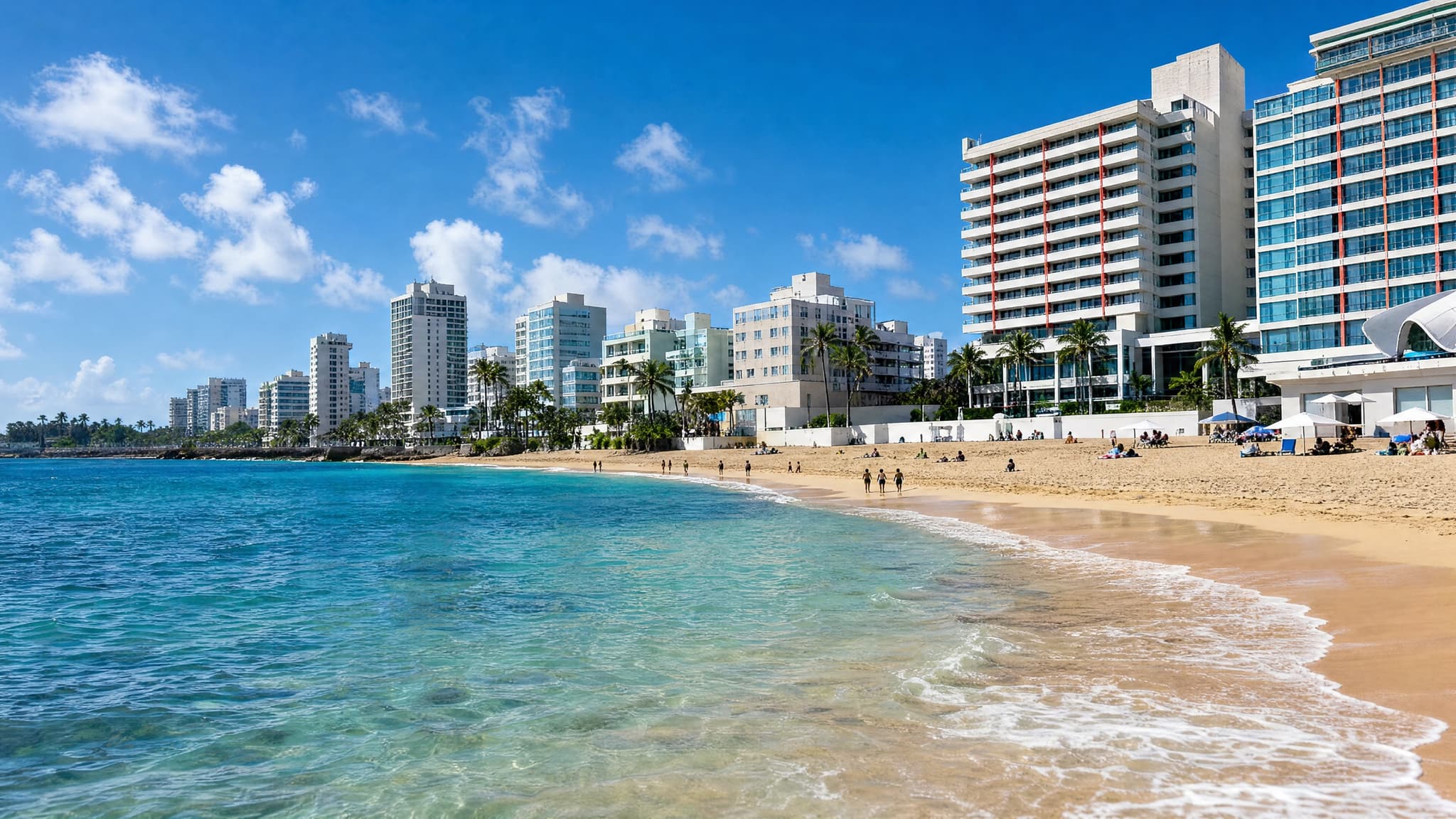
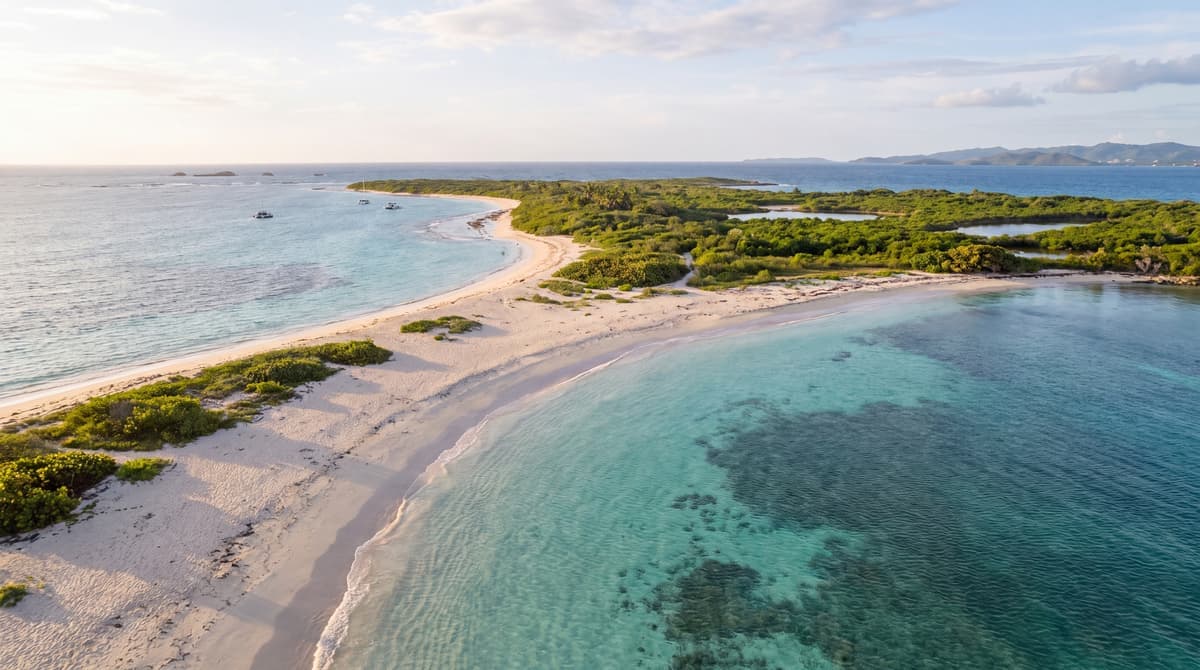
Puerto Rico answers with variety more than with any single famous strand, though it has one of those too: Flamenco Beach on Culebra regularly turns up on lists of the best beaches in the world. Beyond it you get calm city beaches in San Juan, wild offshore-island sand on Culebra and Vieques, and serious west-coast surf around Rincon, which is a different kind of beach day entirely.
On the bioluminescent bays, both have them, and Puerto Rico has the best one. Mosquito Bay on Vieques is recognized by Guinness World Records as the brightest bioluminescent bay in the world. The USVI has its own glow at Salt River Bay on St. Croix, which is a lovely night out, but Vieques is the one that holds the record. Our bio bay guide explains how to pick a night and a tour.
Let us plan this trip for you
We check every spot against live sources, share your dates and we'll build the rest.
Stay in the Puerto Rico loop
Puerto Rico news and deals, in your inbox.
Get island news, fresh activity ideas and deals when available, straight to your inbox.
Occasional emails from Puerto Rico Playbook. Unsubscribe anytime.
Email signup is temporarily paused. Please check back soon.
Browse the latest Puerto Rico storiesThe one surprise on the way home: customs
This is a quirk almost nobody mentions, and it genuinely differs between the two. Puerto Rico is inside the US customs territory, so flying home to the mainland is just another domestic arrival, with no customs line (the only inspection is a quick US Department of Agriculture check of your bags for certain plants and produce on the way out).
The US Virgin Islands sit outside the US customs zone, even though they are US soil. That means when you fly back to the mainland you do clear US Customs, filling out a declaration like an international traveler, though still with no passport required for US citizens. The upside is real, and it is why the territory leans so hard into duty-free shopping: returning US residents get a $1,600 duty-free exemption, double the standard $800 from most places, plus a generous alcohol allowance of up to five liters when at least one bottle is produced in the islands. So the USVI adds a customs step going home but hands you one of the best duty-free allowances anywhere to make up for it.
Money: which one costs more
We do not publish specific nightly figures for either destination, because rates move constantly and no honest source supports a fixed number, but the direction is not in doubt. The US Virgin Islands generally run more expensive than Puerto Rico, and St. John, with its limited, largely national-park footprint and no budget-chain sprawl, is the priciest corner of all. Puerto Rico has a far wider range, from backpacker guesthouses to luxury resorts, simply because it is a much bigger place with much more inventory, so it is easier to build a trip to almost any budget. Both are priced like US travel, pay as you go, without the all-inclusive-resort model you find in Cancun or the Dominican Republic. Our vacation cost breakdown covers what a Puerto Rico trip actually runs.
Find your hotel by area & budget
Compare current Puerto Rico rates across the major booking sites in one place, in USD. Most rooms are free to cancel.
Weather and when to go
The weather calendars are nearly identical, because the two destinations sit in the same stretch of the Caribbean. Both run their dry, high-season peak from roughly December through April, and both share the Atlantic hurricane season from June to November, with the statistical peak in September. Sargassum, the brown seaweed that can collect on exposed, open-Caribbean-facing beaches, affects both roughly April through October and spares the sheltered coasts, so it is not a reason to pick one over the other; our sargassum guide explains how to check live conditions. For either destination in storm season the honest move is the same: favor refundable bookings and buy travel insurance. Our hurricane season guide walks through the trade, and our best time to visit guide breaks Puerto Rico down month by month.
So, which one?
Here is the honest verdict, one line each.
Choose the US Virgin Islands if your ideal trip is a quiet, water-first week on world-famous beaches, you want St. John's national-park coves or a sailing-and-snorkeling rhythm, you do not mind flying a bit further, driving on the left and clearing customs on the way home, and the higher price is worth the slower pace.
Choose Puerto Rico if you want more trip for your money and your time: a 500-year-old city, a rainforest, the brightest bio bay in the world and a real food scene alongside the beaches, with the easiest flights, no customs on the way home, and driving on the familiar side of the road.
For most travelers deciding between the two, Puerto Rico is the better all-rounder and the easier logistics, while the Virgin Islands win a specific brief: the pure beach escape. When your dates are set, the booking hub, our hotels page and all our activities are where to lock in the pieces that sell out in peak season.
Browse 30 vetted Puerto Rico experiences
Instant confirmation, free cancellation up to 24h.
FAQ
Do you need a passport for Puerto Rico or the US Virgin Islands? No, not if you are a US citizen. Both are US territories, so a flight from the mainland to either is domestic, with no passport and no immigration form. You do need a REAL ID-compliant license or a passport to clear TSA, as for any US flight. The one quirk is on the return: the USVI sits outside the US customs zone, so you clear US Customs flying home, but still without a passport.
Is Puerto Rico or the US Virgin Islands cheaper? Puerto Rico is generally the better value. The US Virgin Islands run more expensive across the board, and St. John is the priciest of the three islands. Puerto Rico is a much larger place with far more lodging inventory, from guesthouses to resorts, so it is easier to match almost any budget. We do not publish specific figures for either, because rates move constantly.
Can you visit both Puerto Rico and the US Virgin Islands in one trip? Yes, and plenty of people do, but by air rather than by boat. There is no regular public ferry between the Puerto Rico main island and the USVI, so the connection is a short flight, San Juan to St. Thomas in about 30 to 45 minutes, with Cape Air and JetBlue on the route. A common split is a few days in Puerto Rico for the city and the rainforest, then a few days in the Virgin Islands for the beaches.
Which has better beaches, Puerto Rico or the US Virgin Islands? The US Virgin Islands have the stronger beach-for-beach reputation, with Trunk Bay on St. John and Magens Bay on St. Thomas, plus St. John's national-park coves. Puerto Rico offers more variety, from calm city beaches to wild offshore-island sand like Flamenco on Culebra, which still lands on world's-best lists, plus west-coast surf. Both have warm, swimmable water all winter, and Puerto Rico has the world's brightest bioluminescent bay on Vieques.
Do you really drive on the left in the US Virgin Islands? Yes. The USVI is the only jurisdiction under US control where you drive on the left, a holdover from its colonial past, and most cars are standard left-hand-drive American imports, which adds to the adjustment. It is manageable but takes a day or two of concentration, especially on St. Thomas's steep, narrow roads. Puerto Rico drives on the right, exactly like the mainland.
Is Puerto Rico or the US Virgin Islands safer? Both are US soil, so neither carries a US foreign travel advisory, and millions of Americans visit both safely every year. The sensible precautions are the ordinary big-destination ones in either place. Our is Puerto Rico safe page goes neighborhood by neighborhood on the Puerto Rico side.