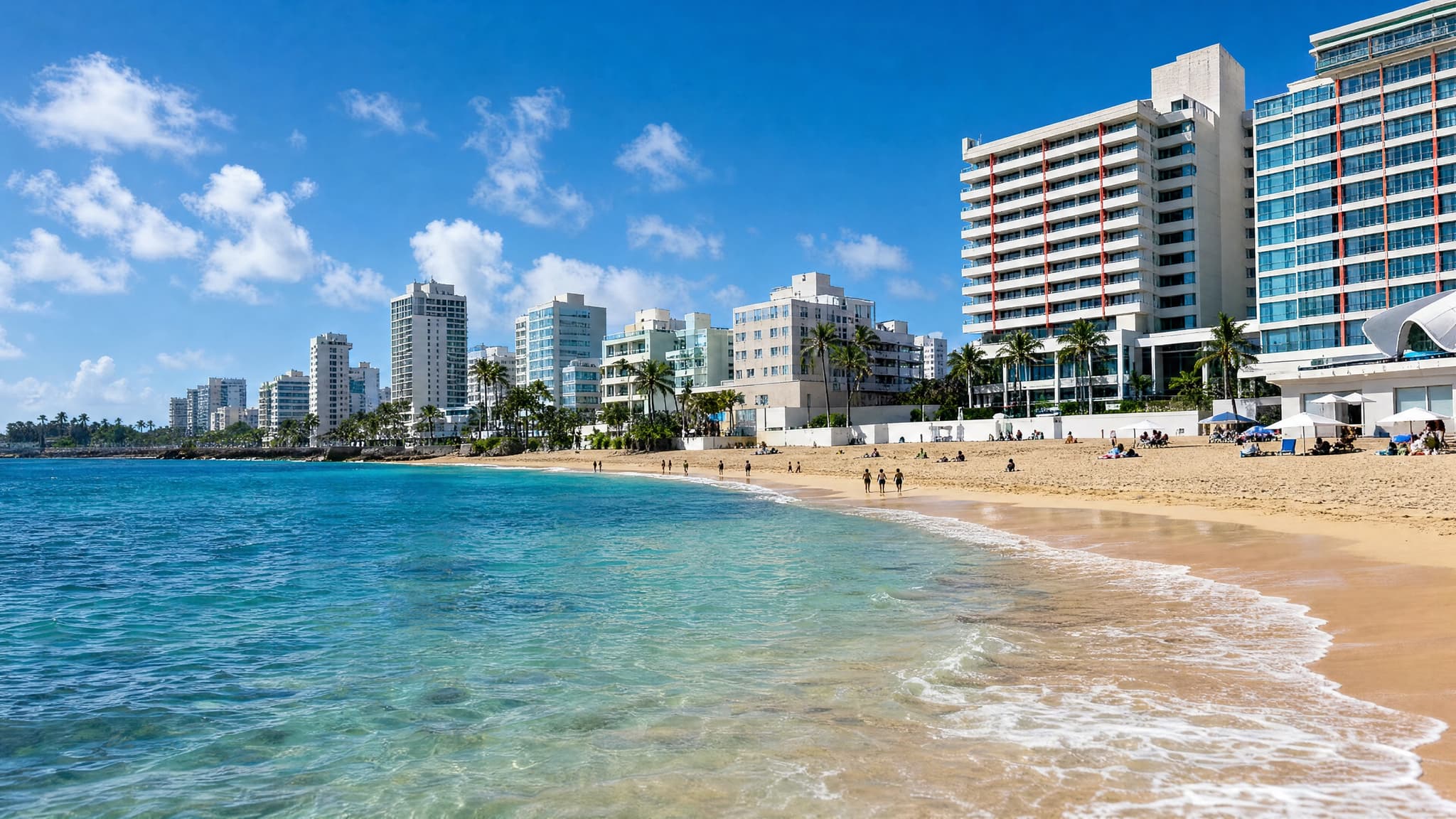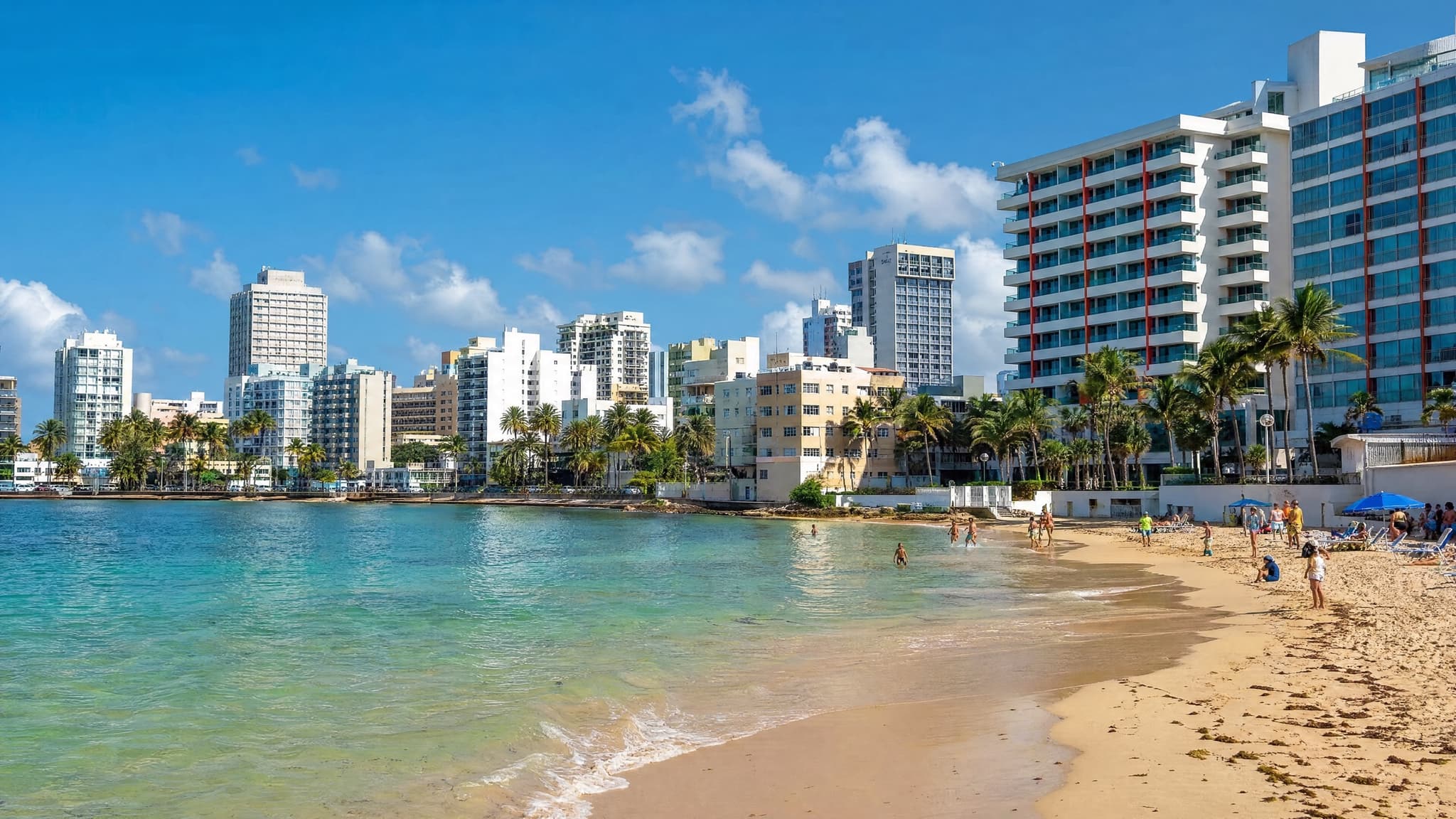
Puerto Rico and Hawaii land in the same daydream: warm water, palm shade, a US flag over it, and no passport in the drawer. That last part is true of both, which is exactly why the comparison tangles people up. If neither one needs a passport, then paperwork is not the deciding question at all. What decides it is how far you are flying, what the week costs, whether you will spend two afternoons recovering from jet lag, and which kind of place you actually want to wake up in. Here is the honest version, tilted toward Puerto Rico because that is what we cover, with every number kept to what we can verify.
The passport question, which is a tie
Start here, because most comparisons start here and then never mention it again. Both Puerto Rico and Hawaii are US soil. For a US citizen or permanent resident that means no passport, no customs declaration, no currency exchange, no immigration line, and no international roaming on your phone. The US dollar and your normal cell plan work in both places. Even the one bit of friction is shared: both run an agricultural inspection of your bags on the way out, screening for fruit, plants and pests before you fly back to the mainland. Our no-passport guide covers how Puerto Rico's version works at San Juan. So if you were choosing between these two to dodge a passport, relax; neither needs one. The real differences are everything below.
Want your whole trip planned for you?
Tell us who is coming and when, and we will build your days around what you actually want.
Distance is the whole ballgame, and it depends where you start
This is the single biggest factor, and it is not close. From the East Coast, Puerto Rico is about a four hour nonstop from New York and under three from Miami, landing you on Atlantic time, which is the same as Eastern in summer and one hour ahead in winter. In practice that means no jet lag: you land and the day is still the day.
Hawaii from the East Coast is a different order of trip. New York to Honolulu is roughly eleven hours nonstop, and from most other East Coast cities you connect through the West Coast or Texas, which turns it into a full travel day each way. Hawaii keeps its own time zone all year, five to six hours behind Eastern depending on the season, so an East Coast body lands thinking it is early evening when Hawaii says early afternoon. Most people do not feel fully adjusted for the first few days, which is a real bite out of a one week trip.
Now flip the map. From the West Coast the whole thing reverses: Honolulu is roughly a five to six hour nonstop from Los Angeles or San Francisco with a gentler time change, while Puerto Rico from the West Coast is almost always a connection and a long day. If you live in California, Hawaii is your easy island and Puerto Rico is the haul. If you live in Boston, Philadelphia, Atlanta or Miami, it is the other way around, and the gap is dramatic. That one fact decides more of these trips than anything about the beaches.
Cost
Hawaii is consistently one of the most expensive US destinations, and Puerto Rico generally is not. From the East Coast the airfare gap alone is large before you have booked a single night, and Hawaii hotels tend to start higher. Puerto Rico is not a budget destination either, to be clear. Because it runs on the US dollar and much of its supply chain mirrors the mainland's, hotels price closer to a US mainland city and restaurants closer to mainland restaurant prices. But the ceiling is lower and the entry point is friendlier, especially for an East Coast traveler. We are not going to invent a side-by-side weekly total, because we have no like-for-like Hawaii figure we would stand behind, and a made-up number is worse than none. For Puerto Rico specifically, our vacation cost breakdown gives real numbers instead of a vague verdict, and our budget guide shows where the trip actually leaks money.
Let us plan this trip for you
We check every spot against live sources, share your dates and we'll build the rest.
Storm season, and this one favors Hawaii
Both islands share a June 1 to November 30 storm season, so if you are reading this in the fall you are inside it for either one. The honest difference is exposure. Puerto Rico sits squarely in the Atlantic hurricane belt, and its season peaks in September, which is also its quietest and often cheapest stretch. Pretending otherwise would break every rule this site runs on, and our hurricane season guide covers how to weigh it. Hawaii sits in the central Pacific, where direct hurricane strikes are genuinely rarer, though not impossible, and forecasters flagged an above normal central Pacific season for 2026. If your only travel window is late August through early October and you will not gamble a non-refundable week, Hawaii carries the lower storm risk. That is a real point in its favor, and we are not going to soften it.
Two different trips, not two versions of the same one
This is where the choice stops being logistics and becomes taste.
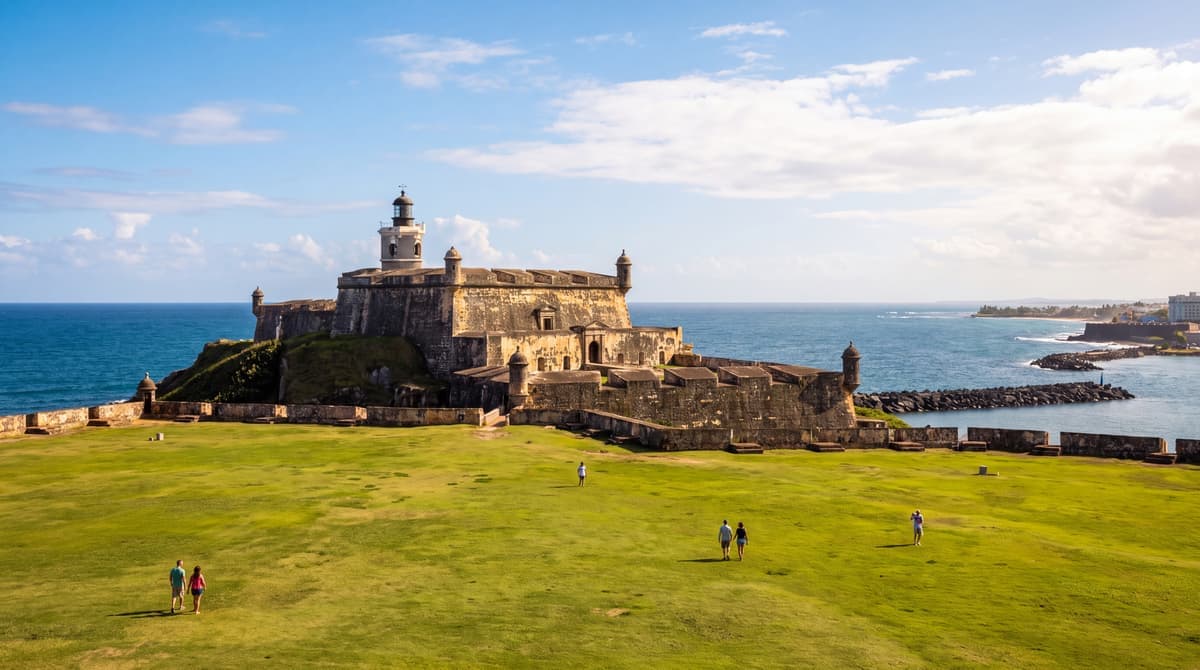
Puerto Rico is a variety trip on one island you can actually see in a week. In seven days you can walk the blue cobblestones and Spanish colonial forts of Old San Juan, begun in the 1500s and still standing over the Atlantic; hike El Yunque, the only tropical rainforest in the entire US National Forest System; paddle a bioluminescent bay, including Mosquito Bay on Vieques, which holds the Guinness World Record as the brightest on the planet; and still have time for a west-coast surf town like Rincon. Two of the island's best beaches sit out on the day-islands of Culebra and Vieques, reached by ferry or a short hop, which is both the charm and the catch. The culture is Caribbean and Latin: salsa, mofongo, lechon, Spanish and English side by side.
Hawaii is a bigger canvas and, honestly, more than one trip. It is an archipelago where each island is really its own vacation: Oahu for Waikiki and the North Shore, Maui for the road to Hana, Kauai for the cliffs, the Big Island for active volcanoes you can stand near. The culture is Polynesian and Pacific, distinct from anything in the Caribbean, and some of the most famous beaches and snorkeling on earth are here. The catch is that seeing more than one island means paid inter-island flights and more planning, so most people wisely do one island per trip. Hawaii rewards the traveler who wants a single island explored deeply; Puerto Rico rewards the one who wants range inside one week.
Browse 30 vetted Puerto Rico experiences
Instant confirmation, free cancellation up to 24h.
The free 7-day itinerary
The exact 7 days we send friends
One email with our day-by-day Puerto Rico plan: which beach on which day, where to eat, and the tours worth booking. No spam, unsubscribe anytime.
Getting around, and language
Both usually need a rental car once you leave the walkable core, whether that core is Old San Juan and Condado or Waikiki, because the best of each is spread out. Our car rental guide covers Puerto Rico's tolls and paperwork. On language, Puerto Rico speaks Spanish and English, and Hawaii speaks English, with Hawaiian; English works for visitors in both, and neither will leave a US traveler lost.
So which one
Pick Puerto Rico if you are flying from the East Coast, want a short trip with no jet lag and a friendlier bill, or want a rainforest, a walled old city, a bio bay and a surf town inside one week. The honest costs of that choice are its Atlantic hurricane exposure, the sargassum that can reach the east and southeast coasts from about April to October (our beaches guide has the coast-by-coast version), and the ferry or short flight to its two best beaches.
Pick Hawaii if you are flying from the West Coast, if you specifically want volcanoes, Polynesian culture, or a single island explored deeply, and if the extra distance, cost and jet lag are worth it to you. The honest cost of that choice is the travel day, the price, and the fact that you will really only see one island this time.
If your window is September and you will not gamble a non-refundable week, let the storm paragraph decide before the photographs do. And if the passport was your only worry, it should not be, because neither of these asks for one.
Find your hotel by area & budget
Compare current Puerto Rico rates across the major booking sites in one place, in USD. Most rooms are free to cancel.
Two more honest comparisons
If you are island-shopping more widely, we have written the same honest breakdown for Puerto Rico vs the Dominican Republic, where the passport gap genuinely does matter, and for Puerto Rico vs Aruba vs Curacao, where hurricane records do most of the deciding. And before you lock dates either way, our flights guide covers which airport to use and when to book.
FAQ
Do I need a passport for Puerto Rico or Hawaii? No, not for either, if you are a US citizen or permanent resident. Both are US soil, so a REAL ID-compliant license or standard domestic ID is enough, the currency is the US dollar, and your normal US phone plan works. Both do run an agricultural inspection of your bags when you leave.
Is Puerto Rico cheaper than Hawaii? Generally yes, especially from the East Coast, where the airfare gap alone is large before you book a room, and Hawaii is consistently one of the most expensive US destinations. Puerto Rico is not a budget trip, since it prices close to a US mainland city, but its ceiling and its entry point are both lower. For real Puerto Rico numbers see our vacation cost breakdown at /puerto-rico-vacation-cost.
Which is the shorter flight? It depends entirely on where you start. From the East Coast, Puerto Rico is about a four hour nonstop from New York and under three from Miami, with no real jet lag, while Honolulu is roughly eleven hours from New York and five to six hours behind Eastern. From the West Coast it flips: Hawaii is a five to six hour nonstop and Puerto Rico becomes a connecting, all-day trip.
Which has the lower hurricane risk? Hawaii. Both share a June 1 to November 30 season, but Puerto Rico sits in the Atlantic hurricane belt and peaks in September, while Hawaii's central Pacific sees direct strikes far less often, though not never. If you cannot move a fall trip, that is a real point for Hawaii.
Can I see the whole island in a week, on either one? In Puerto Rico, largely yes: one main island plus the day-islands of Culebra and Vieques is a realistic week. In Hawaii, no; each island is really its own trip, and seeing more than one means paid inter-island flights, so most visitors do a single island per visit.
Which is better for a first warm-weather trip from the mainland US? For an East Coast traveler who wants warm water, variety and the least friction, Puerto Rico is the easier first trip: shorter, cheaper, no jet lag, no passport. Hawaii is the stronger choice for a West Coast traveler, or for anyone whose heart is set specifically on volcanoes and Polynesian culture.