Puerto Rico, Aruba and Curacao turn up in the same search results because from a distance they look interchangeable: warm water, short flight, good sand. Up close they stop looking alike. What decides a trip here is not beach quality, which all three have. It is paperwork, hurricane exposure, and whether your week happens on one strip of sand or across a whole island. Here is the honest version, using only figures our own island research supports.
The paperwork gap, and it is the biggest single difference
Puerto Rico is a US territory. For a US citizen or permanent resident that means no passport, no customs declaration, no currency exchange and no immigration line on either end; a REAL ID-compliant driver's license or standard domestic ID is enough. The only checkpoint is a USDA agricultural inspection of your bags before you leave San Juan, screening for fresh fruit, plants and certain meats. Our no-passport guide covers how that works at the airport.
Aruba requires a valid passport from every visitor, US citizens included, plus the Embarkation and Disembarkation card, the ED card, filed at the official portal edcardaruba.aw before you fly. It costs $20 per person.
Curacao also requires a valid passport, plus the online digital immigration card at dicardcuracao.com, completed before arrival. US and EU citizens need no visa for a tourist stay, and airlines may ask for proof of the completed card at check-in.
None of this is a hardship for an experienced traveler. But for a long weekend, a first Caribbean trip, or a family where somebody's passport has quietly expired, Puerto Rico removes a whole category of friction the other two do not.
Browse 30 vetted Puerto Rico experiences
Instant confirmation, free cancellation up to 24h.
Money once you land
Puerto Rico runs on the US dollar: no exchange, no conversion arithmetic, nothing to think about.
Aruba uses the Aruban florin, written AWG, pegged at a fixed official rate of 1 USD to 1.79 AWG, and US dollars are accepted essentially everywhere on the island.
Curacao has used the Caribbean guilder, XCG, since it fully replaced the old Netherlands Antillean guilder on July 1, 2025, pegged at the same 1 USD to 1.79. US dollars are still widely accepted at tourist-facing businesses, but change may come back in guilders.
Getting there from the US
From the East Coast, all three are roughly the same afternoon.
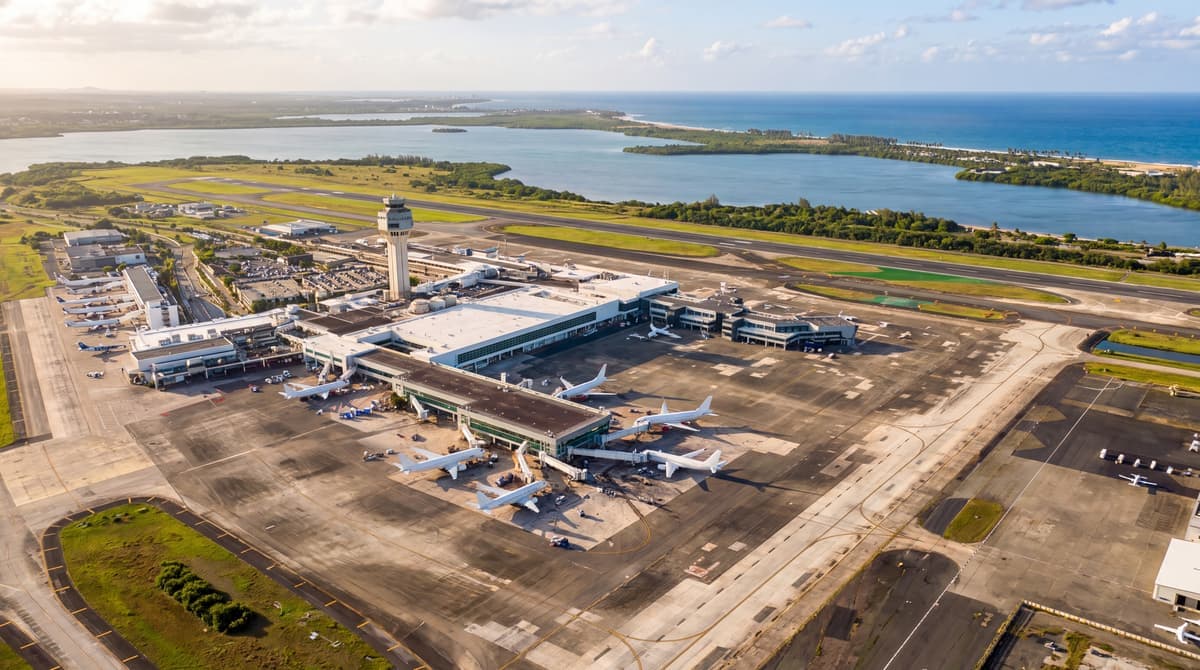
Puerto Rico runs about three hours nonstop from Miami or Orlando and three and a half to four hours from New York. From Chicago or Dallas plan on four and a half hours or more, and from the West Coast you are almost always connecting, with a travel day closer to eight or nine hours. Most nonstops land at San Juan (SJU); Aguadilla (BQN) sits about 15 miles from Rincon, and Ponce (PSE) is a small south-coast option.
Aruba runs roughly three hours from Miami or Fort Lauderdale, about four from Atlanta, about four and a half from New York, Boston, Baltimore or Washington DC, and four and a half to five from Houston or Chicago. Everything lands at Queen Beatrix International (AUA).
Curacao's workhorse is Miami, flown year-round by American at just under three hours, its most frequent US nonstop, with JetBlue from New York JFK at close to five hours. There is no scheduled nonstop from the West Coast or the Mountain West, which makes it the costliest of the three in connection time for a western US traveler. Flights land at Hato (CUR), north of Willemstad.
Want your whole trip planned for you?
Tell us who is coming and when, and we will build your days around what you actually want.
Hurricane exposure, which is the one that should change your mind
Puerto Rico sits in the hurricane belt, and pretending otherwise would break every rule this site runs on. The Atlantic season runs June 1 through November 30 and peaks in September, which is also the island's quietest and often cheapest stretch. Our hurricane season guide covers how to weigh that honestly.
Aruba sits at 12.5 degrees north. In 168 years of NOAA Atlantic hurricane records covering 1851 to 2019, no hurricane centre has made landfall on the island.
Curacao sits at 12.2 degrees north. Since 1851 the NOAA-derived record shows zero major hurricanes and six hurricane-strength passes anywhere near it.
Both islands' own guides note that "outside the hurricane belt" is travel-writing shorthand rather than an official NOAA designation. Fair caveat. The records are still the records. If your only travel window is late August through early October and you will not gamble a non-refundable week, that outranks everything else here.
Three genuinely different beach trips
Aruba has more than 40 beaches and the geography sorts them for you: the west coast is calm and sheltered, the east coast has rough surf and is generally not for swimming. Eagle Beach consistently ranks among the world's best, wide white sand, fofoti trees, postcard sunsets. Concentrated rather than scattered, which is exactly the appeal for some.
Curacao trades strips for coves: the cliff-backed bay at Grote Knip, palapa-lined Cas Abao, Kleine Knip, and the calm Jan Thiel and Mambo stretch. Playa Kalki is the standout for water rather than sand, where the reef starts close to shore and drops straight into a wall.
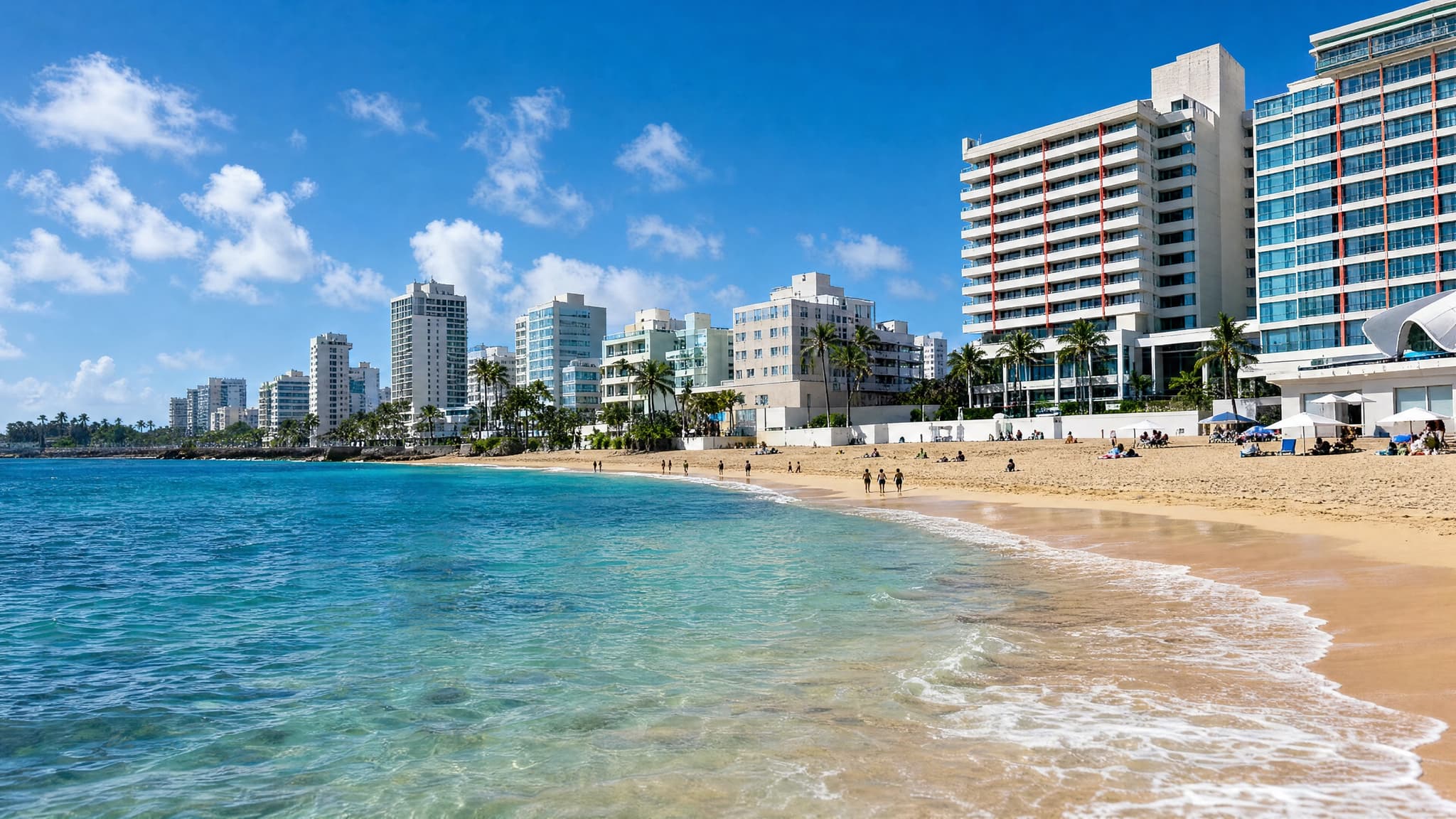
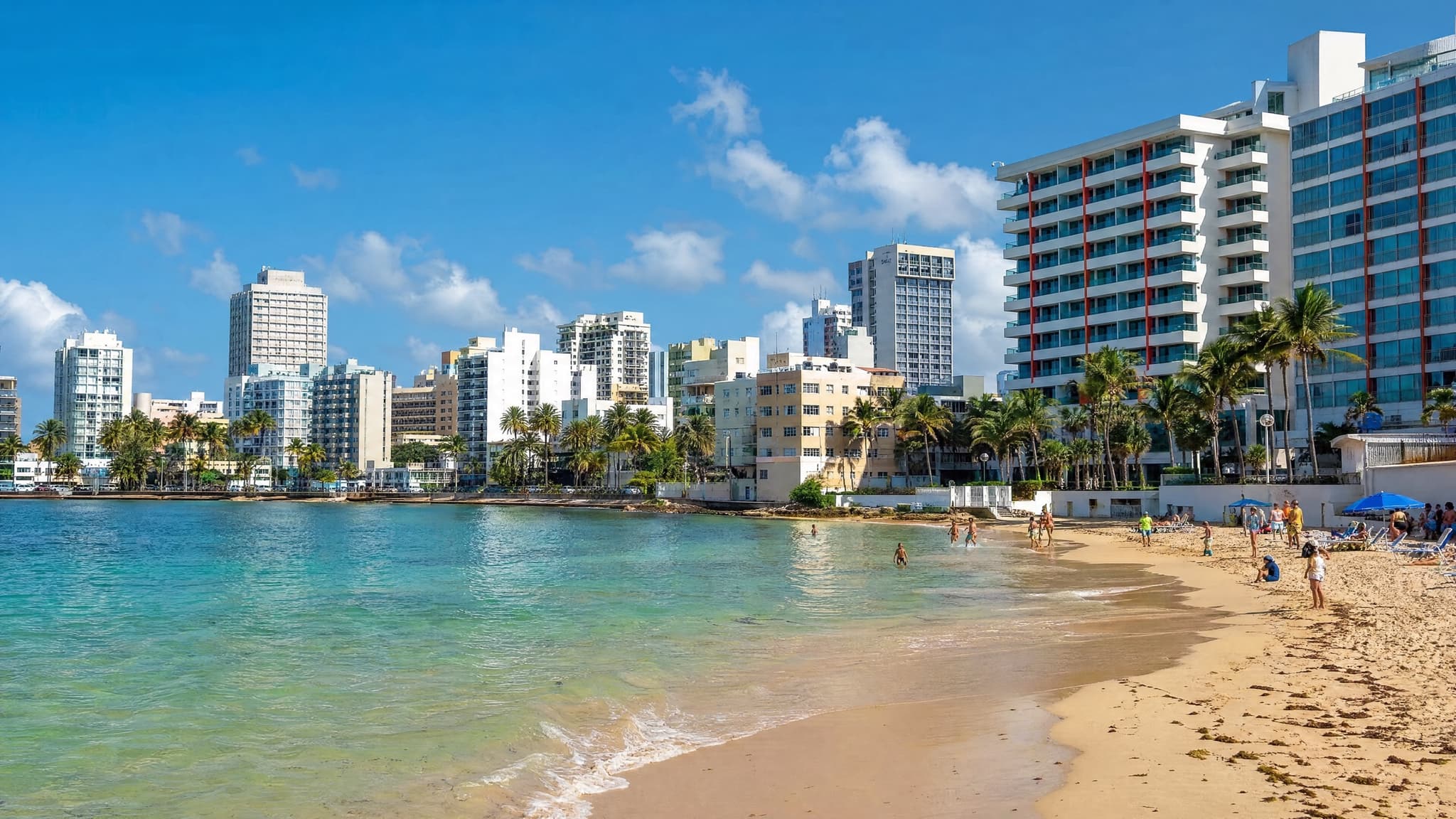
Puerto Rico varies most by geography. Flamenco on Culebra is a mile-long horseshoe bay behind an offshore reef, with a rusted 1940s Sherman tank half-buried in the sand. Rincon is a surf town where Domes is a reef break and winter, roughly November through April, brings the groundswells. Condado and Isla Verde put swimmable sand minutes from Old San Juan. The honest caveat is sargassum: worst on the east and southeast coasts roughly April through October, clearer on the west coast and the north-shore metro beaches, lowest November through March. Our beaches guide has the coast-by-coast version.
Let us plan this trip for you
We check every spot against live sources, share your dates and we'll build the rest.
What you actually do all day
Aruba is the watersports island: catamaran snorkel trips, jet skis, parasailing and world-class kiteboarding at Hadicurari, alongside Arikok National Park 4x4 and UTV runs, the Natural Pool, and the street-art district in San Nicolas. The island is 20 miles long and 6 miles wide, so nothing is more than about 30 minutes away.
Curacao is the diving and snorkeling island. Its Marine Park protects more than 65 coral species and 350 fish species along a coastline with over 70 named dive sites, many reachable straight from the beach, plus the day sail to uninhabited Klein Curacao and turtle snorkeling at Playa Piskado. Willemstad is a working port city rather than a resort, and on multi-ship cruise days the historic core fills by late morning. Five properties are truly all-inclusive; everything else is room-only, apartment, villa or boutique.
Puerto Rico is the variety island, and a trip usually looks like independent travel: a base, then drives out to El Yunque, a bioluminescent bay (Mosquito Bay on Vieques holds the Guinness World Record as the brightest on the planet), the forts and blue cobblestones of Old San Juan, or the west-coast surf towns. Resorts exist but nothing like the all-inclusive density of its neighbours, and San Juan is a major cruise port, so the old city's main streets fill fast once ships dock.
The free 7-day itinerary
The exact 7 days we send friends
One email with our day-by-day Puerto Rico plan: which beach on which day, where to eat, and the tours worth booking. No spam, unsubscribe anytime.
Do you need a rental car
On Aruba, not every day. Based on Palm Beach or Eagle Beach, taxis and hotel shuttles cover you; rent for the days you want Arikok, the Natural Pool, the north coast or Baby Beach. There is no Uber or Lyft on the island.
On Curacao, more often than not, yes. It is roughly two and a half times the size of Aruba, with the best beaches, dive sites and parks spread along a long coastline rather than clustered on one hotel strip. Ride-hailing is limited, so the alternative is licensed taxis, white plates marked TX and mostly unmetered, so agree the fare first.
In Puerto Rico, almost everywhere outside Old San Juan and Condado, yes. A walkable base is fine for the forts, restaurants and metro beaches, but the moment El Yunque, the Fajardo bio bay, or Rincon and Cabo Rojo are on the list, a car is the only realistic way to keep your own schedule, and Rincon alone is about two and a half to three hours from the San Juan airport. Our car rental guide covers tolls and paperwork.
Find your hotel by area & budget
Compare current Puerto Rico rates across the major booking sites in one place, in USD. Most rooms are free to cancel.
Language
Aruba speaks Papiamento, Dutch, English and Spanish; Curacao speaks Papiamentu, Dutch, English and Spanish; Puerto Rico speaks English and Spanish. English works for visitors on all three.
So which one
Pick Puerto Rico for the lowest-friction trip available to a US traveler, for a long weekend, or when you want a rainforest, a bio bay, a walled old city and a surf town inside one week. Read when to visit before locking dates.
Pick Aruba for one excellent beach you never have to leave, a short flight, calm sheltered water, and a hurricane record with no landfalls in it.
Pick Curacao to dive or snorkel seriously, if a real port city interests you more than a resort strip, and if you are happy to drive to a different cove most days.
If your only window is September, let the hurricane paragraph decide rather than the photographs.
What flights to Puerto Rico cost right now
Real recent round-trip fares by departure city, with a live search one tap away.
About these three guides
Worth saying plainly: we write all three. Aruba Playbook and Curacao Playbook are sister guides run by the same team as this one. Every figure above comes from our own island research rather than a scraped comparison table. Whichever island you choose, we would rather you chose it correctly, and where we could not verify a number consistently across all three, including a like-for-like cost of a week, we left it out instead of estimating.
FAQ
Which island can I visit without a passport? Puerto Rico, if you are a US citizen or permanent resident. It is a US territory, so a REAL ID-compliant license or standard domestic ID is enough. Aruba and Curacao both require a valid passport, plus Aruba's $20 ED card or Curacao's online digital immigration card, filed before you fly.
Which of the three has the lowest hurricane risk? Aruba and Curacao, and not by a small margin. Aruba, at 12.5 degrees north, has no hurricane landfall in 168 years of NOAA Atlantic records covering 1851 to 2019. Curacao, at 12.2 degrees north, has zero major hurricanes on record since 1851. Puerto Rico sits inside the hurricane belt, whose season runs June 1 to November 30 and peaks in September.
Do I need to rent a car on all three islands? Not on Aruba, where a Palm or Eagle Beach base plus taxis works most days. Usually yes on Curacao, about two and a half times Aruba's size with its beaches and dive sites spread along a long coastline. Usually yes in Puerto Rico too, unless your trip stays inside Old San Juan and Condado.
Which island is cheapest? We are not going to rank them on price: we have no like-for-like cost comparison across all three, and inventing one would be worse than useless. For Puerto Rico specifically, our vacation cost breakdown at /puerto-rico-vacation-cost gives real numbers.
Which has the best beaches? They answer different questions. Aruba has the concentrated postcard strips, calm west coast, rough east coast. Curacao has cliff-backed coves and the best shore-entry snorkeling and diving of the three. Puerto Rico has the widest range, from Flamenco's horseshoe bay to Rincon's winter surf, though its east and southeast coasts see the most sargassum from April to October.