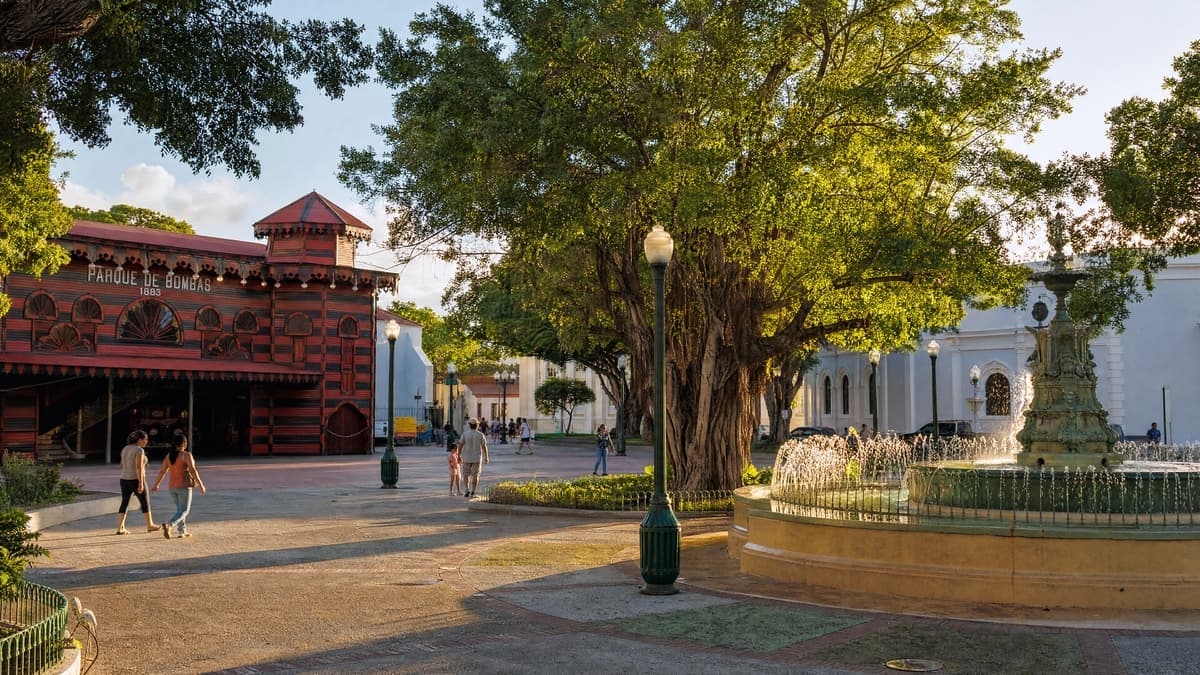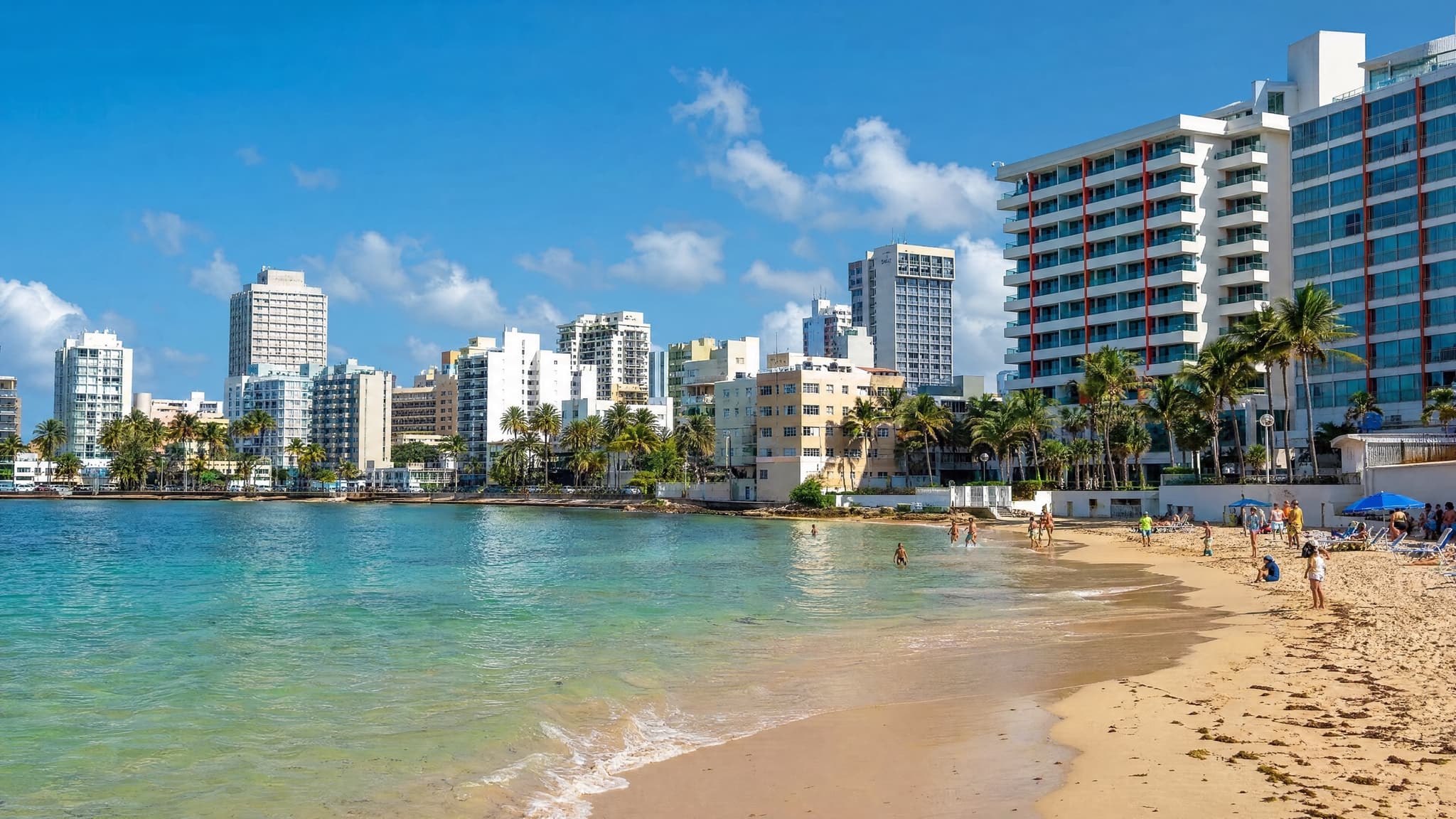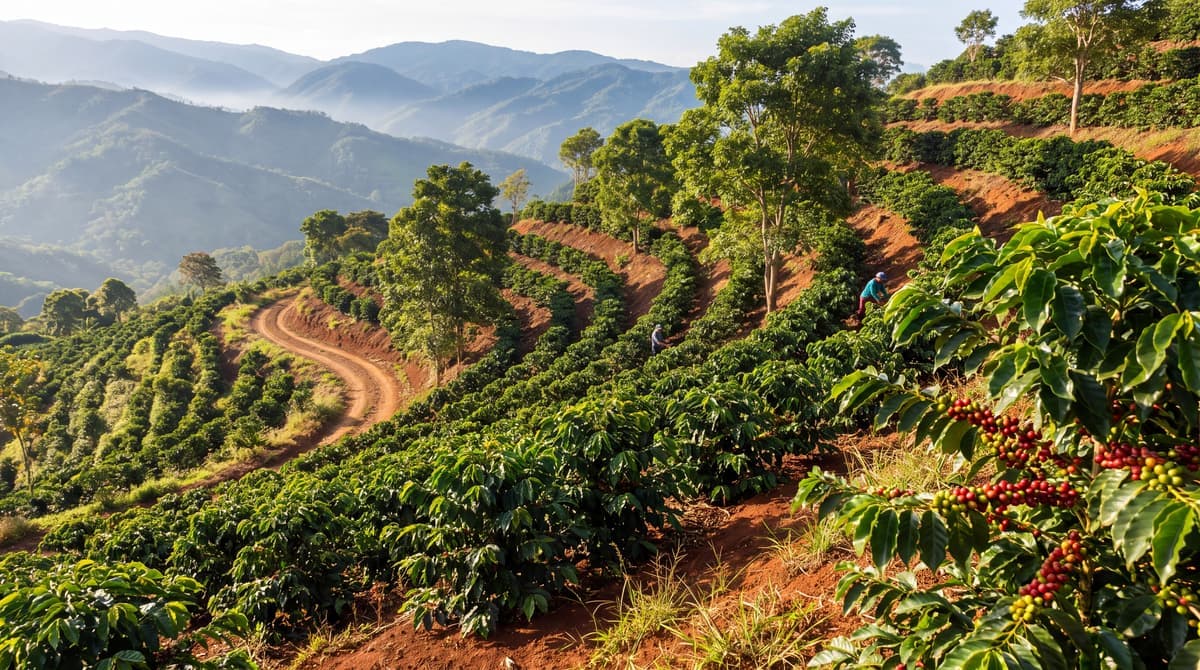
Most first trips to Puerto Rico never leave the coast, and that is a fair way to spend a week. But the interior of the island is a different country: a spine of green mountains, the Cordillera Central, where the air is cooler, the roads fold back on themselves every few hundred feet, and coffee has grown since Spanish settlers brought the first Typica plants in the 1700s. If you have already driven El Yunque and want a day most visitors skip, coffee country is it. Harvest runs roughly September through February, which makes fall and winter the one window when a farm tour shows you the whole chain, from red cherries on the branch to the roaster, rather than an empty hillside.
Three real options exist for a traveler who wants to actually visit a hacienda, and we cover each below. Two are living farms, Hacienda San Pedro in Jayuya and Hacienda Tres Angeles in Adjuntas; the third, Hacienda Buena Vista near Ponce, is a restored nineteenth-century estate run as a history tour. All three require a reservation, none is a walk-in, and all of them sit a real mountain drive from the coast. One honest note before you build a day around the phrase: there is no official, signed "Ruta del Cafe" the way there is a marked Ruta Panoramica. The coffee route is a region and a drive you assemble yourself, not a numbered highway with brown signs.
Why the mountains grow serious coffee
Puerto Rico sits at the right latitude and, more importantly, the right altitude for arabica. The central-western mountains climb high enough that daytime heat moderates, rainfall stays steady, and the humidity holds up, which is the combination slow-growing, high-grown arabica wants. The varieties you will hear named on a tour are the classic ones: Typica, which the Spanish planted in the 1700s, along with Bourbon and Caturra. For a stretch in the nineteenth century the island's coffee was genuinely prestigious, exported to Europe and beyond, and the restored estates in the hills date from that era.
The recent history is harder, and any honest tour will tell you so. When Hurricane Maria crossed the island in September 2017 it destroyed an estimated 80 percent of Puerto Rico's coffee trees, wiping out most of that year's harvest and years of future yield in a single day. The recovery has been slow and is still underway: replanting programs have put millions of new seedlings in the ground, and production has been climbing back, but a coffee tree takes years to bear, so the industry you visit today is one rebuilding itself, not one at its old peak. That backstory is part of why the visit matters; the small farms that survived run on thin margins, and the tour fee is part of what keeps them going.
Want your whole trip planned for you?
Tell us who is coming and when, and we will build your days around what you actually want.
What "coffee country" actually covers
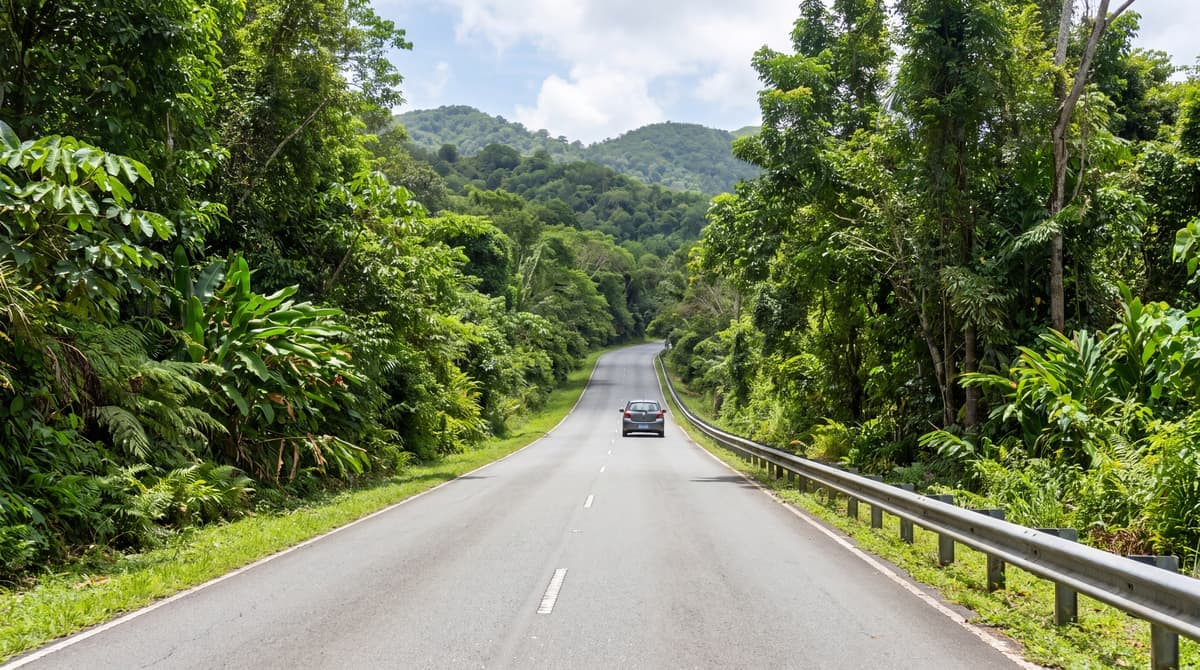
The coffee-growing towns cluster in the central and western interior: Jayuya, Adjuntas, Utuado, Lares, Maricao, Yauco and Ciales are the heart of it. There is no single road that ties them into a tidy loop. The formally designated scenic drive through these mountains is the Ruta Panoramica, a roughly 167-mile network of some 40 secondary roads that runs the length of the Cordillera Central from west to east, mostly along PR-105, PR-143 and PR-182. Long stretches of it pass through coffee country, and driving even a segment, with ferns arching over the pavement and a new valley opening after every switchback, is one of the best non-beach things to do on the island.
The catch is the driving itself. Reaching Jayuya from San Juan is about 64 miles and close to two hours, and the last half hour, once you leave the expressway for the mountain roads, is genuinely slow: tight blind curves, sections that are one lane in practice, and no shoulder. You need your own car for any of this. There is no useful transit into these towns, and a coach tour from San Juan is not how most of these haciendas are reached. If you are still deciding whether to rent, our guide to whether you need a car in Puerto Rico and the car rental basics both apply doubly up here. Drive it in daylight, and do not plan on coming down those roads after dark.
Hacienda San Pedro, Jayuya
Jayuya is often called the coffee capital of the island, and Hacienda San Pedro is its most visitor-ready farm: a working, family-run operation with an on-site cafe and a small museum, and a coffee brand you will see bagged in stores across Puerto Rico. The guided tour walks you through how the farm grows, picks and processes its beans, and ends, as it should, with a cup.
At the time of writing the farm runs its facility tours on weekends only, Saturday and Sunday, at 12 p.m. and 2 p.m., for about $10 per person, and the tour runs roughly 45 minutes. Reservations are required and handled by phone (787-828-2083), so this is not a stop you can improvise on the drive up. The honest caveat: because tours are weekend-only and reservation-based, San Pedro does not fit a spontaneous weekday itinerary, and the drive from the coast is long enough that you will want the farm to anchor the day rather than tacking it on. Call ahead, confirm the current times and price, and build the day around your slot.
Let us plan this trip for you
We check every spot against live sources, share your dates and we'll build the rest.
Hacienda Tres Angeles, Adjuntas
A ridge or two over, in Adjuntas, Hacienda Tres Angeles was the first farm on the island to earn the Puerto Rico Tourism Company's agro-tourism certification, and it is set up for visitors accordingly. The guided tour takes you through the plantation and the warehouse where the cherries are processed, then finishes at a coffee shop and terrace with a long mountain view, usually over fresh coffee and homemade baked goods.
At the time of writing the coffee tour runs on Saturdays at 10 a.m. by prior reservation, priced around $15 for adults, $12 for seniors 60 and older, and $5 for children under 11; the farm itself keeps limited public hours on Friday and Saturday. Reserve by phone (787-360-0019) before you go. The caveat mirrors San Pedro's: a single Saturday-morning tour slot means your whole day has to bend around it, and a rainy mountain morning, common in these hills, can make both the drive and the walk less pleasant, so leave yourself weather slack rather than treating the reservation as fixed.
The free 7-day itinerary
The exact 7 days we send friends
One email with our day-by-day Puerto Rico plan: which beach on which day, where to eat, and the tours worth booking. No spam, unsubscribe anytime.
Hacienda Buena Vista, Ponce: the history option
If your interest is as much in how the nineteenth-century coffee economy worked as in a modern farm, Hacienda Buena Vista in the hills above Ponce is the better fit, and it is also the most reliable to book. Run by the conservation nonprofit Para la Naturaleza, it is a restored 1800s estate where the original waterwheel-driven machinery still turns; the guided walk covers the main house and the ingenious system that channeled river water to power the coffee mill. It runs guided tours year-round, in English and Spanish, by advance reservation, for about $10 for adults and $7 for children and seniors, booked online through Para la Naturaleza or by phone (787-722-5882).
The honest distinction: Buena Vista is a museum-quality historical estate, not a commercial production farm, so if watching a working harvest is the point, one of the Jayuya or Adjuntas farms serves that better. What Buena Vista does better than anywhere is explain the history, and it pairs naturally with a day in Ponce. Our honest guide to Ponce and the Ponce destination page cover the drive, which museums are open after the earthquakes, and whether the city is a day trip or an overnight; a reserved Buena Vista tour is a strong reason to make it the anchor of that day.
Browse 30 vetted Puerto Rico experiences
Instant confirmation, free cancellation up to 24h.
When to go, and the harvest hook
Harvest season runs roughly September through February. Visiting in that window is the difference between seeing an active farm, cherries reddening on the shrubs, pickers on the slopes, the processing shed actually running, and seeing a quiet one out of season. That is the timely reason to think about coffee country now, at the start of the season, rather than in spring. It is also worth setting expectations: the mountains are cooler and wetter than the coast, afternoon showers are routine, and evenings can feel genuinely cool by Caribbean standards, so pack a layer you would not bother with for a beach trip. None of the three haciendas is a rain-or-shine indoor attraction, a washed-out mountain morning is a real possibility, and the reservation-only model means you cannot simply show up the next clear day without calling first.
Building it into a trip
Coffee country is not a San Juan half-day; it is a full day, and it fits best inside a trip that already has an interior or southern leg. The cleanest pairing is with Ponce and the south coast: Buena Vista sits right above the city, and Jayuya and Adjuntas are within reach of a south-based day. If you are routing across the north-central karst instead, the mountains around Utuado and Lares connect toward the Arecibo and Camuy area, which makes a natural interior thread. On a full week, our 7-day Puerto Rico itinerary shows where a mountain day sits against the coast and the forts, and if your dates are still open, our guide to when to visit lines the harvest window up with the rest of the calendar.
Think of it as the counterweight to the rainforest: where El Yunque is lush, wet and public, coffee country is agricultural, private and reservation-based, a slower and quieter kind of mountain day. If you want to keep the made-in-Puerto-Rico tasting theme going, the island's other homegrown drink has its own tour in a pitorro moonshine tasting, and you can see the full set of vetted things to do to slot around your farm day. However you build it, the one non-negotiable is the car and the daylight: reserve your tour, drive up in the morning, and let the farm set the pace.
Find your hotel by area & budget
Compare current Puerto Rico rates across the major booking sites in one place, in USD. Most rooms are free to cancel.
FAQ
Is there an official Ruta del Cafe in Puerto Rico? Not as a signed, numbered route. Unlike the formally designated Ruta Panoramica, the "coffee route" is a region and a self-assembled drive through the central mountain towns, not a marked highway. You plan your own path between the haciendas you want to visit.
Can you tour a coffee farm in Puerto Rico? Yes. Three haciendas take visitors on guided tours: Hacienda San Pedro in Jayuya and Hacienda Tres Angeles in Adjuntas are working farms, and Hacienda Buena Vista near Ponce is a restored historical estate. All three require a reservation in advance.
When is coffee harvest season in Puerto Rico? Roughly September through February. Visiting during harvest is the one time you are likely to see cherries being picked and the processing running, rather than a quiet off-season farm.
How far is coffee country from San Juan? Jayuya is about 64 miles and close to two hours from San Juan, and the last stretch is slow mountain driving with tight curves. You need your own car; there is no useful transit into these towns.
How much does a coffee tour cost? At the time of writing, about $10 per person at Hacienda San Pedro, around $15 for adults ($12 for seniors 60 and older, $5 for children under 11) at Hacienda Tres Angeles, and about $10 for adults and $7 for children and seniors at Hacienda Buena Vista. Prices move, so confirm when you reserve.
Do I need a reservation? Yes, all three require one. San Pedro runs weekend tours (Saturday and Sunday) by phone reservation, Tres Angeles runs a Saturday-morning tour by reservation, and Buena Vista runs year-round by advance reservation through Para la Naturaleza.