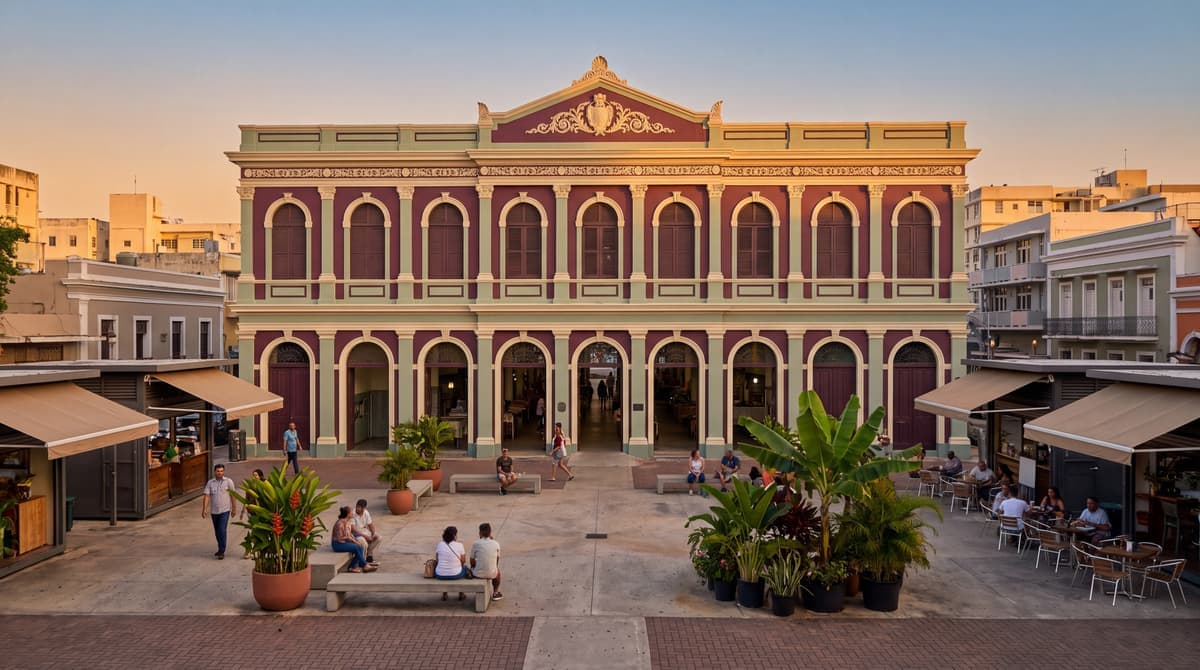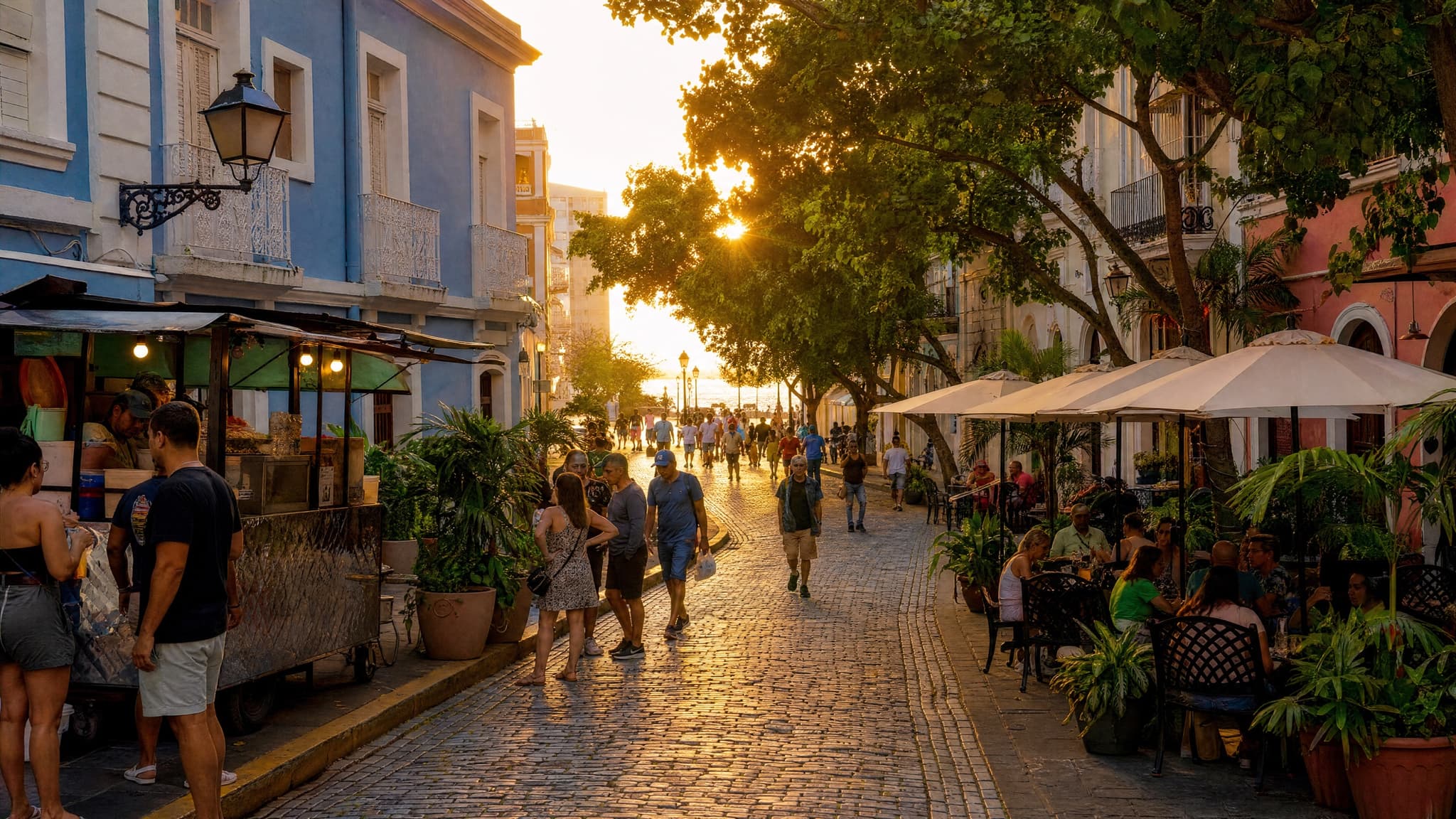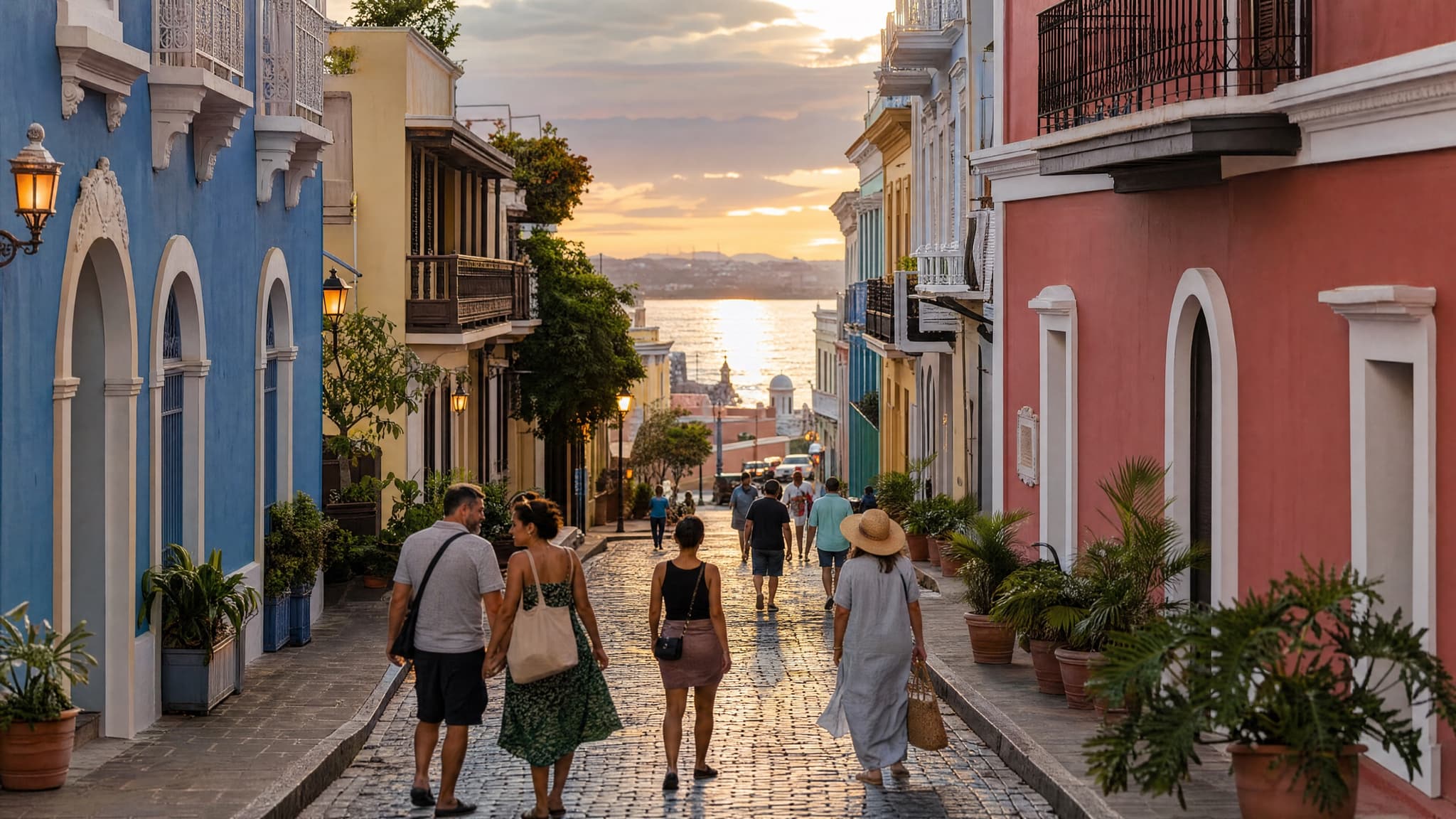
The hardest part of eating well in Puerto Rico is not finding good food, it is not wasting one of your limited meals on the wrong thing in the wrong place. The island punches far above its size at the table, from white-tablecloth tasting menus in Old San Juan to roadside kiosks frying crab fritters within sight of the surf, but those two worlds sit in completely different parts of the island and reward completely different plans. This is the where-to-eat companion to our guide on what to actually eat here: that one covers the dishes, this one covers the tables, organized the way you will actually encounter them, by region.
A note on what this is and is not. We keep a running file on the island's dining and check each place against its own listing before we point you at it; the spots below are the ones that keep earning their reputation, re-confirmed as operating before this guide went up. It is not a complete island directory, and it leans toward San Juan plus a handful of regional standouts rather than pretending to cover all 78 municipalities. Every one of these is a real, independently verifiable place, which matters more to us than a longer list would. Our full set of picks, with the map pins, lives on the dining page.
How Puerto Rico's food map actually works
Two facts shape every dining decision here. The first is that the food is intensely regional. San Juan holds the island's fine dining and its densest concentration of restaurants, but the signature eating experiences, the beach-kiosk fritter crawl, the Sunday lechon in the mountains, the catch-of-the-day table on a quiet island, are all somewhere else. The second is that reaching most of them means driving. San Juan's neighborhoods are walkable and rideshare-friendly, but the kiosks, the lechoneras and the west-coast and island tables effectively require a rental car and, in one case, a ferry. Our guide on whether you need a car is the honest answer, and it is yes the moment your appetite leaves the city.
One practical rule applies across all of it: hours and days drift here more than they do on the mainland, especially at the casual places and around holidays. Treat every "open" below as a reason to go, not a promise for a specific Tuesday, and confirm directly before you build a meal around any single spot.
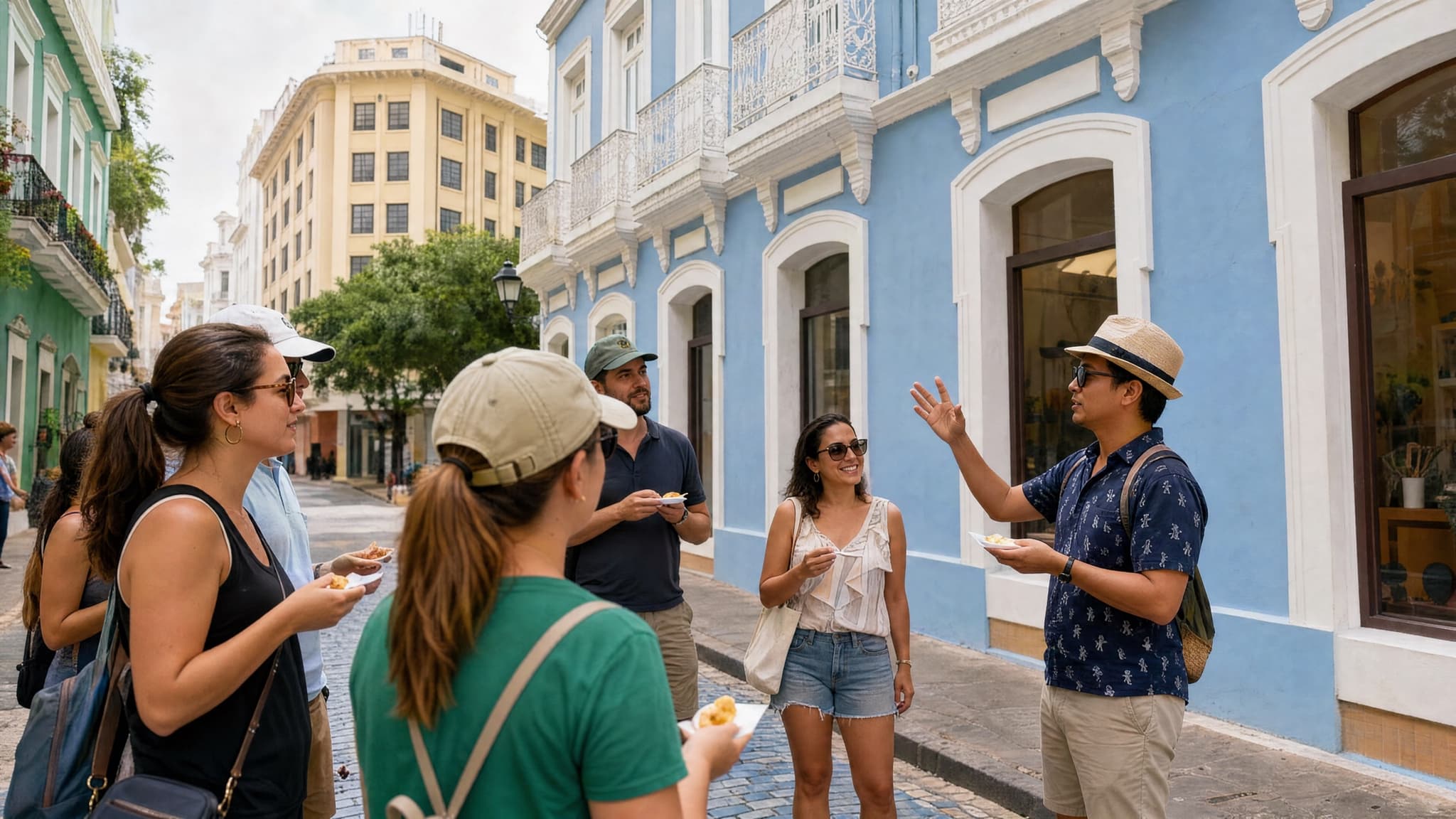
Old San Juan: the island's range in a few walkable blocks
The old city is the one place you can eat across the full spectrum on foot, which is why it anchors our separate Old San Juan food guide and the walkable food-tour route. For the top of the range, Marmalade on Calle Fortaleza is a tasting-menu restaurant and wine bar built around French technique and Caribbean ingredients, the kind of multi-course evening you plan a night around. The honest caveat: it is the priciest format on this list and runs as a tasting menu, so it is the wrong call for a casual, grab-a-plate night and it wants a reservation well ahead, especially in winter.
At the other end of the same few blocks, Cafe Manolin on Calle San Justo is a family-run Puerto Rican lunch counter that has been feeding a mostly local crowd home-style criollo plates since the 1950s. It is where you go for mofongo and asopao at a fair price among regulars rather than tourists. The caveat is simply that it is a daytime spot that closes by late afternoon, so it is a lunch plan, not a dinner one. Between those two poles sits Verde Mesa on Calle Tetuan, a plant-filled, farm-to-table room that builds its menu around whatever is freshest that week. That is also its one caveat: because the menu changes with the harvest, there is no fixed dish to count on, and its days and hours have shifted since it reopened under its original owner, so confirm the current schedule directly before you go. For the wider old-city context, our San Juan destination page covers how the neighborhoods fit together.
Santurce, Condado and Ocean Park: where San Juan actually eats
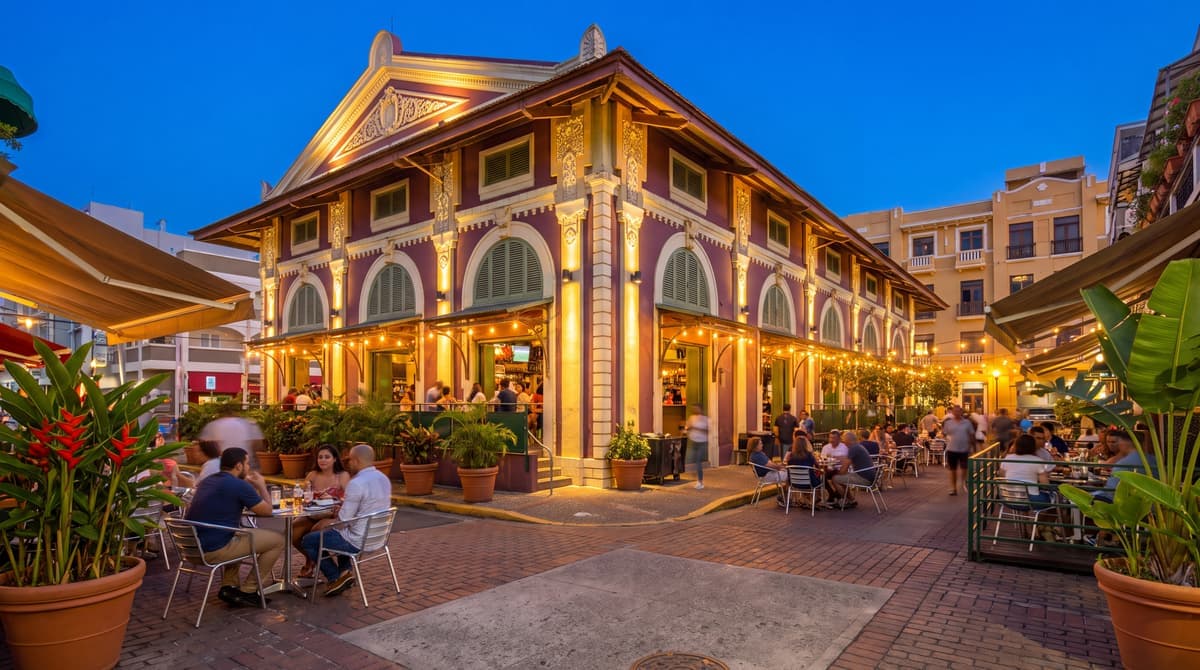
Step out of the tourist core and you reach where the city eats on a normal night. Santaella sits a block from the market stalls of La Placita in Santurce, a converted warehouse with an open kitchen turning out modern Puerto Rican cooking, ceviche, grilled octopus, a serious cocktail program. Its caveat is its appeal flipped around: the bar gets loud after dark and the room fills, so reserve and do not expect a quiet dinner, and note it closes on Mondays. Around it, the Plaza del Mercado de Santurce (La Placita) turns from a daytime produce market into one of the island's busiest eating-and-drinking districts after dark, which is exactly why it anchors this post's photo.
A few minutes east, Bebo's Cafe on Calle Loiza is an island-wide name for made-to-order mofongo with a long list of fillings, open long hours and busy at most of them. The caveat: it is no-frills and can mean a wait at peak times, and it is the Calle Loiza location you want, not any other. Further along in Ocean Park, Kasalta is a bakery, deli and restaurant woven into the neighborhood's daily rhythm, pastry cases up front and a full Spanish-Caribbean menu in back; the mallorca and the cafe con leche are the move. It is counter-service and draws a morning line, so it earns its place as a breakfast or casual-lunch stop rather than a sit-down dinner. If you are deciding which of these neighborhoods to sleep in, our where to stay guide maps the trade-offs.
Our pick
Want your whole trip planned for you?
Tell us who is coming and when, and we will build your days around what you actually want.
The east-coast beach drive: kiosks over restaurants
Head east toward El Yunque and Luquillo Beach and the smart money leaves the restaurants behind for the kiosks. The Kioskos de Luquillo, a strip of roughly 60 family-run food stalls along PR-3 beside the beach, are Puerto Rico's original beach-food scene, running since the 1940s: alcapurrias, bacalaitos, stuffed mofongo, fresh coconut water, one after another. The honest caveat is that it is a strip, not a single kitchen, so quality varies kiosk to kiosk, it is liveliest on weekends, and some stalls stay dark midweek. Closer to the city on the way out, Kiosko El Boricua in Pinones is one of that beachfront strip's best-known stands, famous for crab-stuffed alcapurrias; it is a cash, casual, limited-hours fritter stop rather than a meal you sit down for.
If you want an actual seafood table out east rather than a fritter crawl, Kalizo near Fajardo's marina in Las Croabas serves whatever the local boats bring in, run by the same chef for two decades. Its caveat is that hours vary seasonally, so call ahead, and it is out by the water, which makes it a natural pairing with a Fajardo bio-bay evening rather than a destination on its own.
Stay in the Puerto Rico loop
Puerto Rico news and deals, in your inbox.
Get island news, fresh activity ideas and deals when available, straight to your inbox.
Occasional emails from Puerto Rico Playbook. Unsubscribe anytime.
Email signup is temporarily paused. Please check back soon.
Browse the latest Puerto Rico storiesThe mountains: Guavate and the Pork Highway
The single most Puerto Rican meal on this list is not in a restaurant at all. In the Cayey mountains, the stretch of PR-184 known as La Ruta del Lechon, the Pork Highway, is lined with open-air lechoneras turning whole pigs on spits. Lechonera Los Pinos has been doing it in Guavate since 1998, cafeteria-style: roast pork carved to order, pasteles, morcilla, arroz con gandules, cash-friendly and unpretentious. The caveat is the drive (it is a real trip up into the mountains) and the timing: Guavate is busiest and best on weekends, and if you are visiting over the winter holidays you are arriving in its peak season, when the lechoneras run hardest around Christmas week and Three Kings Day in early January. We cover the whole ritual, and why Sunday is the day, in our Sunday lechon culture guide.
Our pick
Let us plan this trip for you
We check every spot against live sources, share your dates and we'll build the rest.
The west coast and the islands: worth the drive or the ferry
Two tables are worth planning the rest of your route around. On the west coast in Rincon, La Copa Llena at the Black Eagle is an open-air oceanfront deck serving progressive Caribbean plates to a crowd that has been watching sunsets from this spot since the 1970s. Its caveat is limited evening hours on limited days, so confirm the current schedule, and it only makes sense if you are already out west for the surf and the sunsets rather than driving three hours for dinner.
Offshore, on Vieques, El Quenepo in Esperanza is the island's special-occasion room, an open-air dining space a few steps off the waterfront built around the day's catch. Two honest caveats here, both significant: it is seasonal and closes for stretches in the off-season, and reaching it means a ferry or a small flight to Vieques in the first place. Reserve, and confirm it is open for your exact dates before you build a trip around it, because its seasonal calendar shifts year to year.
How to not waste a meal here
A few rules save the most meals. Reserve ahead for the sit-down dining rooms, Marmalade, Verde Mesa, Santaella and El Quenepo, especially across the December-to-April high season when the island is fullest. Carry cash for the kiosks and lechoneras, which run casual and do not all take cards. Assume hours and days can change, and confirm directly for anything seasonal or off the beaten path rather than trusting a months-old listing. Budget a car for everything outside San Juan; our vacation cost breakdown puts dining in the context of the rest of the trip. And if you only remember one thing: the fancy meal is in San Juan, but the meal you will talk about afterward is usually a kiosk, a lechonera, or a plastic table by the water. The complete set of our picks, with map pins, is on the dining page.
Our pick
Browse 30 vetted Puerto Rico experiences
Instant confirmation, free cancellation up to 24h.
FAQ
Where should I eat in Puerto Rico? It depends on where you are. In San Juan, Old San Juan has the full range (tasting menus to local lunch counters), Santurce around La Placita is where the city eats at night, and Ocean Park and Calle Loiza have the bakeries and mofongo. Outside the city, the signature meals are the Luquillo and Pinones beach kiosks, the Guavate lechoneras in the mountains, and a few standout tables out west in Rincon and on Vieques. Our dining page has the full map.
What are the best restaurants in San Juan? For a splurge dinner, Marmalade in Old San Juan runs a tasting-menu format. For modern Puerto Rican cooking with a lively bar, Santaella in Santurce near La Placita. For local, home-style criollo at lunch, Cafe Manolin in Old San Juan. For mofongo, Bebo's Cafe on Calle Loiza. Reserve ahead for the sit-down rooms, especially in winter high season.
Do I need a reservation to eat in Puerto Rico? For the fine-dining and tasting-menu rooms (Marmalade, Verde Mesa, Santaella, El Quenepo on Vieques), yes, especially across the December-to-April high season. The kiosks, lechoneras and bakeries are walk-in and casual, no reservation needed, though they keep loose hours, so confirm times directly rather than trusting an old listing.
Where do locals eat in Puerto Rico? A lot of the best local eating is away from the tourist strips: the family lunch counters of Old San Juan, Santurce around La Placita, the beach kiosks at Luquillo and Pinones, and the Guavate lechoneras in the Cayey mountains, which fill with Puerto Rican families on weekends. The kiosk and lechonera scenes in particular are where you eat shoulder to shoulder with locals rather than other visitors.
What is the Pork Highway in Puerto Rico? La Ruta del Lechon, the Pork Highway, is a stretch of PR-184 in the Guavate area of Cayey lined with open-air lechoneras roasting whole pigs on spits. It is one of the island's defining food experiences, busiest and best on weekends, and at its peak over the winter holidays around Christmas week and Three Kings Day. Lechonera Los Pinos is a long-running example.
Do I need a car to eat around Puerto Rico? In San Juan, no: the neighborhoods are walkable and rideshare covers the gaps. But the signature eating, the beach kiosks, the Guavate lechoneras, and the west-coast and Vieques tables, effectively requires a rental car (and a ferry or flight for Vieques). If your appetite is leaving the city, plan on driving.