Puerto Rican food is one of the best reasons to come here, and it is also the part of the trip first-timers most often get wrong, defaulting to a hotel dining room or a familiar chain when the best plate of the week is a few dollars at a roadside kiosk. The good news is that eating well here asks nothing special of you and no passport: this is US soil, so the currency is the dollar and there is no customs line between the mainland and this food, a point we lay out in full on our no passport needed page. What you are eating is comida criolla, the island's own Creole cooking, a blend of Taino, Spanish and African roots that turns up everywhere from Old San Juan lunch counters to mountain lechoneras.
This is our honest field guide to what to order, where locals actually eat it, and the one caveat that comes with each dish. We do not hand out fake "best of" crowns or rate plates we have not verified; what we do is point you at the long-running places and the dishes that reward the effort. For the full sit-down restaurant picture, our dining guide and the Old San Juan food crawl go deeper than any single post can.
Mofongo, the dish you should not leave without eating
If you eat one thing here, make it mofongo. It is green plantain, fried and then mashed in a wooden pilon with garlic, olive oil and crisp pork cracklings, packed into a dome and usually stuffed, "relleno," with garlic shrimp, stewed chicken, steak or mixed seafood in a light broth. Done well it is one of the great comfort dishes of the Caribbean; done poorly it is a dense, dry ball, which is exactly why where you order it matters. On this island the reliable move is a working lunch counter rather than a resort kitchen: Cafe Manolin, a family-run Old San Juan counter serving a mostly local crowd since the 1950s, and Bebo's Cafe on Calle Loiza, an institution known island-wide for mofongo built to order with a long list of fillings, are the kind of places locals actually name.
The honest caveat: mofongo is heavy. It is a full meal that sits with you, not a light lunch before an afternoon of walking, and the garlic is not shy. Order one to share on your first go and see how your day handles it before you commit to one each.
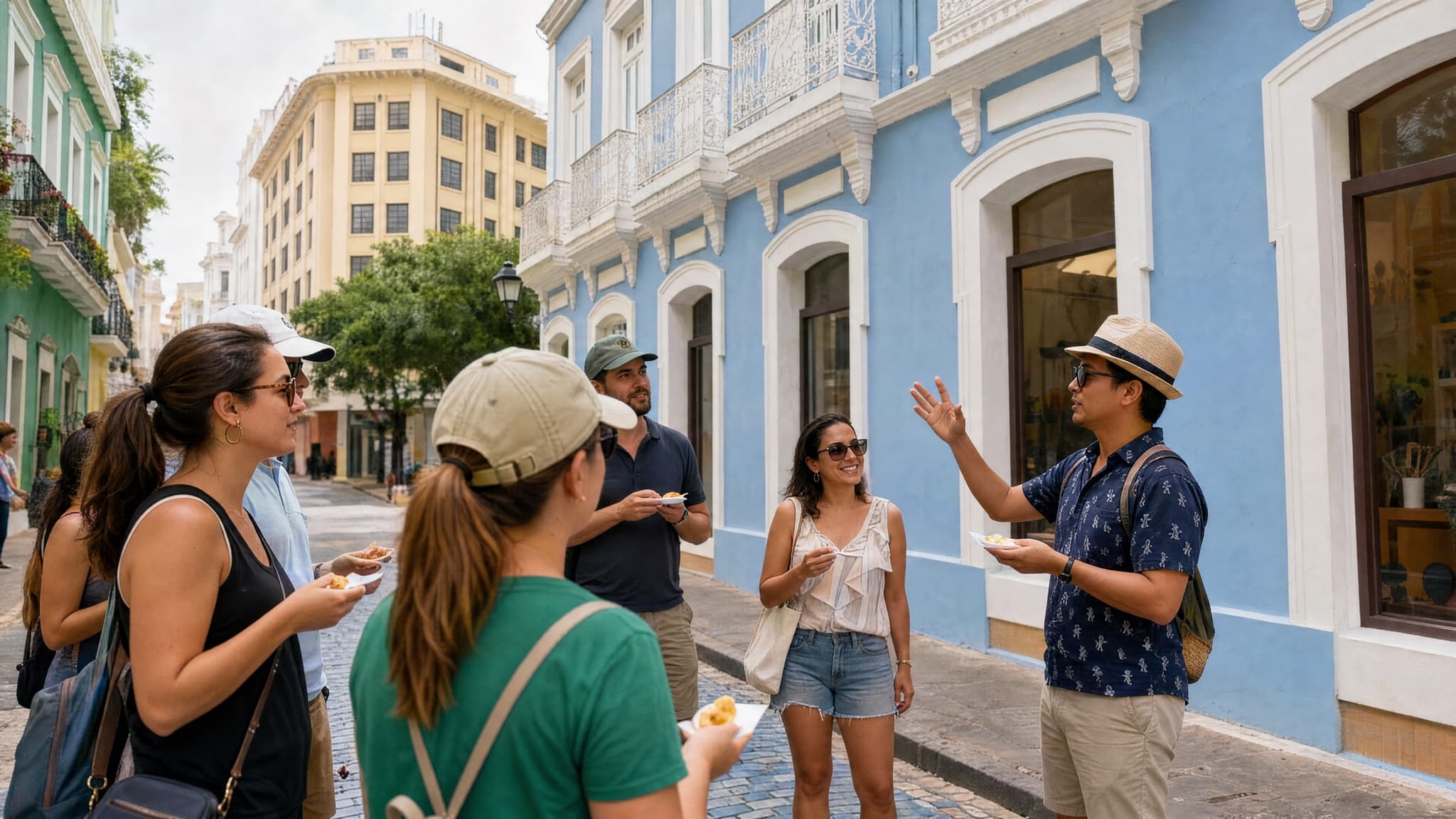
Authentic Flavors of Old San Juan Food Tour
3 Hours · From $170. Live prices, dates, and the honest details, one page.
Lechon and the Pork Highway
The other dish worth planning around is lechon: a whole pig, seasoned with garlic and oregano and slow-roasted over wood until the skin turns to glass and the meat pulls apart. You do not find the best of it in the city. You find it in the hills of Guavate, in the mountain town of Cayey, along a stretch of road locals call la ruta del lechon, the Pork Highway, where open-air lechoneras line up with pigs turning on spits out front and cafeteria-style trays of roast pork, morcilla, pasteles and rice inside. Lechonera Los Pinos has been doing exactly this in Guavate since 1998, and it is the sort of place a Puerto Rican family drives an hour to on a Sunday.
That timing is the caveat. Guavate is a weekend scene, busiest and most alive on Saturdays and especially Sundays, when the lechoneras fill with families and live music; a Tuesday visit can be quiet or find some spots closed. Bring cash, plan for a mid-afternoon drive back rather than a rush, and read our Sunday lechonera culture piece before you go, because the ritual is half the point.
The roadside kiosks and the art of frituras
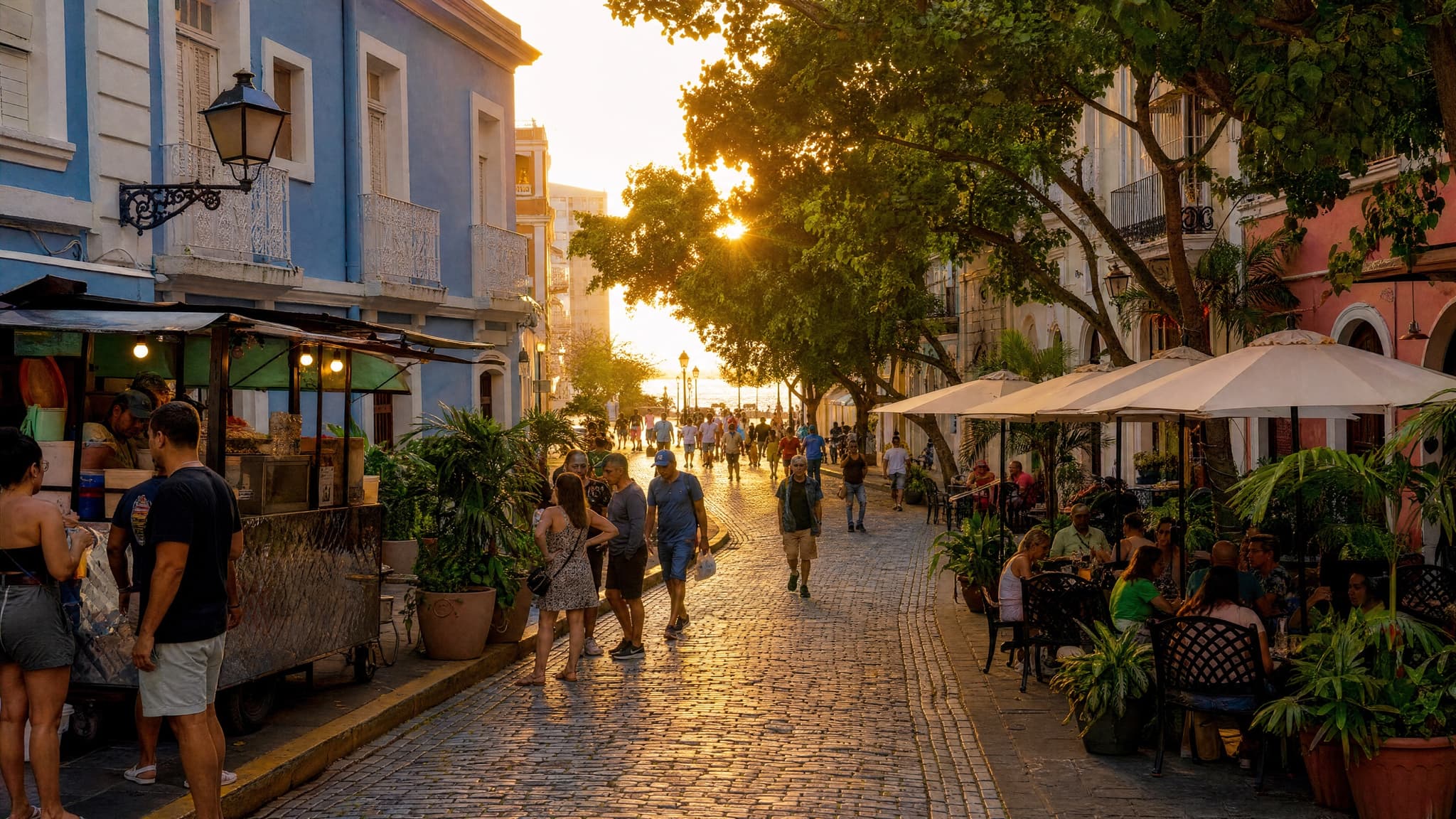
Some of the most Puerto Rican eating you will do is standing at a roadside kiosk with a paper plate of frituras, the island's deep-fried snacks. The two you want to know are alcapurrias, a masa of grated green banana and plantain wrapped around seasoned ground beef or crab and fried until crisp, and bacalaitos, flat, lacy salt-cod fritters the size of a small plate. Two clusters near San Juan are worth the short drive. Pinones, just east of the city in Loiza, is a run of beachfront kiosks under the palms where the frituras are the whole reason to stop. Farther east, the Kioskos de Luquillo, a strip of roughly sixty family-run stalls beside Luquillo Beach that has been running since the 1940s, pairs perfectly with an El Yunque day.
The caveat here is practical: many kiosks are cash-first, hours are loose, and quality varies stall to stall, so follow the lines and the smoke rather than the signage. It is street food in the honest sense, cheap, fast and unglamorous, and it is often the best few dollars you spend all trip.
Let us plan this trip for you
We check every spot against live sources, share your dates and we'll build the rest.
The everyday plate: arroz con gandules and comida criolla
Beyond the signature dishes is the everyday cooking you will see on nearly every criollo menu, and it is worth ordering on purpose. Arroz con gandules, rice cooked with pigeon peas and sofrito, is widely called the island's national dish, and its natural partner is a piece of lechon or pernil, roast pork shoulder. Around it you will find tostones, twice-fried green plantains you dip in a garlic or mayo-ketchup sauce, and their sweet opposite, amarillos or maduros, fried ripe plantains that taste almost like dessert. Look also for pastelon, a casserole of sweet ripe plantain layered with seasoned ground beef that gets called Puerto Rican lasagna, and for a plate of viandas, boiled root vegetables, in the more traditional kitchens.
The caveat is a happy one: portions are generous and the sides are the stars, so a single main plus tostones and amarillos often feeds two. This is where a modest food budget goes furthest, which our budget guide and the vacation cost breakdown both bear out.
Breakfast the local way, and the coffee
Do not sleep through breakfast here. The one to seek out is a mallorca, a soft, faintly sweet spiral roll dusted with powdered sugar, often split, buttered and pressed on a griddle, and sometimes built into a ham-and-cheese sandwich. You eat it at a panaderia with a cafe con leche, and a classic address for exactly this is Kasalta, an Ocean Park bakery and deli that is part of the neighborhood's daily rhythm. While you are at the pastry case, add a quesito, a flaky puff pastry wrapped around sweet cream cheese.
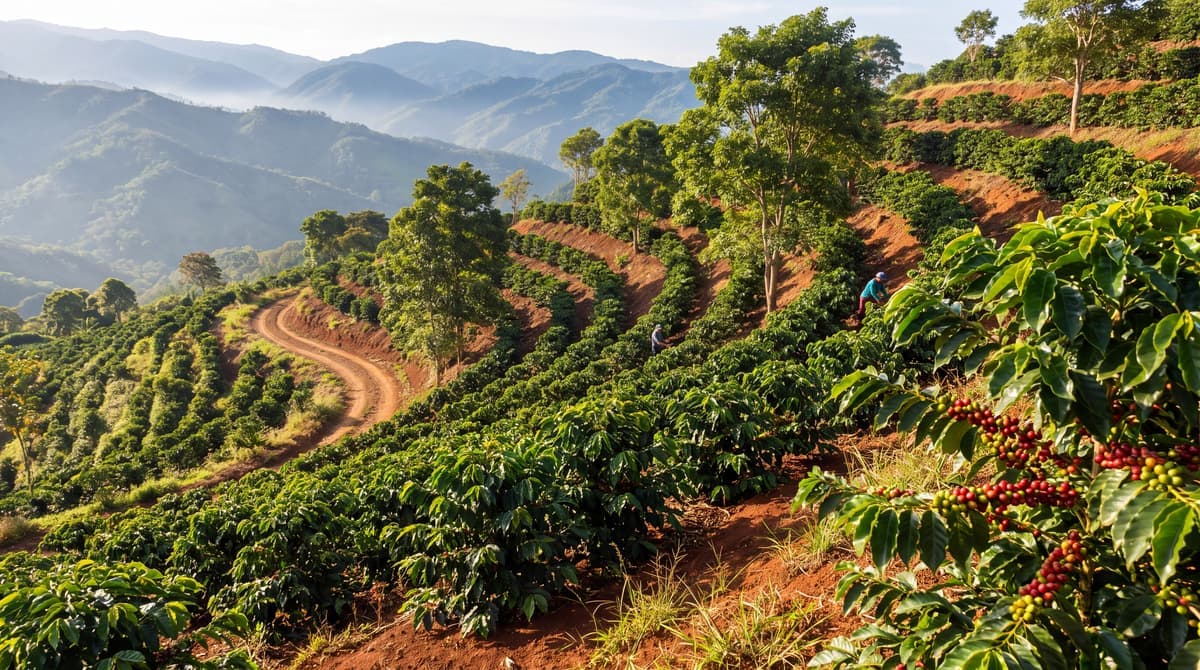
The coffee deserves its own mention, because Puerto Rico grows serious high-altitude arabica in the central mountains, and a strong cafe con leche is the local default. If the coffee grabs you, the farms themselves take visitors during the fall-to-winter harvest, which we cover in our coffee country guide. The caveat on breakfast is only that the best panaderias are neighborhood spots, not hotel buffets, so it is worth walking a few blocks off the resort strip to find one.
Browse 30 vetted Puerto Rico experiences
Instant confirmation, free cancellation up to 24h.
The free 7-day itinerary
The exact 7 days we send friends
One email with our day-by-day Puerto Rico plan: which beach on which day, where to eat, and the tours worth booking. No spam, unsubscribe anytime.
What to drink
The drink Puerto Rico is most famous for is the pina colada, and it was in fact invented in San Juan, though exactly where is a genuinely disputed local rivalry. The Caribe Hilton credits its bartender Ramon "Monchito" Marrero with creating it in 1954, and an official 2004 proclamation backs that version; the Barrachina restaurant in Old San Juan credits Ramon Portas Mingot in 1963. It was named the island's official drink in 1978, and the honest position is that both houses have a claim, so have one at each and decide for yourself.
For something more local, look for pitorro, the island's homemade rum, traditionally strong and often infused with fruit; you can taste it properly on a pitorro moonshine tasting. Around the winter holidays, pitorro becomes coquito, Puerto Rico's rich coconut answer to eggnog, which appears alongside pasteles on Christmas tables, both of which we cover in the holiday season guide. Beer drinkers order a cold Medalla, the local light lager that turns up everywhere from the beach kiosks to the lechoneras.
Where to actually eat it
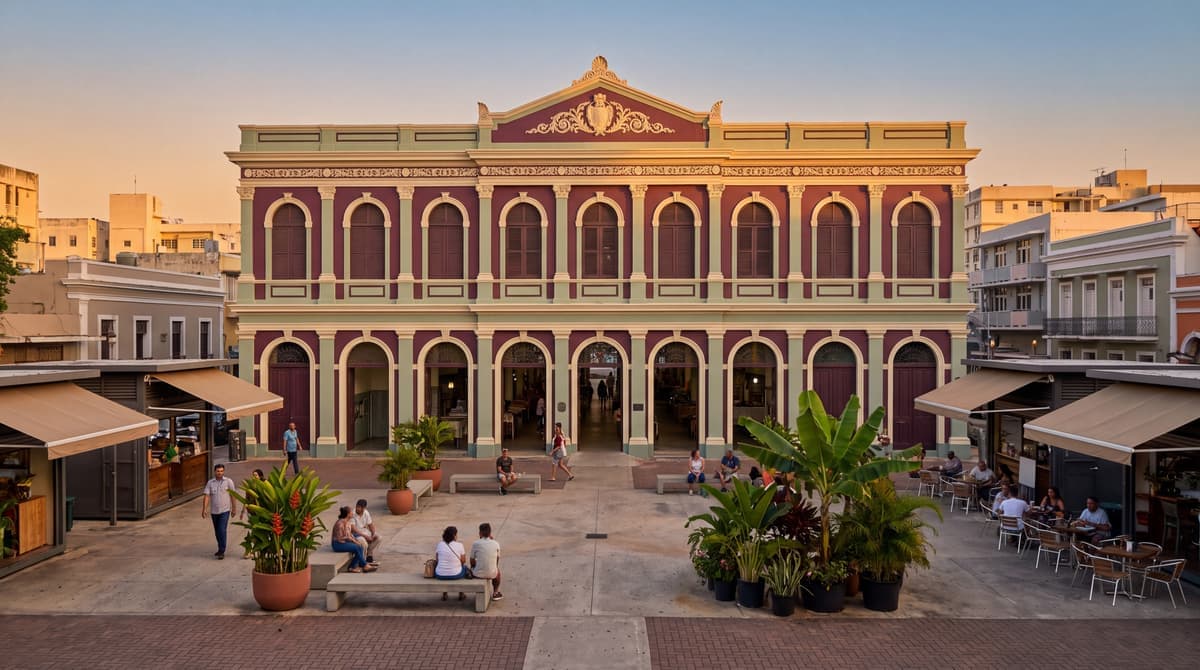
The pattern behind all of this is simple: the food you came for lives at fondas and lunch counters, roadside kiosks and weekend lechoneras, not in hotel dining rooms. A useful first-trip plan is to keep one meal a day loose and local, a mofongo at a lunch counter, an afternoon of frituras at a kiosk, a Sunday drive to Guavate, and to treat the resort restaurant as the fallback rather than the plan. If you want the local scene concentrated in one place, the Plaza del Mercado de Santurce, better known as La Placita, is a historic San Juan market by day that turns into an open-air food-and-music district by evening. And if you would rather have someone walk you through it on day one, a guided Old San Juan food tour is an efficient way to taste a lot in a single afternoon and learn what to reorder for the rest of the trip. Browse the full set of vetted food and activities to slot the rest around your meals.
Find your hotel by area & budget
Compare current Puerto Rico rates across the major booking sites in one place, in USD. Most rooms are free to cancel.
The practical stuff
A few honest notes that save first-timers grief. First, this food is savory and garlicky, not chili-hot: the backbone is sofrito, adobo and sazon, not heat, so if you were worried about spice, do not be. Second, carry cash. The best kiosks and lechoneras are cash-first even when a card is technically accepted, and small bills move the line faster; our tipping and money guide covers where a card works and where it does not. Third, vegetarians should plan a little: this is pork-forward cooking, and while tostones, amarillos, viandas and rice and beans are reliable and everywhere, a strictly meat-free plate takes a bit more asking, since even the rice is often cooked with pork. None of that is a reason to hold back. Come hungry, keep one meal a day in local hands, and let the island feed you the way it feeds itself.
FAQ
What is Puerto Rico's national dish? Arroz con gandules, rice cooked with pigeon peas and sofrito, is the plate most often named as the island's national dish. Its classic partner is lechon, slow-roasted pork.
What is mofongo? Mofongo is green plantain, fried and then mashed with garlic, olive oil and crisp pork cracklings into a dome, usually stuffed with garlic shrimp, chicken, steak or mixed seafood. It is filling, so many people share one to start.
Is Puerto Rican food spicy? No, not in the chili-heat sense. It is deeply savory and garlicky, built on sofrito, adobo and sazon rather than heat, so it suits travelers who do not like spicy food.
Where do locals actually eat in Puerto Rico? At fondas and lunch counters, roadside kiosks like the ones at Pinones and Luquillo, and weekend lechoneras in the Guavate hills, far more than at hotel restaurants. La Placita in Santurce is the concentrated San Juan version.
Do I need cash to eat well in Puerto Rico? Often, yes. The best kiosks and lechoneras are cash-first even where a card is accepted, so carry small bills. Sit-down restaurants in San Juan take cards normally.
Is it hard to eat vegetarian in Puerto Rico? It takes a little planning. The cuisine is pork-forward, and even the rice is frequently cooked with pork, but tostones, amarillos, viandas and rice and beans are reliable, widely available meat-free options once you ask.