Money is the easiest part of a Puerto Rico trip and the part people ask about most, mostly because the tipping question comes bundled with an unspoken worry about doing something rude. The short version: you are in the United States, your instincts are correct, and the only genuinely confusing part is the tax lines on your receipt.
Our local team gets asked this constantly, so here is the whole picture in one place, with the numbers sourced.
The easy part first
Puerto Rico is a US territory. The currency is the US dollar, so there is no exchange, no conversion arithmetic and no bad airport rate. Your US debit and credit cards work as they do at home, with no foreign transaction fees, because nothing about the transaction is foreign. Your phone plan works normally. Our no-passport guide covers why all of that follows from territorial status.
Cards are accepted widely across the metro and at anything tourist-facing. Where they are not is a real and specific list, and we cover it below, because that is the part that catches people out.
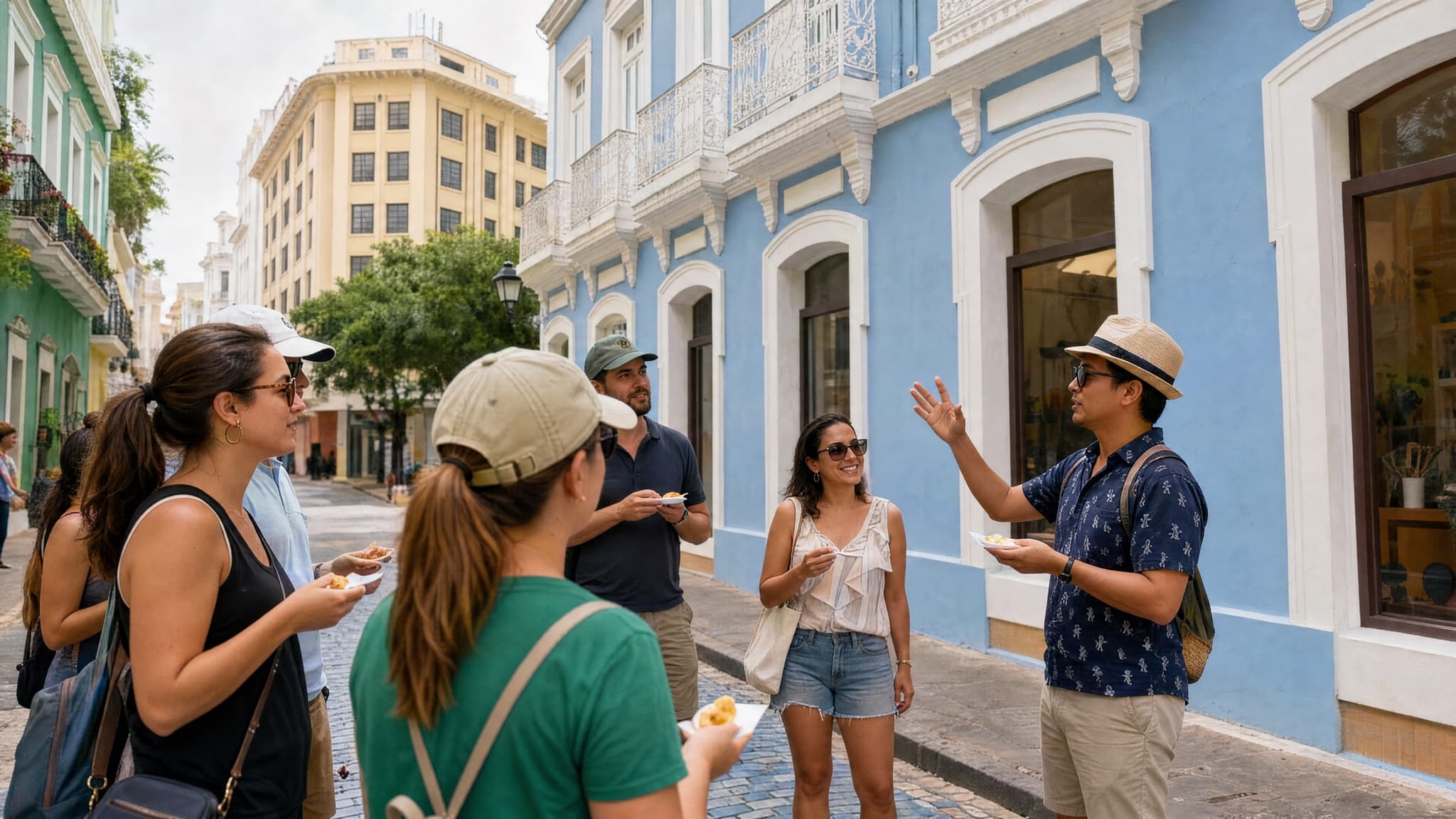
Authentic Flavors of Old San Juan Food Tour
3 Hours · From $170. Live prices, dates, and the honest details, one page.
The three taxes on your bills
There are three, and they are separate. Once you can name them, nothing on a receipt is a surprise.
Sales and use tax, the IVU, is 11.5 percent. That is 10.5 percent commonwealth plus a 1 percent municipal portion, per the Treasury Department's own IVU regulation. It applies to most taxable goods and services and it is added at the register rather than baked into the shelf price, exactly like a mainland sales tax.
Restaurants can charge a reduced 7 percent, and it is worth knowing why. Treasury operates a reduced IVU rate of 7 percent instead of 11.5 percent on prepared foods, carbonated drinks, bakery products and candy, but only at establishments that have met its compliance requirements and been authorized. Treasury's own announcement of the measure told consumers two useful things: you can look up whether a specific business is authorized to charge the 7 percent rate on the SURI system, searchable by municipality or by name, and you should check the receipt before paying the bill.
So if your dinner receipt shows 11.5 percent and the place next door showed 7, neither is a mistake. One is certified and one is not. It is a small saving per meal and a genuinely interesting window into how the island runs, and it is the sort of thing no guide tells you.
The room occupancy tax is separate, and it is not the IVU. The Room Tax Law is posted in English by the Puerto Rico Tourism Company and sets the rates directly: a general tax of nine percent over the room occupancy rate, eleven percent for lodgings authorized to operate casinos, seven percent for lodgings authorized as inns, and seven percent for supplementary short-term lodging. The Tourism Company's own room tax page repeats the last one for hosts: rent short-term, under 90 consecutive days, and you must charge guests 7 percent of the room rate and remit it.
Two honest caveats on that. Whether IVU also applies on top of the room tax is something we could not confirm on any official page, so read your own booking's tax breakdown rather than trusting our arithmetic or anyone else's. And resort fees, where a property charges one, are not a tax at all. They are the property's own charge, set by the property, and they belong in the same mental column as parking. Our vacation cost breakdown builds those in.
Tipping: the same conventions, and a better reason to follow them
Puerto Rico follows mainland US tipping conventions. If you tip the way you would in Florida, you are doing it right.
Here is the part worth understanding, because it changes how the numbers feel. The US Department of Labor's table of minimum wages for tipped employees lists Puerto Rico at a $10.50 minimum wage, a $2.13 minimum direct cash wage for tipped employees, and a maximum tip credit of $8.37. Puerto Rico's own Department of Labor says the same thing in its 2024 secretarial opinion: tipped employees are entitled to the $10.50 minimum, and an employer may meet it through direct pay of at least $2.13 an hour plus tips received.
Read that plainly. A tipped worker's guaranteed cash wage can be $2.13 an hour, and your tip is the mechanism that gets them to $10.50. It is not a bonus for good service, it is most of the pay.
These are customs, not law. We looked for a Puerto Rico statute making a tip or service charge mandatory and did not find one, and we are not going to tell you a percentage is required when it is not. What we will say is what is customary, which is what people are actually asking:
- Restaurants: 15 to 20 percent of the pre-tax bill, the same as the mainland.
- Bars: a dollar or two per drink, or the same percentage on a tab.
- Taxis and rideshare: 10 to 15 percent.
- Porters and bellhops: a dollar or two per bag.
- Housekeeping: a few dollars per night, left daily rather than at the end, because it may not be the same person.
- Tour guides and boat crew: for a full day out, think in terms of what you would leave on a comparable restaurant bill.
The one thing to actually check: some restaurants add an automatic service charge, particularly for larger parties. Look at the bill before you add anything, because tipping twice on the same meal is the most common way visitors overpay here. We could not confirm the text of any consumer-protection rule governing how that charge must be disclosed, so treat reading the bill as your own job.
Want your whole trip planned for you?
Tell us who is coming and when, and we will build your days around what you actually want.
Taxis, where the numbers are posted
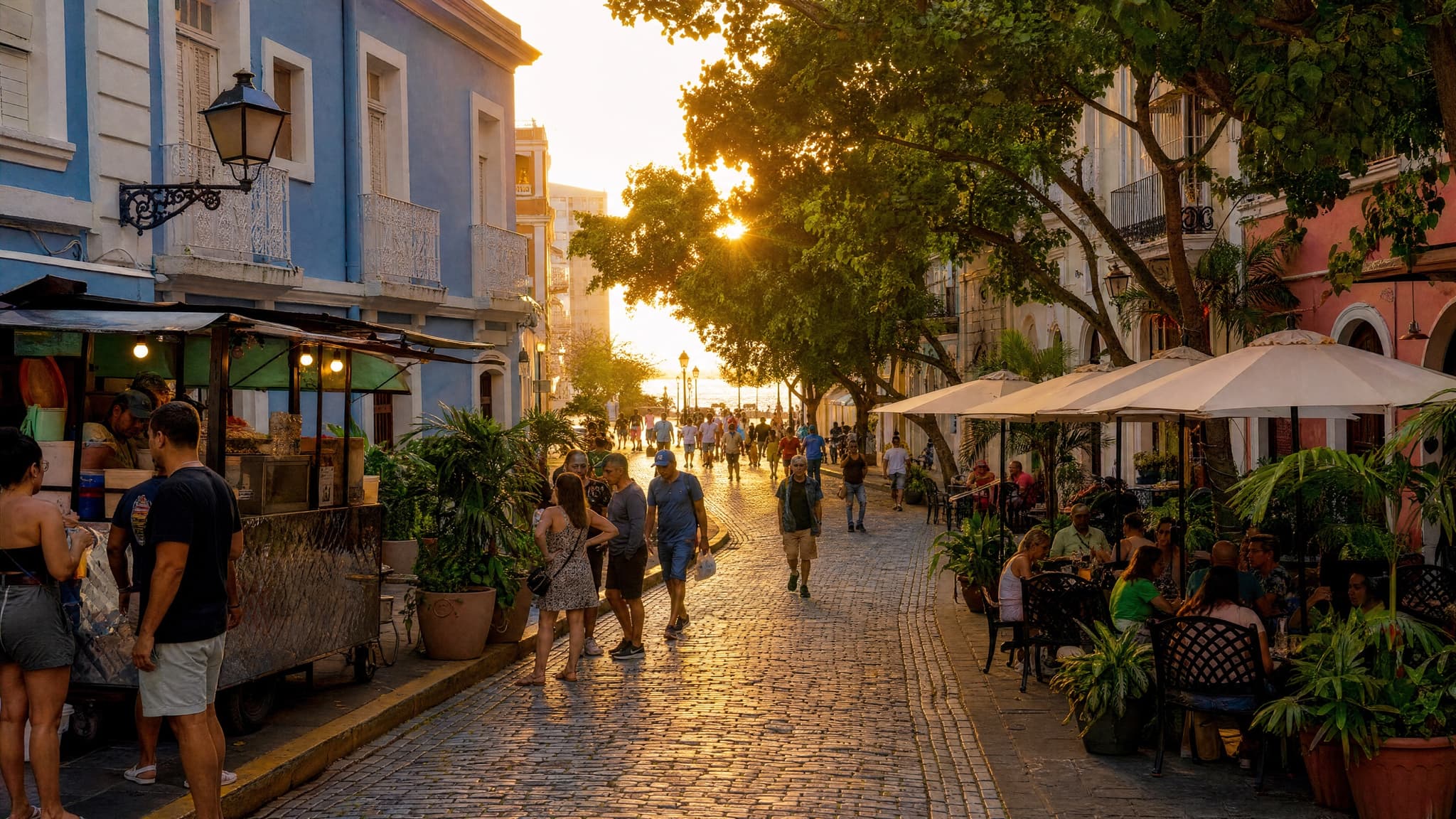
San Juan's tourist taxis are more predictable than most visitors expect, because the Puerto Rico Tourism Company sets fixed flat fares between the airport, the cruise piers and the main tourist zones. From the airport, plan on roughly $12 to Isla Verde, about $17 to Condado, Ocean Park and Miramar, and about $21 to Old San Juan and the piers, plus a small airport surcharge, a per-bag charge of about a dollar, and different rates at night. Outside the defined zones the taxi runs on a meter instead.
Discover Puerto Rico's own taxi guidance makes the relevant point in five words: tolls and tips are not included. The zone fare is the ride, not the total.
Those posted fares do drift over time, so glance at the board at the taxi stand and confirm before you get in. Our getting around guide covers when a taxi beats a rental, and the car rental guide covers the tolls if you are driving yourself.
The free 7-day itinerary
The exact 7 days we send friends
One email with our day-by-day Puerto Rico plan: which beach on which day, where to eat, and the tours worth booking. No spam, unsubscribe anytime.
Where you still need cash
This is the practical heart of the post. Cards cover most of a San Juan trip. Cash covers the parts of the island most worth going to.
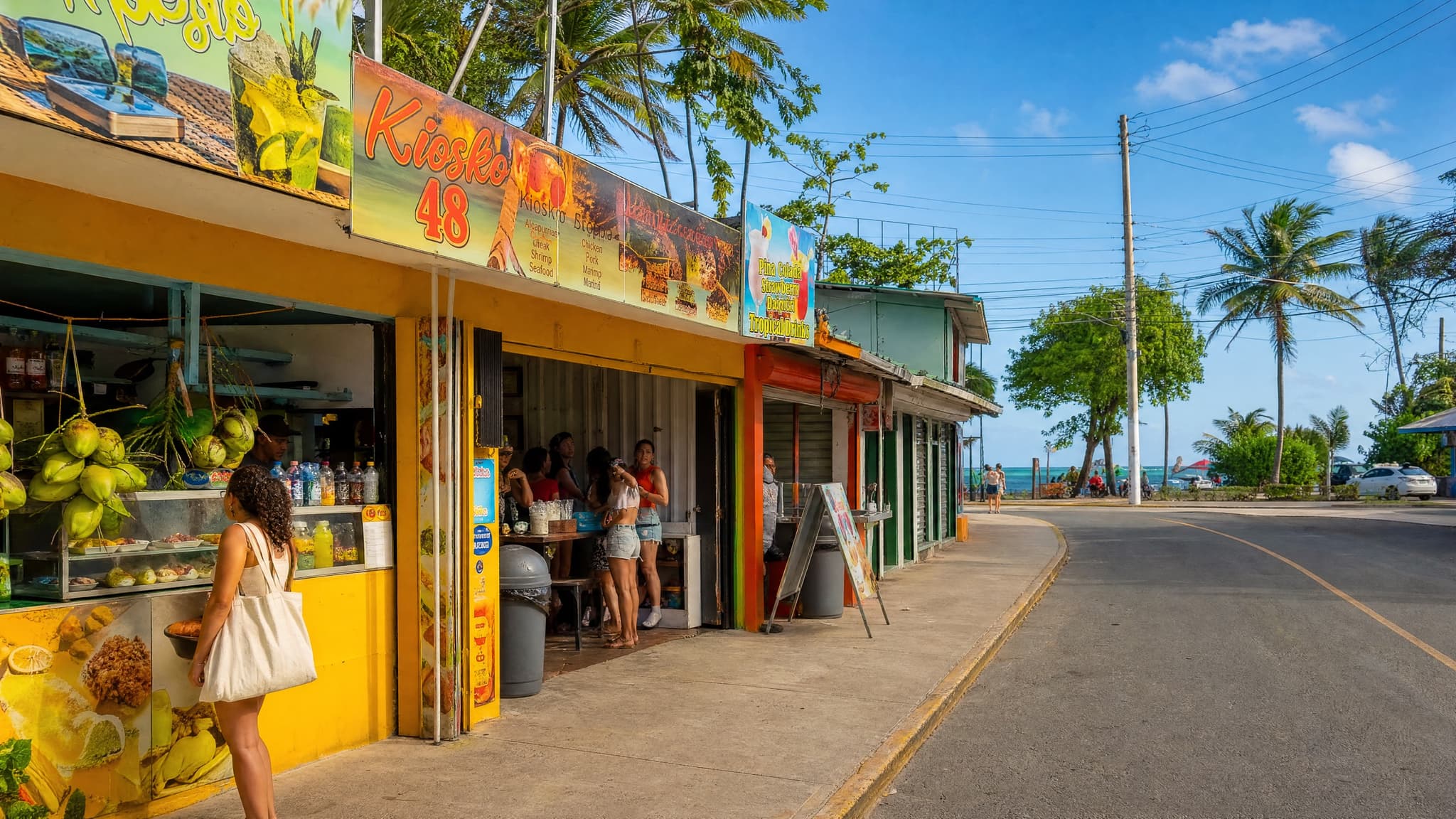
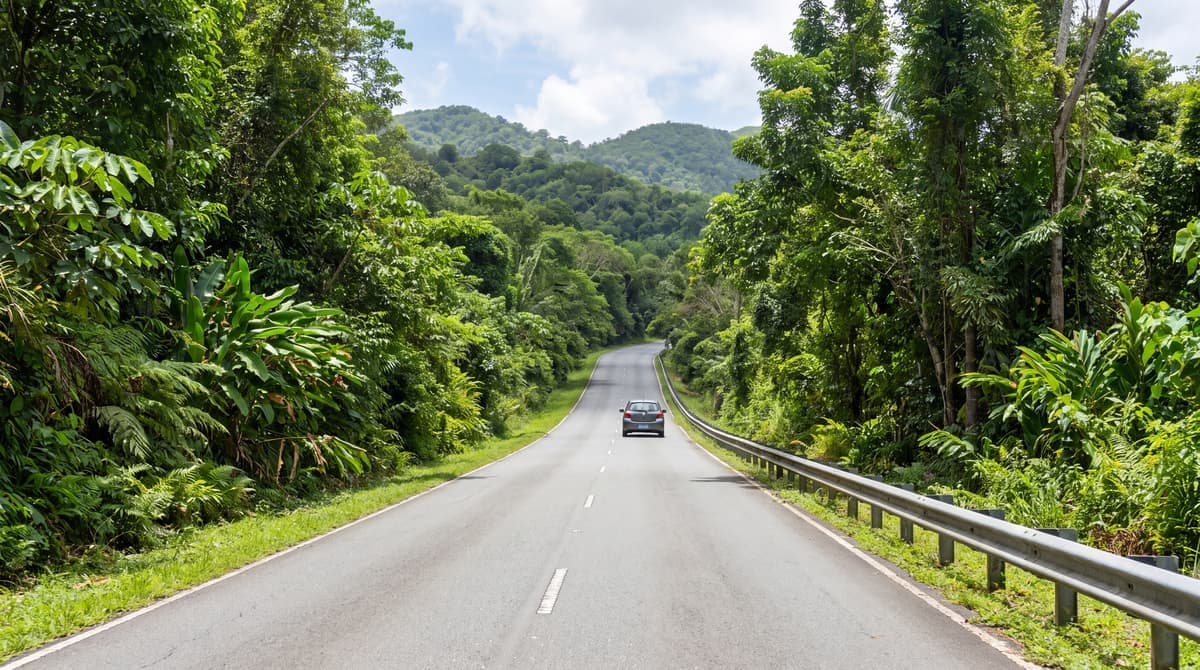
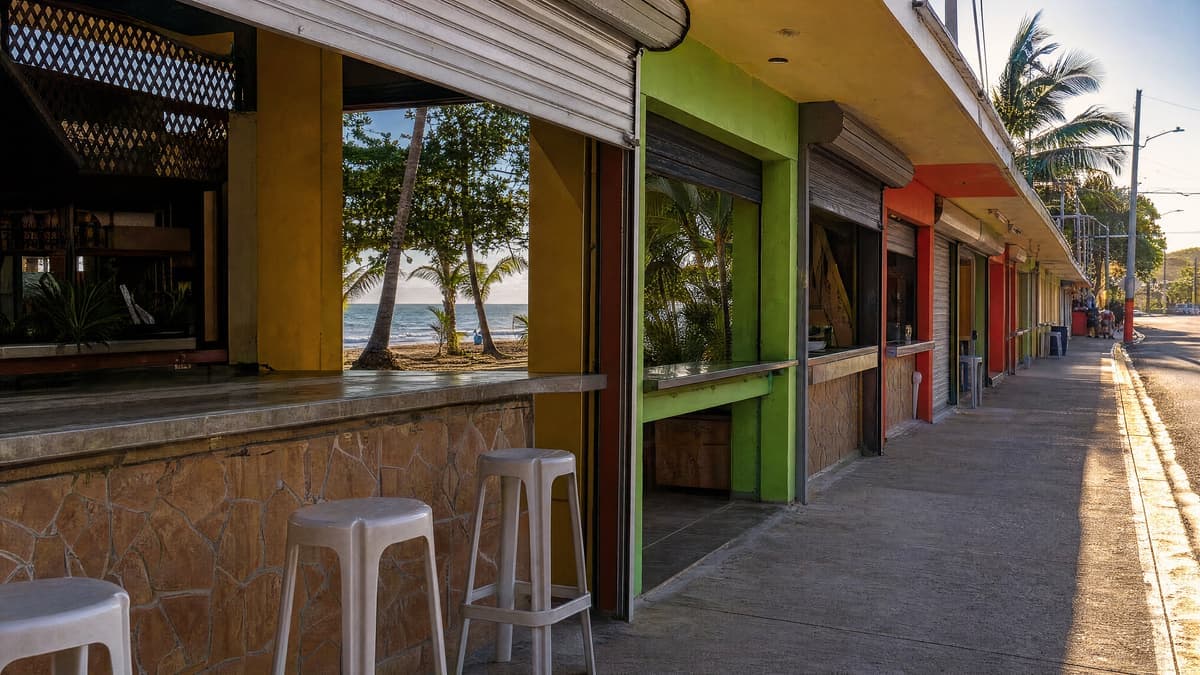
Bring some for roadside food, which is where a lot of the best eating happens: the kioskos at Luquillo, the lechoneras up in the mountains, the beach shacks. For artisan and street fairs, where vendors are small independent businesses. For beach parking at the public balnearios, which is a few dollars and usually cash. For publicos, the shared vans that connect towns. And on Vieques and Culebra, where card acceptance is patchier than on the main island and an ATM outage is a genuine inconvenience rather than a nuisance.
We are not going to publish an ATM fee figure, because it depends on your own bank and the machine, and a wrong number would be worse than none. The useful habit is simply to draw cash in the metro before you drive out, rather than assuming you will find a machine in a small town on a Sunday.
Let us plan this trip for you
We check every spot against live sources, share your dates and we'll build the rest.
Two island fees worth knowing about
The ferry is almost free. Adult fares from Ceiba are $2.00 to Vieques and $2.25 to Culebra, read off the operator's own rates table. That is not a typo, and it is why seats go. Our Culebra ferry guide covers how the crossing actually works.
The Culebra and Vieques conservation fee is real, and it is $2. The Transport Authority's own tariff regulation, adopted under Puerto Rico Law 293-2004, charges every passenger embarking or disembarking at Culebra a $2.00 conservation fee on top of the ferry fare, and the same $2.00 now applies at Vieques. Residents and registered bona fide merchants are exempt. It is collected with your ticket rather than at a booth, so budget two dollars per person per island and do not let anyone charge you a different number on the dock.
What we would not do
Change money before you fly, because there is nothing to change. Assume every restaurant has the same tax rate. Add a tip on top of a service charge without reading the bill. Drive to Guavate or the west coast with only a card. Or tip nothing because you read that Puerto Rico is "different," because on this particular question it is not different at all, and $2.13 an hour is the reason it matters.
For where the rest of the money goes, our vacation cost breakdown and budget guide do the arithmetic, our dining guide covers where to eat, and our tips page collects the small practical stuff that does not fill a post of its own.
Browse 30 vetted Puerto Rico experiences
Instant confirmation, free cancellation up to 24h.
FAQ
Do you tip in Puerto Rico? Yes, on the same conventions as the US mainland: 15 to 20 percent in restaurants, a dollar or two per drink at a bar, 10 to 15 percent for taxis and rideshare, a dollar or two per bag for porters, and a few dollars per night for housekeeping. These are customs rather than legal requirements.
Why does tipping matter more in Puerto Rico? Because of how tipped pay works. The US Department of Labor lists Puerto Rico with a $10.50 minimum wage, a $2.13 minimum direct cash wage for tipped employees and an $8.37 tip credit, so your tip is most of the wage rather than a bonus on top of one.
What currency does Puerto Rico use? The US dollar. Puerto Rico is a US territory, so there is no exchange, no conversion and no foreign transaction fee on a US card.
What is the sales tax in Puerto Rico? The IVU is 11.5 percent, made up of a 10.5 percent commonwealth rate and a 1 percent municipal rate. Restaurants certified with the Treasury Department charge a reduced 7 percent on prepared foods, and you can look up whether a business is authorized on the SURI system.
What taxes are on a Puerto Rico hotel bill? A room occupancy tax set by law: 9 percent generally, 11 percent at lodgings authorized to operate casinos, and 7 percent at inns and at short-term rentals of under 90 days. Resort fees, where charged, are the property's own charge and not a tax.
Where do I still need cash in Puerto Rico? Roadside kioskos and lechoneras, artisan and street fairs, public beach parking, publicos, and on Vieques and Culebra where card acceptance is patchier. Draw cash in the metro before heading out rather than counting on a machine in a small town.