Almost every Caribbean travel insurance page leads with medical evacuation, foreign hospitals and a bill in another currency. None of that is the Puerto Rico story. Puerto Rico is a US territory, so the pitch that sells most Caribbean policies is the part that applies here least, while the parts that actually matter get two sentences at the bottom.
Our local team fields this question constantly. The honest answer is that it depends entirely on which half of the product you are buying, and most people are being sold the wrong half.
Start with the health cover you already have
This is the fact that changes the whole calculation, and it comes straight from Medicare's own page on travel outside the United States: "The 50 states, the District of Columbia, Puerto Rico, the U.S. Virgin Islands, Guam, the Northern Mariana Islands, and American Samoa are considered part of the U.S. Anywhere else is considered outside the U.S."
Read that carefully, because it is a statement about geography, not a promise about your specific plan. Puerto Rico is not "abroad" for Medicare's purposes. The same page goes on to say that because Medicare has limited travel medical coverage outside the US, you may want to buy a travel insurance policy for more coverage. Puerto Rico sits on the inside of that line.
For anyone on an employer plan or a marketplace plan, the picture is similar in shape and less tidy in detail. There is no government page anywhere that says a hospital in Puerto Rico is automatically in-network for a mainland plan, because network status is set by your insurer's contracts, not by territorial status. We looked, and we are not going to invent an answer.
The honest caveat, and the most useful sentence in this post: the fifteen minutes it takes to call the number on the back of your card and ask "am I in-network in Puerto Rico, and what is my out-of-network emergency benefit" is worth more than any policy bought on the strength of a comparison page. On a foreign Caribbean island the answer to that question is usually a flat no and travel medical cover is doing real work. That difference is why the no-passport advantage is more than a paperwork convenience.
Want your whole trip planned for you?
Tell us who is coming and when, and we will build your days around what you actually want.
So what is actually left to insure
Take medical off the table and look at what remains: trip cancellation, interruption, travel delay and baggage. In plain terms, the money you cannot get back if the trip does not happen.
The test we would apply is arithmetic, not anxiety. Add up every non-refundable dollar: the basic-economy fare you cannot change, the villa deposit, the prepaid rental car, the tour booked to lock a date. If that number is small and most bookings are cancellable, you are insuring very little and paying for the privilege. If it is most of the trip, you have a real exposure worth pricing cover against. Our vacation cost breakdown shows what a week here actually adds up to.
The hurricane clause, and the one date that decides it
This is the part worth reading twice.
The Atlantic hurricane season runs June 1 to November 30 and peaks in September, which is also the island's quietest and often cheapest stretch. That trade-off has its own guide at hurricane season in Puerto Rico, and the short version is that the discount is real and so is the risk.
Where insurance is concerned, the rule is unforgiving and every major insurer publishes it. Allianz's own hurricane page puts it like this: "When a hurricane (or other severe weather) becomes a named storm, it also becomes a 'foreseeable event' with known potential to affect your travel. If you buy travel insurance after a storm is named, your plan won't provide coverage for storm-related claims." Travel Guard's education page says the same thing from the other direction: "you must have purchased your travel insurance plan before a storm system first reaches tropical storm status," and "if a storm is named before you purchase the travel insurance plan, coverage wouldn't apply to losses related to that hurricane."
The practical consequence is that hurricane cover is not something you buy when the forecast turns. It is something you either bought when you made your first non-refundable payment or you do not have. Watching a system spin up in the Atlantic and then shopping for a policy is the single most common way people discover this rule.
For context on the season you would be buying into: NOAA's updated outlook, on the Climate Prediction Center page last updated August 25, 2026, calls for a 75 percent chance of a below-normal season, with 7 to 13 named storms, 2 to 6 hurricanes and 0 to 2 major hurricanes. The National Hurricane Center's own 2026 season tally shows four named storms so far and no hurricanes.
The honest caveat: a below-normal season is a statement about the total, not about your week. One system on the wrong dates disrupts a trip exactly as thoroughly in a quiet year as in a busy one. Treat the outlook as a reason not to panic, not as a reason to skip cover you would otherwise have bought.
Let us plan this trip for you
We check every spot against live sources, share your dates and we'll build the rest.
Cancel for any reason, and what it really pays
"Cancel for any reason," usually written CFAR, is the upgrade people ask about most and understand least. It is an optional add-on that lets you cancel for reasons a standard policy would not cover, and it pays back a portion rather than the whole.
Because terms vary by insurer and by state, we are only going to quote one company's published terms rather than pretend there is an industry standard. Travel Guard's own CFAR page states that the coverage "is a percentage of your original trip cost (typically 50%)," that it "can only be purchased at the time you purchase your base plan and only within 15 days of your initial trip payment," and that "your trip must be cancelled at least two days prior to your departure date in order to use the Cancel for Any Reason coverage."
Three things follow, whoever you buy from. It pays part, not all. Its purchase window is tied to your first payment, so it is a booking-time decision. And it has a cancellation deadline, not a same-day escape hatch.
One genuinely odd wrinkle worth knowing: in New York, CFAR is not legally insurance at all. The New York Department of Financial Services' Insurance Circular Letter No. 4 (2020) states that "CFAR benefits in the travel context do not technically qualify as insurance because the cancellation of a trip 'for any reason' does not depend on the occurrence of fortuitous event," and sets out how it may be sold there. If you are buying from New York, expect the CFAR piece to sit in a separate contract from the policy.
Our read: CFAR earns its cost on a large non-refundable trip booked far ahead into hurricane season, and rarely on a long weekend of refundable hotel nights.
The activities question, which nobody asks until afterwards
Puerto Rico trips are unusually activity-heavy for a beach destination. A typical week here includes a bio bay kayak, a rainforest day, snorkeling off a boat, and often a first surf lesson on the west coast. Those are exactly the things travel policies define carefully.
Industry wording treats these as a category of their own. Squaremouth's sports and activities pages list kayaking and zip lining among the activities a sports and activities benefit is designed to cover, and separately note that the definition of a "hazardous sport" varies by policy but "generally refers to extreme sports and high-risk activities," giving scuba diving, skiing, surfing, white water rafting and ziplining as common examples. That is industry language, not regulation, which is precisely why it is not consistent between policies.
What we would do: if your trip includes the Fajardo bio bay kayak, a zipline course, or surf lessons, read the exclusions list before you buy rather than the marketing page, and check whether a sports benefit needs to be added. Browsing what we run will tell you quickly whether your week is the kind that needs it.
The honest caveat: the operator's own waiver and the insurer's exclusion list are two separate documents, and signing the first does nothing about the second.
Browse 30 vetted Puerto Rico experiences
Instant confirmation, free cancellation up to 24h.
The free 7-day itinerary
The exact 7 days we send friends
One email with our day-by-day Puerto Rico plan: which beach on which day, where to eat, and the tours worth booking. No spam, unsubscribe anytime.
What your credit card may already do
A lot of travel cards include trip cancellation, interruption, delay and baggage benefits when the trip is paid with the card. We are not going to tell you what yours covers, because terms differ by card and issuer and a wrong number here would cost somebody real money.
What to look for in your card's guide to benefits, which your issuer publishes on request: whether the benefit is primary or secondary, the per-trip limit, whether the whole trip must go on that card, and which cancellation reasons are listed. On a modest trip that document occasionally makes the question moot.
When we would skip it
Plainly, because "it depends" is not an answer.
We would skip it on a long weekend where the flight is changeable, the hotel is cancellable up to a day or two out, and the only prepaid item is one tour. There is almost nothing to claim on, and your US health cover is already whatever it is.
We would buy it on a week booked months ahead into the August to October window, with a non-refundable villa, prepaid ferry-dependent days to Culebra or Vieques, and a group where somebody's plans could change. That trip has real money at risk and real weather exposure, and the cover has to be bought at booking to be worth anything.
We would think harder about the middle case, which is most trips, and let the non-refundable total decide rather than the forecast.
Find your hotel by area & budget
Compare current Puerto Rico rates across the major booking sites in one place, in USD. Most rooms are free to cancel.
Two Puerto Rico specifics no policy fixes
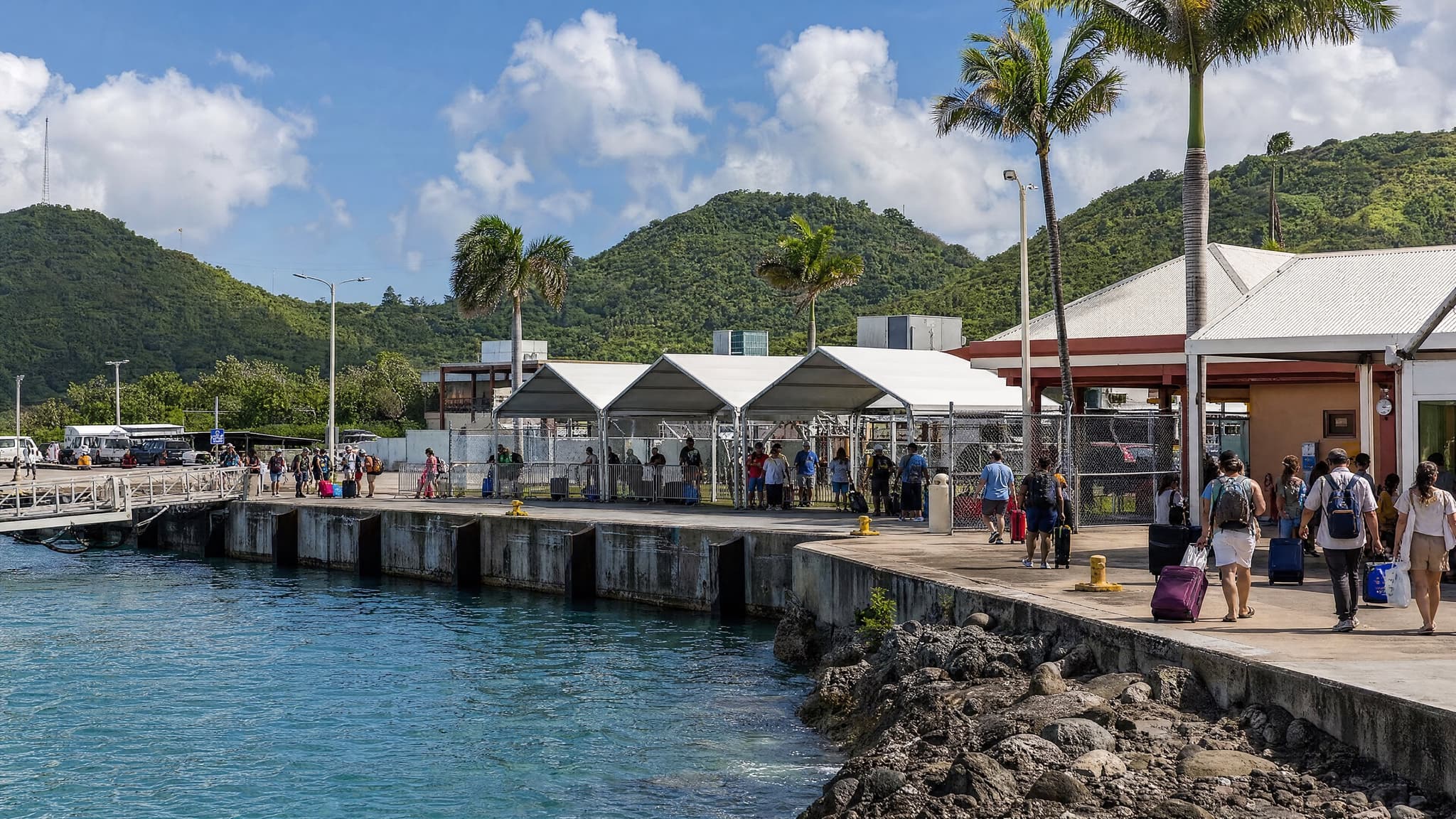
The ferry is weather-dependent. The Ceiba crossings to Vieques and Culebra are a government-contracted service on open water, and rough conditions are a normal cause of disruption. The fix is scheduling an island day early in the trip rather than on the last day, which no policy can do for you. Details are in our Culebra ferry guide.
Sargassum and rainforest closures are not covered perils. Seaweed on a beach is not a cancellation reason under any policy we have read, and El Yunque's corridor can close on short notice for flash-flood risk. Both are planning problems, not insurance ones. Our sargassum guide and El Yunque page cover how to work around them.
The short version
Puerto Rico inverts the usual advice. The medical cover that justifies most Caribbean policies is largely redundant here, because you are inside the US health system and subject to your own plan's network. The cancellation cover that gets a footnote elsewhere is the part doing the work, and it only works if you buy it before a storm has a name.
For the rest of the trip, start with when to go and where to stay, check is Puerto Rico safe if the season worries you, and use the booking hub once dates are set.
What flights to Puerto Rico cost right now
Real recent round-trip fares by departure city, with a live search one tap away.
FAQ
Do I need travel insurance for Puerto Rico? No. It is not required to enter and no US traveler is turned away without it. Whether it is worth buying depends on how much of your trip is non-refundable and whether you are traveling in hurricane season.
Does my US health insurance work in Puerto Rico? Puerto Rico is a US territory, and Medicare's own guidance lists it as part of the United States rather than as travel outside the country. Whether your specific employer or marketplace plan treats a Puerto Rico hospital as in-network is set by your insurer, not by territorial status, so call the number on your card and ask.
Does Medicare cover me in Puerto Rico? Medicare's page on travel outside the US names Puerto Rico among the places "considered part of the U.S.," so it is not treated as foreign travel. Coverage details still follow your own plan, and Medicare Advantage plans can require network providers.
When is it too late to buy hurricane cover? Once the storm has a name. Allianz states that a named storm becomes a foreseeable event and a plan bought afterwards will not cover storm-related claims, and Travel Guard says you must buy before a system first reaches tropical storm status.
Is cancel for any reason worth it for Puerto Rico? It depends on your non-refundable total. Travel Guard's own terms pay a percentage of trip cost, typically 50 percent, must be bought within 15 days of your initial trip payment, and require cancelling at least two days before departure. That shape suits a big prepaid trip booked far ahead, not a refundable long weekend.
Are bio bay kayaking and ziplining covered? It depends on the policy. Industry wording treats kayaking and zip lining as activities a sports benefit is meant to cover, while defining "hazardous sports" loosely enough that surfing and ziplining appear on some exclusion lists. Read the exclusions before buying if your week includes them.